Need for Business Code of Ethics There are many regulations and polices in place that set the minimum standards for ethical business behavior. Unfortunately, businesses still partake in unethical behaviors. Unethical behavior in a business can have many effects on the organization. Over the years, there have been several business scandals that have tarnished the credulity of their business. As a result of their unethical behavior, businesses have lost loyal customers and potential investors. Customers no longer trust the business and what they have to offer. It is important for companies to have an ethics program in place that will outline ethical business behaviors and their code of ethics. This will ultimately reduce and prevent unethical behaviors within a business. The employees have committed many unethical acts due to their lack of a code of ethics and an ethics program. They are unaware of what is expected of them so, Continue reading
Business Ethics
Business ethics (also known as corporate ethics) is a form of applied ethics or professional ethics that examines ethical principles and moral or ethical problems that arise in a business environment. It applies to all aspects of business conduct and is relevant to the conduct of individuals and business organizations as a whole. Business ethics can be both a normative and a descriptive discipline. As a corporate practice and a career specialization, the field is primarily normative. In academia descriptive approaches are also taken. The range and quantity of business ethical issues reflects the degree to which business is perceived to be at odds with non-economic social values.
The Ethics of Sweatshops in Fashion Industry
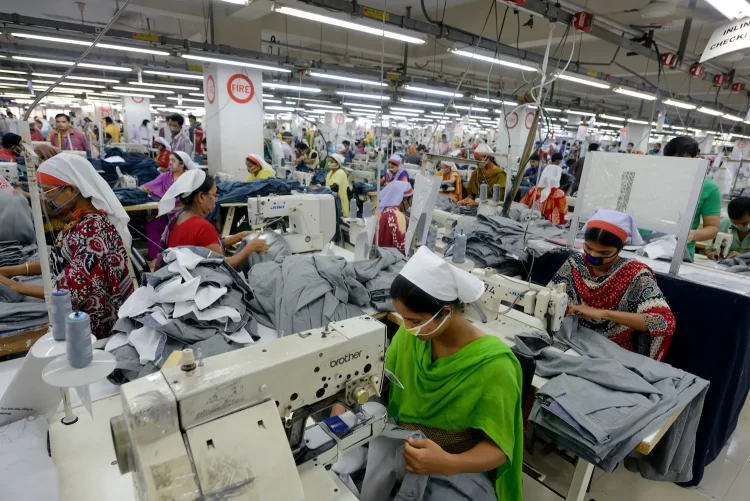
Although the fundamentals of sweat labours have changed since the 18th Century, it still has many similarities between the history and the present. In fashion industry, as the market desire and has developed into new forms, resulting in the use of sweat labours to continue. Sweatshop is a general description of the workplaces which paying poor salary, unsafe or unhealthful working environment, force to a longer working period or using child labour. The term sweatshop is not a new phenomenon but in fact a derivation from history. In 1997, Nike as one of the world largest sport garment company, was caught in a scandal of using sweatshop labour for its garment production in East South Asia. Paying unreasonable salaries, forcing labourers to overwork. As a result, for many years, this has become a label that has tagged on Nike’s logo. Such a worldwide company was soon to be boycotted by its Continue reading
Case Study on Business Ethics: Valeant Pharmaceuticals – The Pharmaceutical Enron

Brief History of the Company Strip away the outer covering of Valeant Pharmaceuticals and find a business enterprise that started its profit-making in the decade of the 1960s. One can argue that it started as an obscure organization focused on understanding the business side of the specialty chemical research enterprise. However, the company started to gain global attention at the turn of the 21st century when its corporate leaders initiated a series of mergers and acquisitions. In the present time, the said pharmaceutical company sells a variety of drugs, such as over the counter medication and prescription drugs. The company’s radical assent into the top of Wall Street’s list of the favorable company started in earnest when it hired Michael Pearson as the new CEO of Valeant Pharmaceuticals. He orchestrated a series of major mergers and acquisitions that required the use of billions of dollars in resource allocation to take control Continue reading
Case Study on Business Ethics: Examining Enron Corporation’s Business Failure
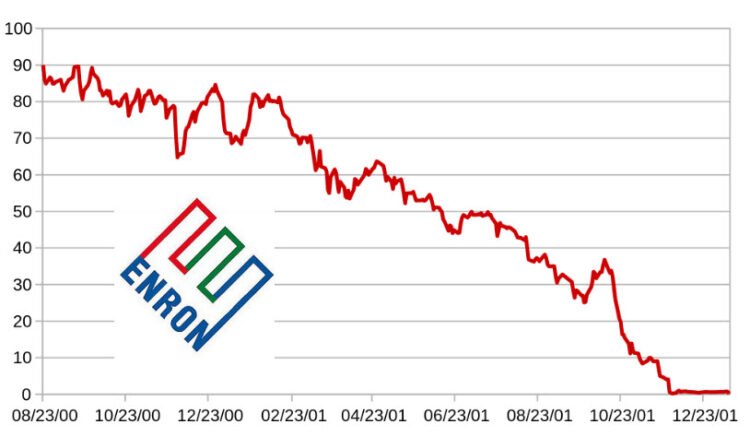
The case of Enron Corporation was one of the most vivid examples of accounting errors and unethical behavior followed by the company’s management. This case had a great impact on other companies and auditing and reporting standards and procedures. After the collapse of the energy company Enron in January 2002, financial statements seem a lot less hard and objective than they once did. Enron caused many problems occurred among equity shareholders, as a company with an equity market capitalization of over $70 billion became worthless in just over a year. The Enron fiasco focused attention on US accounting practices, and highlighted the relationship between companies and the accounting firms who as auditors were meant to confirm the accuracy of financial statements. For many years corporate governance experts had worried over potential conflicts of interest when accounting firms acted as both consultants and auditors to the same firm, but these conflicts Continue reading
Case Study on Business Ethics: Analysis of the Downfall of WorldCom
WorldCom Downfall – Failure to Live up to its Mission Statement WorldCom was a global telecommunication company that, at some point, grew to become the second-largest phone company offering long-distance services. Its mission statement read that “Our objective is to be the most profitable, single-source provider of communications services to customers around the world”. Moreover, the company’s supplier diversity mission statement was defined as to “Create a competitive advantage for WorldCom and contribute significantly to WorldCom’s business success by promoting business practices that provide greater opportunity for a diverse supplier base”. The company, after witnessing a period of growth propelled by various successful acquisitions and mergers, became bankrupt with a damaged image due to its accounting malpractices. It filed for bankruptcy protection on July 21, 2002 before transforming its name to MCI and relocating its corporate headquarters to Dulles, Virginia, from its previous location in Jacksonville, Mississippi. The accounting malpractices Continue reading
Case Study on Business Ethics: Microsoft’s Case of Unethical Competition
Microsoft is undoubtedly the world’s biggest software company. Its size makes it a formidable force for any competitor who dares venture into its business territory. A firm of such status, and any other firm for that matter, would strive to keep this dominance in place. However, the nature of its industry requires it to constantly innovate and invest in new products and technologies. The company’s financial strength allows it to put a lot in innovation and research in order to stay ahead of the competition. However, its true power lay not in its finances, but its platform monopoly. The platform here would refer to its operating system. Since it has a monopoly in controlling the system, it can lock out competition by manipulating this unique advantage. This is where antitrust law steps in. Antitrust laws are laws that are aimed at keeping the markets competitive and not dominated by monopolistic Continue reading