
Introduction to Artificial Intelligence A man is endowed with the ability to comprehend, respond, and perform. Creatures do not have the knowledge or responsiveness in this manner. Intelligence is characterized as the capacity to study, think, and find solutions. Artificial intelligence is defined as the execution of certain activities by a set of machines working together. Machine intelligence, as the name implies, is knowledge developed digitally when computers are programmed to act intelligently like people. Devices, if programmed with intellectual orders, would produce guaranteed results since they are effective. The nervous system might or may not be able to do so, depending on how the brain is functioning at the moment. In 1950, the word Artificial intelligence in 1950 was devised by John McCarthy who is frequently viewed as the initiator of AI skills because he was the primary person to discover the theory. It is the technique of programming Continue reading
Modern Management Concepts
Impact of Artificial Intelligence on Unemployment

Fast technological development and automatization have caused many changes in people’s lives. As soon as the industrial revolution impacted the manufacturing process, productivity skyrocketed, and corporations became major societal driving factors. However, a downside of the industrial revolution was the fast improvement of equipment that worked more efficiently, cheaply, and faster than any person could. From this perspective, the jobs that were previously executed by people were quickly replaced with machines. A similar concern correlates with the current technological development, namely artificial intelligence. Artificial intelligence (AI) is a machine’s ability to learn through certain algorithms, which creates an environment in which it can become fully autonomous and used in any industry while performing any task. There are multiple uses in which AI can be applied, including medicine, physics, the economy, and other essential areas of life. However, similarly to the development of automatization during the industrial revolution, AI may correlate Continue reading
Key Drivers and Life Cycle of Business Continuity Management (BCM)
Managing business environment is one of the challenges which organizations have no control over. There has been escalation in crisis, disasters, and emergencies as many companies enter into the market. Moreover, it is essential for organizations in either the public or private sector to develop a suitable and effective Business Continuity Management (BCM). According to ISO 22301, BCM is a holistic management method of identifying potential threats to organizational activities. BCM also provides a framework for which organizations build resilience to the identified threats and effectively respond. Business Continuity Management (BCM) plays an important role in risk management within the company. Key Drivers of Business Continuity Management (BCM) There it is important to understand the driving factors of Business Continuity Management (BCM), which ensure effective and reliable execution of the organizational plans. The key drivers of Business Continuity Management (BCM) include are highlighted below. Corporate Governance – With the changing Continue reading
Online Reputation Management (ORM) – Meaning, Definition and Strategies

The growth of the internet over the past two decades has come as a welcome development for businesses, both big and small. The internet has provided a whole new, vast and efficient advertising space. However, bad publicity surrounding the brand can also spread faster than ever, tarnishing the image of the brand. The reputation that a brand projects towards its customers, business partners and stockholders can have dramatic effects, not only on the company’s revenue but on its very existence. Many brand owners and managers are still ignorant of the concept of Online Reputation Management (ORM) for businesses. Online reputation refers to a company’s image online. The online environment poses a great risk to businesses and their brands. The online image of a company can be the creation of third parties. Both the company and third parties influence online reputation. It is the responsibility of the company to control its Continue reading
Platformization of Strategic Business Communications
A digital business or communication platform offers a method to recombine technology in novel and transformational ways to create new business functionalities and competences. It offers a logical boundary that divides the technological applications driving digital transformation and technological change from the organizational logic behind those applications. For instance, the Amazon corporation elaborates and designs its digital media, business, and communication platforms as marketplaces and communication channels for clients and colleagues. The implications of platformization for communication and business industries are positive, but can encompass negative aspects related to ethical and privacy issues. Any online communications technology, including desktop, mobile, interpersonal, and email applications, is referred to as a “digital platform.” This notion, in fact, encompasses social networks, media, and websites. Particularly in the media and entertainment sectors, digital platforms have frequently been identified as the key participants in a wide range of marketplaces. Corporate and governmental players in contemporary Continue reading
Assessing Triple Bottom Line (TBL) Progress Using KPIs
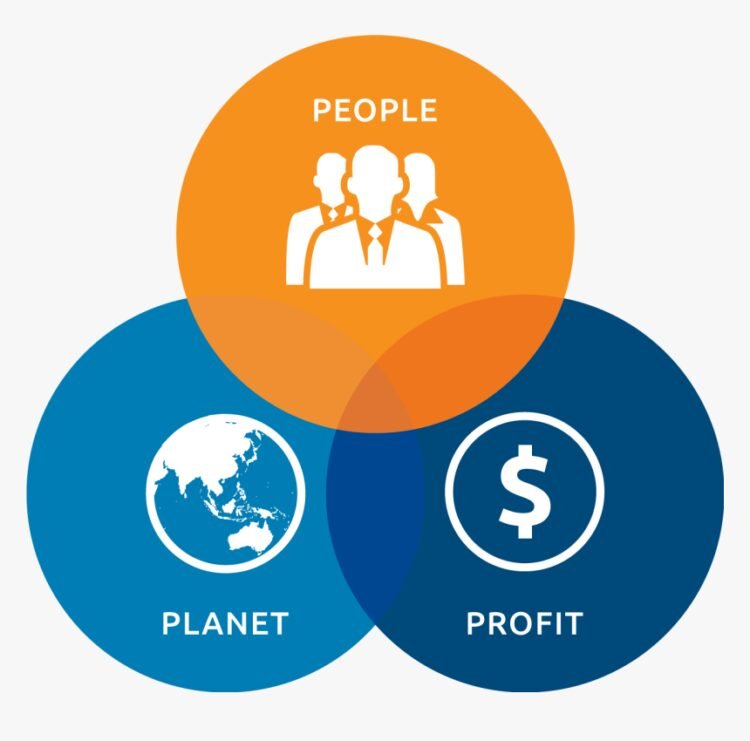
Every organization’s success depends on its ability to adopt decisions and execute essential procedures swiftly, effectively, and consistently, including introducing new strategies or projects. Implementation of new strategies, projects, or extending the definition and reaching of CSR is always associated with some risks and requires careful preparation and monitoring of the result. Key performance indicators (KPI) are the most suitable tool for assessing progress in achieving the specified Triple Bottom Line (TBL) objectives within corporate social responsibility (CSR). It would be best to start by asking a strategic question for each element of Triple Bottom Line (TBL). This is a powerful technique that helps both in developing a strategy and understanding the tools and criteria for monitoring its effectiveness. Strategic questions force one to think in a way that inspires movement and helps you find new approaches. It is imperative to implement TBL because many of the challenges that the Continue reading