
Corporate governance plays an important role in disciplining the management of the company like transparency in financial reporting and having robust internal controls. Enormous responsibilities like audit committee, duty of the auditors and induction of non-executive directors to act independently have been inflicted on the management of the company and any deviations will be viewed seriously and action against directors can be initiated by the compliance authorities. Audit committee, which is a group of directors who are not concerned with day-today management of the company but supervising how business is administered, conducted and reported. A committee of directors which is entrusted with the precise duty to evaluate the yearly financial reports of the business is known as the audit committee. An audit committee acts as a link between the board of directors and the auditor which includes the evaluation of the statutory audit report, the suggestion of the auditors, the Continue reading
Business Ethics
Consumerism – Meaning and Effects

Consumerism refers to the process by which individuals acquire new goods and services without making some important considerations. Some of these considerations that the consumers do not mind are their need for the product and the durability of the product. They also do not mind the effects of the manufacture and disposal of the product to the environment. Companies spend huge sums of money to advertise their products so as to create a desire for the product by the consumers. The advertisements convince the consumers that the products are very important and that it is very beneficial for them to acquire the products. Those who acquire the products are convinced that they have made an achievement. Consumerism leads to materialism where consumers are preoccupied with the acquisition of material objects, comforts and considerations and have no concern on the spiritual, intellectual, and cultural values. Consumerism has many effects on the Continue reading
Moral Hazards in Workplaces
In the economic literature nowadays, moral hazard is studied in various fields. There are two major categories of researches on moral hazard. One is originated from the early literature about insurance market; the other is about economic decision-making, such as finance, banking, accounting and management. In the recent financial crisis, moral hazard is more frequently discussed and blamed as one of the causes of the banking problem. What is Moral Hazard? Moral hazard is defined in various ways in different aspects. The earliest explanation is from the perspective of insurance sector. Marshall provided the definition as ‘any misallocation of resources which results when risks are insured with normal insurance contracts and only with such contracts’. Briefly, moral hazard as the risky behavior an insured individual may act because of the insurance cover. There are two kinds of moral hazard in insurance field. One of them is ex ante moral hazard, Continue reading
Socially Responsible Investment (SRI)
Socially responsible investment (SRI) can be defined broadly as an investment process that considers the social and environmental consequences of investments, both positive and negative, within the context of rigorous financial analysis. SRI funds aim to integrate personal, social and environmental concerns with financial considerations, their objective is to increase investors’ wealth while ensuring that the selected companies have a positive impact on people and the Planet. Often called ethical investments or sustainable investments, this type of investment has become increasingly popular in recent years. The early stages of the SRI movement can be traced back to the nineteenth century, especially amongst religious movements such as the Quakers and Methodists. Specifically, these groups excluded investments that would go against their beliefs. Such non-financial ‘exclusionary’ behavior in investment choice became a highlight in 1960s during the Vietnam War, where funds like the PAX World Fund was set up with a mission Continue reading
Case Study on Business Ethics: Satyam Scam – Corporate Accounting Fraud
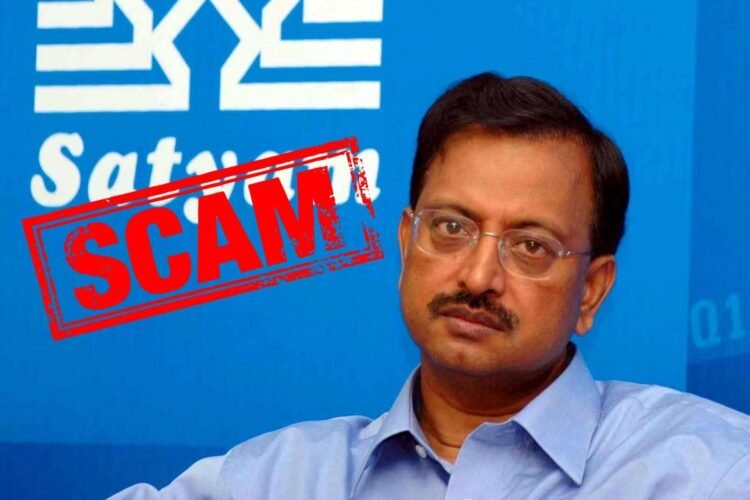
The Satyam scandal was a corporate fraud that primarily affected an Indian-based computer service company known as Satyam as well as other partnering companies. The scandal started in 1999 and erupted in 2009 after Merrill Lynch exposed Satyam’s illegal financial practices. Ramalinga Raju, the company’s chairman, corroborated the allegations by revealing that he had been manipulating financial accounts for many years. The scandal shocked the whole world because Satyam was renowned for its exceptional corporate governance. Moreover, the ethics of conducting business, as well as those of the accounting profession, were challenged. For instance, the reputation of PricewaterhouseCoopers was tarnished as it was Satyam’s official accounting firm. The firm was fined highly by the US Securities and Exchange Commission for engaging in unethical accounting practices, violating the code of conduct, and disregarding the auditing standards. The magnitude of the fraud contributed to its comparison to the Enron scandal. Both scandals Continue reading
Ethics in Financial Reporting
Integrity is of utmost importance for a successful career in business and finance in the long run. Some believe that the world of finance lacks ethical considerations. Whereas the truth is that such issues are prevalent in all areas of business. The business environment in much of the world is reeling from the revelation of several financial scandals in the past few years. The optimism of the turn of the century has been replaced by scepticism and distrust. It will be discussed as to how we landed ourselves in this situation, what is being done to correct it, and what the future holds for us. Though Enron has been used as the poster-child for this purpose, breakdowns in accounting and corporate governance in Enron as well as in other companies will be discussed. Some companies that have encountered financial reporting problems will be discussed along with the role of auditors Continue reading