
Cess van Der Hoeven, Ahold’s CEO, set ambitious expansion targets for the company in 1994. Sales were expected to double every five years. A similar target was set for net profit. This plan would ensure a 15% compound growth in both sales and net profits per annum. Such an expansion called for investment funds. 66.7% of the expansion was to be funded by the company’s cash-flow. The remaining 33.3% was to be funded by external creditors. The earnings Per Share was to grow at 10% annually. Ahold managed to acquire the Stop and Shop chain thus rising to be the 5th largest food retailer in the world. Van Der Hoeven set a target for the company to be the 2nd largest food retailer. This meant overtaking Carrefour, to rank after Wal-Mart. Ahold expanded rapidly between 1994 and 1999 through the acquisition of several supermarkets globally. Initially, the company focused on purchasing regional Continue reading
Business Ethics
Case Study on Business Ethics: Analysis of the Downfall of WorldCom
WorldCom Downfall – Failure to Live up to its Mission Statement WorldCom was a global telecommunication company that, at some point, grew to become the second-largest phone company offering long-distance services. Its mission statement read that “Our objective is to be the most profitable, single-source provider of communications services to customers around the world”. Moreover, the company’s supplier diversity mission statement was defined as to “Create a competitive advantage for WorldCom and contribute significantly to WorldCom’s business success by promoting business practices that provide greater opportunity for a diverse supplier base”. The company, after witnessing a period of growth propelled by various successful acquisitions and mergers, became bankrupt with a damaged image due to its accounting malpractices. It filed for bankruptcy protection on July 21, 2002 before transforming its name to MCI and relocating its corporate headquarters to Dulles, Virginia, from its previous location in Jacksonville, Mississippi. The accounting malpractices Continue reading
Case Study: The Story Behind the Olympus Scandal
In the 1980s, several Japanese corporations experienced financial challenges as they depended on investments to boost their declining profits. One of the main reasons was that the country’s export had been damaged by the strength of its currency against other currencies, especially the US Dollar. Olympus became one of the number one victims of Japan’s economic situation. Because the company was struggling with its business operations, it decided to use a Japanese concept known as zaitech, which refers to financial engineering in salvaging the situation. Consequently, the company decided to invest in risky businesses and financial derivatives in order to boost its profits. Nevertheless, the business ventures caused huge losses of about 2.1 billion Yen in the early 1990s. It is during that time when the management of the Olympus devised ways of concealing the huge losses from the published financial reports. Although it has been able to hide the Continue reading
Case Study on Business Ethics: Microsoft’s Case of Unethical Competition
Microsoft is undoubtedly the world’s biggest software company. Its size makes it a formidable force for any competitor who dares venture into its business territory. A firm of such status, and any other firm for that matter, would strive to keep this dominance in place. However, the nature of its industry requires it to constantly innovate and invest in new products and technologies. The company’s financial strength allows it to put a lot in innovation and research in order to stay ahead of the competition. However, its true power lay not in its finances, but its platform monopoly. The platform here would refer to its operating system. Since it has a monopoly in controlling the system, it can lock out competition by manipulating this unique advantage. This is where antitrust law steps in. Antitrust laws are laws that are aimed at keeping the markets competitive and not dominated by monopolistic Continue reading
Case Study: The Downfall of Nissan’s Carlos Ghosn
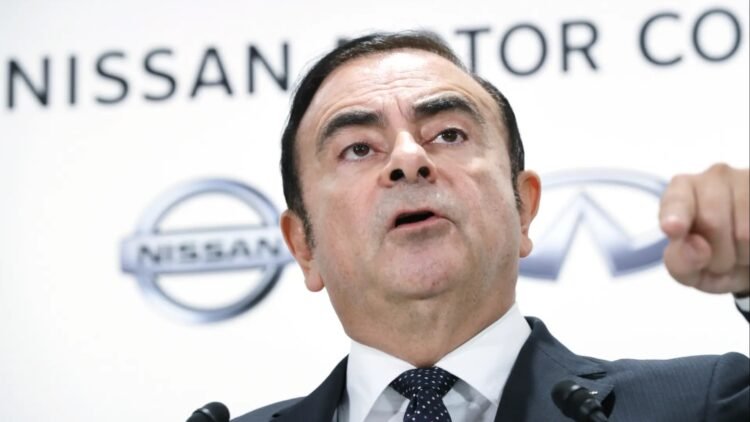
Financial dishonesty and misconduct pose significant threats to any business. Carlos Ghosn, an influential top manager and ex-CEO of Nissan, was arrested because of financial misconduct in Japan in 2018. The scandalous news led to a panic on the stock exchange, and Nissan’s shares crashed rapidly, which also affected other automobile companies. Today, the company prepares for difficult times and reputational losses, which can no longer be avoided, even if the most serious accusations are not confirmed. Currently, Ghosn has already been interrogated by the police, and an investigation against him is underway. The 64-year-old top manager was accused of financial misbehavior, using his position. To do this, he deliberately distorted the data on the amount of his remuneration, which he received from the Alliance brands, such as Nissan, Renault, and Mitsubishi. Ghosn was also criticized that for 20 years of working with the Alliance, he received almost unlimited power, Continue reading
Case Study on Business Ethics: The Bribery Scandal at Siemens AG
Siemens AG is a German company with a long history of success and a good reputation in the technology industry. It is also one of Europe’s largest technology firms with a revenue base of over $77 billion. In addition, the company has over 430,000 employees. However, the reputation that Siemens has built for several years was brought into question in 2006 after being caught engaged in a series of corruption scandals. In the first incidence, Siemens was caught having bribed foreign officials in a bid to win contracts and create a slush fund. In another case, Siemens was alleged to have bribed the officials of the labor representatives of the supervisory board in a bid to win their support over the policies that Siemens intended to implement. Immediately after the whistle had been blown on the scandal, a team of investigators was appointed which immediately raided Siemens’ offices in Germany Continue reading