Eastman Kodak is in most certainty the story of an organization that has failed to correctly manage and implement change. The company which was enjoying sales of around US$10 billion in 1981 has a net income of only US$139 million in 2005. Kodak’s brand value also slipped down dramatically. An estimated US$2.6 billion was lost owing to the decrease in organization’s brand value. A number of factors played an important role in Eastman Kodak’s tragic decline. The most important factor that contributed to Kodak’s demise was the rigid thinking on part of its management that stopped them from taking timely initiative towards adoption of digital technology in digital communications segment of the company. Another important letdown related to change implementation occurred when Kodak’s management failed to realize that it needs to continuously monitor the changes occurring in the environment and then take small continuous steps towards complete adoption of a Continue reading
Company Analysis
Case Study: Analysis of IBM’s Strategic Acquisition of Red Hat
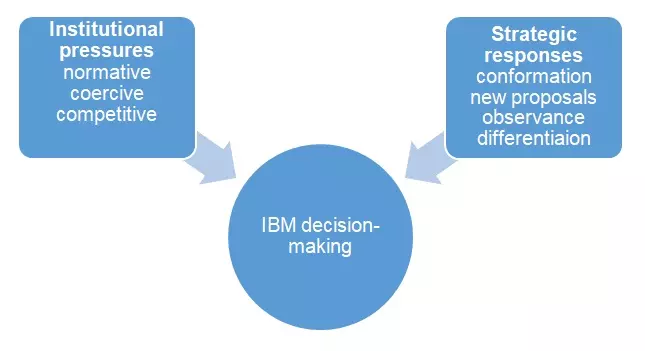
International Business Machines Corporation (IBM) is an American multinational corporation that operates in 170 countries globally and significantly impacts the market of technologies. Its central office is located in Armonk, New York; however, there are many departments in other strategically important regions. The corporation manufactures, designs, and sells hardware, middleware, software and provides diverse consulting services in the area of innovation and nanotechnologies. At the moment, it is one of the leaders in this market segment with annual revenue of about $62.753 B. The company is managed by the Board of Directors who accept all critical strategic decisions and are responsible for substantial growth. At the moment, Arvind Krishna is the chair and president of IBM who correctly realizes the peculiarities of the company and contributes to its further evolution. IBM’s strategic acquisition of Red Hat company with a total value of about $34 billion is taken as the background for Continue reading
Case Study: The Lego Group and Its Sacred Cows
The ability to adapt to the changing environment, customer demands, and market forces is vital to the success of a business. The mindset and practices that have propelled a company to success are not necessarily the ones that would help stay successful in the future. It is often advisable to discard the elements that drag the company down, even if they have been a part of it for half a century. These elements can be regarded as metaphorical sacred cows, which are expected to be exempt from any form of metaphorical animal cruelty. This irrational reverence can make a business go bankrupt before giving up on the familiar but obsolete practices. That exact fate almost befell LEGO, one of the most recognizable toy manufacturers in the world. Only through cutting the unnecessary ideas and changing the litigious mindset could the company save itself from the brink of ruin. Case Background Continue reading
Case Study: Analysis of Walt Disney’s Acquisition of Lucasfilm
Walt Disney Company is one of the leading mass-media and entertainment corporations with the central office in the Walt Disney Studios in Burbank, California. At the moment, it is considered the world’s largest media conglomerate that is focused on the production of movies, cartoons, and entertaining products such as theme parks that are popular among the population globally. It is an American company headed by its president, Robert Iger who is considered a successful CEO because of a number of effective solutions contributing to the development of the company and it’s becoming a leader in the selected market segment. The company also owns other famous franchises and studios such as 21st Century Fox which contributes to the generation of the competitive advantage and significant empowerment of the corporation. Decision The decision that is discussed in terms of this case is the purchase of Lucasfilm for $4 billion by Disney. The Continue reading
Case Study: Fiat Automobiles Survival From Turbulent Times
Fiat is a manufacturer and a seller of the common Fiat brand vehicles based in Italy and with many sales branches around the world. It has been successful for many years in the production of its vehicles and has made a lot of returns from that. However, the company has faced a lot of challenges, especially the effects of the global financial crisis, factors that have caused it to undergo a recession and a great fall in its business resulting to very low returns. On the other hand, the company has undergone a lot of pressure from its competitors in Italy and also other car manufacturers from prominent countries like Germany and Japan and this has resulted to a lowered competitive advantage. All these factors have contributed to what has been referred in the vehicle business world as the fall of Fiat. In addition, the company suffered a lot of Continue reading
SWOT Analysis of Mattel

Mattel was started in 1945 by Harold Mattson and Eliot Handler. The company was primarily focused on manufacturing doll-house furniture. Mattson eventually sold his ownership share to Handler and the company went on to manufacture a wide variety of toys. In addition to manufacturing toys, Mattel decided to sponsor the Walt Disney Mickey Mouse Club in 1955, which was a pioneering and very successful marketing step which provided direct access to millions of young potential customers. The famous Barbie (named after Eliot Handler’s daughter) was brought to market in 1959 and the company went public in 1960. After going public, gross sales increased to $75 million and the famous Hot Wheels line was launched in 1968. Over the next 20 years, there was a series of management and changes in strategy — the Handlers were forcibly removed from management in 1074 and the company proceeded to acquire non-toy business, such Continue reading