Culture shock is a form of homesickness felt when a person moves into a foreign country or society that has a markedly different culture from his own. These differences are normally in the form of language, climate, social norms, sanitation, food, climate, and so on. Culture shock causes a difficulty in adjusting into the new culture characterized by nostalgia, loneliness, depression, mental fatigue, confusion as to how to proceed with work, boredom, and a lack of enthusiasm. In extreme instances, culture shock may lead to physical discomfort, withdrawal from social activities, eating disorders, stereotyping of and hostility towards locals, and irritability. Behavioral scientists have shown that culture shock occurs in various stages, each stage characterized by a set of symptoms mentioned above. The first stage is known as ‘honeymoon’ phase, followed by negotiation phase, then adjustment phase and finally the mastery phase. Today, the number of corporations with operations in various regions Continue reading
International Business Basics
4 Important Types of Intellectual Property Rights
The process of inventing or discovering the innovative and rather unique product and the focus on launching it in the future can guarantee the success of a company or a person within the market. Nevertheless, there are a lot of associated challenges. Thus, the unique idea or design can be stolen or copied. Moreover, the inventor or creator does not receive the recognition and benefits, if the product and idea are not protected with references to the intellectual properties laws. Intellectual property is one of the most controversial legal and ethical fields of management. It is the dynamic and developing area of the modern law which covers all the creations of the human mind. From this point, intellectual property can be defined as the specific concept which is used to speak about inventions, literary pieces, artistic and music works, designs, photographs, slogans, names, and symbols. The above-mentioned pieces and objects are Continue reading
Grounds for Refusal of Trademark Registration
A trademark, is a unique symbol or sign that can be used by a person or an organization to uniquely identify its services and products. Trademarks should be unique and should not replicate any other existing trademark. A registered trademark is that trademark which has been registered with the appropriate trademark office in a particular jurisdiction. It is not a legal obligation for a trademark to be registered. Some of the trademarks are not registered with the appropriate legal office. Registering a trademark has some advantages. They include a notification to the general public about the right of ownership of the trademark, exclusive rights to the use of the mark and a legal conjecture of ownership nationally. Various countries and states have different legal frameworks and guidelines that determine to what extent a trademark is considered legally owned. Trademark infringement is considered a serious crime in most jurisdictions and the Continue reading
Difference between Trademark and Trade Secret?
A trademark is one of the most valuable components of a company’s functioning, which can provide it with a significant competitive advantage. Trademarks are a method of protecting symbols that are proprietary to a company. Hence, it consists in confidential information that describes the processes or things that characterize the organization. It can be a phrase, a slogan, a symbol, or a mixture of these aspects. To qualify for a trademark, the information must correspond to specific points. It must have commercial value for the company, must be known to a limited number of people, and fall under such documents as consent to conceal data for the persons by whom it is used. The 3M logo is an example of a trade mark. The red or black combination, the font, the fact the curves of the “3” lay tangent to the “M” are is something that is universally recognized by a Continue reading
Intellectual Property – Meaning and Definition
Intellectual property (IP) refers to the creations of the mind such as inventions, artistic and literary works, symbols, designs, names, and images that are used in commerce. IP is protected by law through patents, trademarks, and copyrights which enable people to earn recognition or derive financial gains from what they have created. By striking a balance between the interests of the inventors and the general public, the IP system aims to create an environment where creativity and innovation can flourish. Copyright is the term that is applied to describe the rights of the creators over their artistic and literary works. It covers items such as books, music, films, sculptures, computer programs, paintings, advertisements, maps, and technical drawings. The patent refers to the exclusive rights that are given to an invention. It gives the inventor the right to decide if their work can be used by others or not. Lastly, a Continue reading
Franchising – Definition, Types, Advantages and Disadvantages
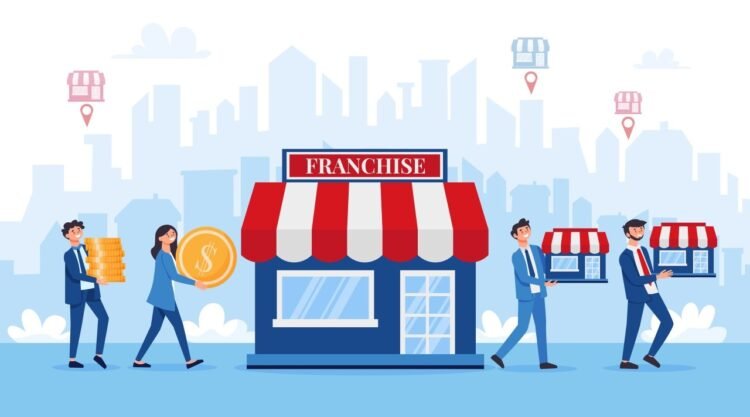
Meaning and Definitions of Franchising In a sense, franchising is very much similar to branching. Franchising is a system for selectively distributing goods or services through outlets owned by the retailer or dealer. Basically, a franchise is a patent or trademark license, entitling the holder to market particular products or services under a brand name or trademark according the different terms and conditions. The origins of franchising as it is now defined can be clearly traced to one man: Isaac Singer. After the US Civil War in the 1860s, Singer had achieved the ability to mass-produce his famous sewing machines, but had no economically viable way of repairing and maintaining them across a country as geographically vast as the US. He began to license out servicing and repairs to local merchants around the country, who were later permitted to become regional salesmen for the machines too. Singer’s use of a Continue reading