
An organizational culture entails the organization’s philosophy, expectations, experiences, and the values that guide member behavior and is expressed in member self-image, future expectations, interactions with the outside world, as well as inner workings. Culture is shared on written and unwritten rules that are not only developed over time but also considered valid, beliefs, customs, and attitudes. In an organization, culture also entails the organization’s language, habits, beliefs, symbols, vision, systems, norms, values, as well as assumptions. It basically means the manner in which things are done in an organization. The organization culture impacts the way in which people and groups interact, with clients, as well as with stakeholders and it further influences how much employees identify themselves with the organization. The foundation of organizational culture is the management but the culture can also be built by a leader. Culture is important in the success of the organization and thus Continue reading
Management Concepts
Management Control – Definition, Process, and Types
Controlling is one of the four main functions in management. It is important to managers in order to ensure all planning, organising and leading run as smoothly as desired. If managers are able to ensure that each plan made and every task given to the employees are carried out perfectly, and the results expected is what had been planned, control is not required. Unfortunately, managers are not able to ensure these conditions will run smoothly without the occurrence of any problems since most planning is done by humans and humans are known to be diverse in terms of abilities, motivation and others. In a rapidly changing business environment, not only the expected results must be controlled, planning must also be monitored and controlled. Definition of Management Control Management control is a systematic effort to fix or establish the standard of performance through planning objectives, designing information feedback systems, comparing true Continue reading
What are the Key Differences Between Leaders and Managers?
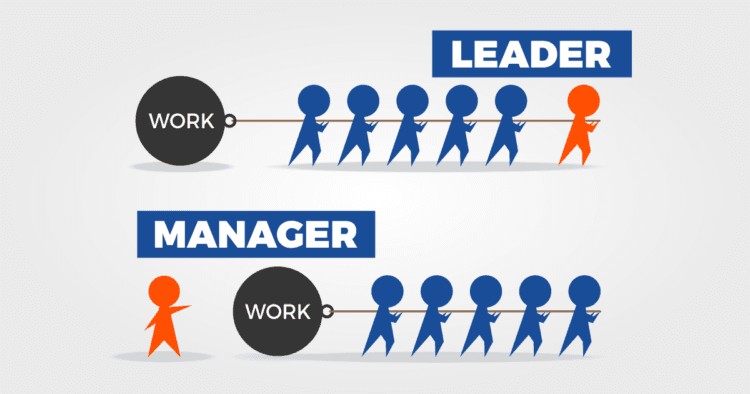
The difference between leader and manager can be summarized this way: “When you are a leader, you work from the heart. As a manager, you work from the head.” Although it is probably more complex than that, the point to remember is the difference between what you do as a leader and what you do as a manager-and the constant need to be able to do both. Furthermore, the head and heart need to be partners, not independent operators. Leaders are trailblazers, they set new routes for others to follow, and are essentially fearless and adventurous, whereas managers seek conformity with corporate ideals and procedures. Through management, the company seeks compliance with the work assigned to the workforce; initiates action for ensuring that the workforce conforms and complies with their duties and responsibilities towards the organization. Thus, manufacturing new products and entering new product markets would need leadership roles while Continue reading
What is Transformational Leadership?

In any organization, the focus is based on yielding high profits. The key to this lies in the leader, who in turn inspires the staff. Leadership in an organization is usually classified into different categories based on the style the leader uses. Different leadership styles are used to attain desired goals, but the secret to an organization that is effective in achieving its goals lies in the use of transformational leadership. A leader usually uses power and influence to exercise authority. In transformational leadership, however, the idea is to emphasize influence to manage the teams and bring them aboard to understand the leader’s vision. Transformational leadership can be defined as implementing new ideas through adopting a more flexible and universal method of influencing and continually ameliorating those around them. This type of leadership calls for the leader and the staff to improve one another’s motivation levels. Motivational leaders bravely work towards making Continue reading
Risk Matrix Approach to Risk Analysis

A risk matrix is defined as a table that is divided into several categories of probability, likelihood, or frequency for its rows, and multiple categories of severity, impact, or consequences for its columns. The constituents of risk ordinarily attest themselves as a hazard; which refers to the likely origin of a harmful outcome and harms; which are the ensuing damages to the environment. It incorporates generally accepted ratings of risk, urgency and priority, with every row-column pair. This is represented by distinct cells which are separately colored, using red, green and yellow colors. Each distinct cell has a different risk rating, for instance, cells colored in red will indicate risks that require an urgent attention, whereas those that are colored in green will indicate those risks that do not require to be dealt with urgently. The yellow colored cells indicate those risks that fall in between the ratings of very urgent and Continue reading
Benefits and Drawbacks of Scientific Management Theory
Management has changed from traditional methods to more modern forms of leadership. The change has been brought by the need to change and to try to make the organizations work better. Different approaches to organizational design can affect the company’s work differently, so the management style should be chosen individually for each case, depending on the organization’s goals. One of the options is scientific management, based on applying scientific theories and principles to design work in organizations. Since the early 20th century, scientific management has been at the forefront of organizational design. The design development was spearheaded by Frederick W. Taylor, who aimed to boost workplace productivity using scientific techniques. Scientific management has substantially influenced work design in contemporary companies, with its virtues and flaws under everyday discussion. The prediction of scientific management is based on the notion that efficiency in the workplace may be increased via scientific methodologies and Continue reading