The business environment today has become increasingly competitive. The aim of every organization is to expand its market and acquire new customers. The organization should ensure that it maintains the current customers as it acquires new customers. The more the customers the organization acquires the more the chances of making more sales, and at the same time making more profits and revenues. As a result, marketing has become increasingly important since it has the ability to give the organization a competitive advantage. There are many organizations that are striving to get a large share of the market. This has led to the emergence of acquisition marketing, a form of marketing whereby the organization aims at converting the non-existing or prospective customers into new customers. Definition of Acquisition Marketing The term acquisition can simply be defined as the action of taking over something and making it yours. In the corporate world, a Continue reading
Marketing Concepts
Understanding the Basic Concepts of Branding
Branding has emerged as one of the most important issues of modern world. In fact, it influences a multitude of spheres, including marketing, society, and even psychology. First, it is worth mentioning that nowadays creating a brand image has become of a paramount importance for the international market in general and for the major companies in specific. Secondly, branding influences the consumers as well: even though the brands are being designed and developed for people, this phenomenon also has a reverse process. For instance, while the brand products need buyers, the consumers need the products with a good brand image. The better the position of a certain brand in the international market, the greatest is the demand for it, and visa versa. Finally, brands are now proved to have a great impact on the psychology and subconsciousness of people. Thus, there is an evident interdependence of the two main components Continue reading
Ethical Aspects of Ambush Marketing Strategy

Marketing has been identified to be highly reinforced by advertising. Advertising creates awareness in the market as regards a specific brand. This has been there, ever since the inception of mass media and it has allowed businesses to communicate to a huge share of their target market cheaply. Of the more common methods of advertising is sponsorship, which is the creation or the support of one or more socio-cultural events by a business so as to take advantage of it as a communication platform. Over the years, this has been known to be successful and it has attracted other marketers who have devised ways of cashing in on events that they have nothing to do with. This has come to be recognized as ambush marketing, guerrilla marketing or parasite marketing. Marketers have struggled with the question of whether ambush marketing is an unethical trick or a justified professional tool. This Continue reading
Customer Involvement in New Product/Service Development
Organizations today are constantly facing increasing global competition in the marketplace that demands more frequent innovation of goods and services that are of a high quality. The challenge such organizations face is to be more customer focused, responsive to their needs and provide goods and services that are cost effective. This can be achieved by value delivery and creation where value delivery entails order fulfilment by ensuring the flow of materials, products and services through production and distribution while value creation entails new product or service development activities that identify the customer’s needs in the form of new products or services. The new product development process is a series of interdependent and often overlapping stages during which a new product or service is brought from the idea generation stage, business or technical assessment, product or service conceptualization, product engineering and design, to the readiness stage for production or manufacturing. As the Continue reading
Keller’s Brand Equity Model or Brand Resonance Model
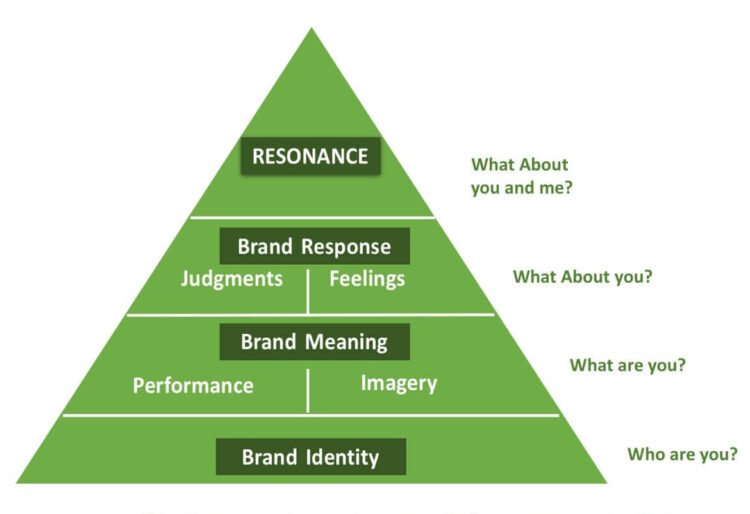
A brand is defined as a name, term, sign symbol (or a combination of these) that identifies the maker or seller of the product. In order for a brand to succeed in the ever increasing market, brand building activities such as promotion and advertisement must be conducted in order to gain awareness to establish and promote the company. Financially, Brand Equity is described as the total value of a brand which is a separable asset – when it is sold or included in a balance sheet. Kotler (2013) defines Brand Equity as the “differential effect that knowing the brand name has on customer response to the product or its marketing.” Aaker (1991) defines Brand Equity as, “a set of brand assets and liabilities linked to a brand, its name and symbol, that add to or subtract from the value provided by a product or service to a firm and/or that Continue reading
Market Segmentation – Definition, Process, and Forms
One of the core objectives of business organisations is to maximise their profit. Attainment of this goal is only possible if is firm has integrated customer-driven focus. Over the past 2 decades, firms have increasingly considered the concept of market segmentation as an important element in their marketing success. Market segmentation is defined as the process through which a firm partitions its market into small groups depending on the customers’ characteristics and needs. Firms intend to satisfy the consumer’s needs. Currently, adoption of mass marketing can lead into a firm failing. For example, a firm’s margin may be pushed downwards because some needs of a certain category of consumers are not wholly addressed. This may also give the competitor a winning margin. Market segmentation is based on the notion that a market is heterogeneous in nature. Therefore, it is possible for a firm to divide the market into small homogenous groups Continue reading