
About Walmart Wal-Mart Stores, Inc. is the largest retailer in the world, the world’s second-largest company and the nation’s largest nongovernmental employer. Wal-Mart Stores, Inc. operates retail stores in various retailing formats in all 50 states in the United States. The Company’s mass merchandising operations serve its customers primarily through the operation of three segments. The Wal-Mart Stores segment includes its discount stores, Supercenters, and Neighborhood Markets in the United States. The Sam’s club segment includes the warehouse membership clubs in the United States. The Company’s subsidiary, McLane Company, Inc. provides products and distribution services to retail industry and institutional foodservice customers. Wal-Mart serves customers and members more than 200 million times per week at more than 8,416 retail units under 53 different banners in 15 countries. With fiscal year 2010 sales of $405 billion, Wal-Mart employs more than 2.1 million associates worldwide. Nearly 75% of its stores are Continue reading
Management Case Studies
Management case studies are real-life examples of issues and problems found in particular workplaces or business organisations. Case study assignments give the opportunity to relate theoretical concepts to practical situations. Most case studies are written in such a way that the reader takes the place of the manager whose responsibility is to make decisions to help solve the problem. In almost all case studies, a decision must be made, although that decision might be to leave the situation as it is and do nothing.
Case Study of Nokia: Lessons from the Collapse of a Global Tech Leader
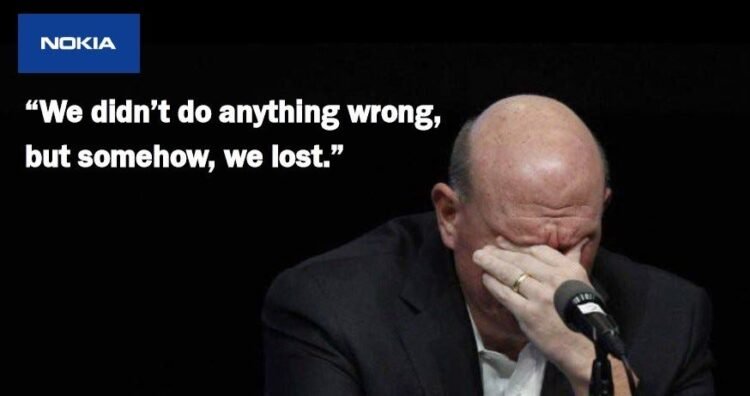
The company Nokia was established in 1865 and focused on the manufacture of paper; at the beginning of the 20th century, Nokia became a power industry company. Only at the end of the 20th century, the company’s core business became the development, production, and sales of mobile phones. The company experienced a peak in sales and popularity in the market at the end of the 1990s and in the 2000s but had to face a decline at the end of the 2000s. In 2013, the company sold its business to Microsoft. The main failure that led to the company’s decline was its inability to adapt to the demands of the market, i.e. provide products that would be efficient in the era of the mobile Internet. The company was not prepared for the emergence of new technology (smartphones) and failed to understand the consumers’ needs. The company’s investment in its operational Continue reading
Case Study: The Hewlett-Packard and Compaq Merger

The following is a brief description of the two companies: Hewlett-Packard (HP) It all began in the year 1938 when two electrical engineering graduates from Stanford University called William Hewlett and David Packard started their business in a garage in Palo Alto. In a year’s time, the partnership called Hewlett-Packard was made and by the year 1947, HP was incorporated. The company has been prospering ever since as its profits grew from five and half million dollars in 1951 to about 3 billion dollars in 1981. The pace of growth knew no bounds as HP’s net revenue went up to 42 billion dollars in 1997. Starting with manufacturing audio oscillators, the company made its first computer in the year 1966 and it was by 1972 that it introduced the concept of personal computing by a calculator first which was further advanced into a personal computer in the year 1980. The Continue reading
Case Study: FedEx Success Story

Federal Express was founded in 1971 as the “big idea” of charter airplane pilot Fred Smith. It launched its overnight air express business in 1973, and just 10 years later, it was the first U.S. company to top $1 billion in revenues in its first decade. Today, FedEx (its nickname, “FedEx,” officially became the company name in 2000) is the world’s largest express transportation company-almost 196,000 employees move more than 3 million items to more than 200 countries each business day, up from 110,000 workers and 2 million packages just five years ago! In 1990, FedEx became the first service company to win the Baldrige Award. Since then, the company has expanded its ground delivery business by purchasing both Parcel Direct (formerly a division of Quad/Graphics, now renamed FedEx SmartPost) and more than 1,100 Kinko’s locations (now FedEx Kinko’s Office and Print Centers) in 2004. The survival issue is prominent Continue reading
Case Study of Fedex: Using Marketing Channels to Create Value for Customers

FedEx as a service company that mainly focuses on transportation or shipment services, channel played an important role leading to success. FedEx need a good channel to get and reach more customers. FedEx has a strong network structure linking all the market together. FedEx serves more than 220 countries and territories currently. Further, these networks are linked up by land, air and ocean transportation. FedEx’s service covered all around the globe, making services available for customers from many countries and almost every place. FedEx has many drops off location around the globe. Customer can choose either one drop- off location that is nearest to them. FedEx has great air network, having more than 320 daily international flight and 654 aircraft ready to ship the packages. FedEx has many hubs around the world working as a midpoint of delivering the packages. There are four hubs in Asia pacific. That is Shanghai, Continue reading
Case Study of PanAmSat: Recovering from a Satellite Failure

A Galaxy 4 satellite operated by PanAmSat, a subsidiary of Hughes Electronics, tilted away from the earth at 6:13 P.M. on May 19, 1998 and began to spin because of a computer failure and the subsequent failure of a backup computer. This unexpected problem disabled 80% to 90% of the pager services in the U.S. along with a number of credit card authorization networks, television transmissions, and other networked services. PanAmSat’s effects to realign the satellite failed, but it was able to restore service within a day by rerouting the traffic the satellite normally handled. Of the 17 satellites PanAmSat had in orbit at the time, one was a spare. The recovery plan included rerouting signals for paging, retail-store services, and other services though its Galaxy 3R satellite and rerouting television signals through its Galaxy 4 had occupied since its launch in 1993. Computer failure had transformed the Galaxy 4 Continue reading