
Pepsi was created by chemist named Caleb Bradham. He was inspired to experiment with various products and ingredients to create a suitable summer drink that became highly sought after way back in the summer of 1898. It was this summer inspiration that later evolved into what we now know as Pepsi Cola. The company was launched officially in the year 1902. The beginning of Pepsi Cola was in the back room of his pharmacy, but recognizing its potential, Caleb soon started bottling the product so that people all over can enjoy it. As the years passed, Caleb started franchising the bottling of the drink to different people in different locations. Soon Pepsi Cola was being sold in 24 states across the United States. When World War I broke out, the company went bankrupt and Caleb had to sell the trademark to a stock broker from North Carolina. But he too Continue reading
Management Case Studies
Management case studies are real-life examples of issues and problems found in particular workplaces or business organisations. Case study assignments give the opportunity to relate theoretical concepts to practical situations. Most case studies are written in such a way that the reader takes the place of the manager whose responsibility is to make decisions to help solve the problem. In almost all case studies, a decision must be made, although that decision might be to leave the situation as it is and do nothing.
Case Study on Apple’s Business Strategies

Apple was founded by Steve Jobs and Stephen Wozniak in 1976; Apple Computers revolutionized the personal computer industry. Apple Computers Inc is considered to be one of the innovators in the computer industry. It brought about different changes to the industry; these changes are still visible in the present. The company’s products were used as a basis by other computer company’s in designing the specifications and physical characteristics of their product. It also serves as a meter of how products are designed. The company offers various products for the different market it targets. The products made by the company offer something different. We can describe Apple’s business strategy in terms of product differentiation and strategic alliances. Product Differentiation Apple prides itself on its innovation. When reviewing the history of Apple, it is evident that this attitude permeated the company during its peaks of success. For instance, Apple pioneered Continue reading
Case Study on Apple: Understanding the Real Innovation Behind the iPhone
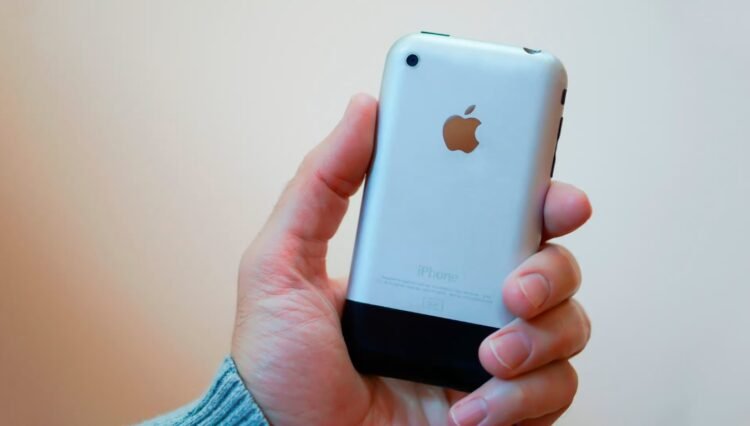
Innovation is a field of study that is simply just a new method, idea or device. However, it is also often regarded as the application of better answers that are meeting unarticulated needs, new requirements or any already existing market needs. Inside the information and communication technology sector, the mobile phone industry has become a very innovative segment. Technical advancements and new product proliferation have molded this industry into an extremely dynamic one. This has happened even after the market shares are extremely concentrated in the hands of a few giants in the industry. Innovation is the core of every successful product, organization or new venture. Apple Inc. is no exception to that. From their iPod to their Apple Newton to iPhone, Apple, Inc. from the beginning itself have provided the pomp and performance. The iPhone has transformed the mobile phone business completely, along with the internet economy and society Continue reading
Case Study of General Motors (GM): How a Lack of Innovation can Cause Business Failure
Innovation is the process whereby the management team of an organization is charged with the responsibility of introducing something new, which might be a new idea or a methodology or rather, a contrivance to facilitate the operational concerns and production. The Old General Motors failed with innovations in the company. These innovations were needed to ensure that the Old GM able remains competitive, and the company was able to manufacture cars that are in line with the client’s demands. This is related to the Old GM field of business to ensure that the organization do continue to produce the respective consumer centered product. The manufacturing industry such as the General Motors, innovation ensure that the output they deliver to the consumer do meet their needs, and expectations in a way that is realistic and makes their product to have a preference by the consumers against other same need satisfying product. Continue reading
Case Study of Mastercard: Going Upscale

Check, cash, or credit card? How many times have you heard that question and replied “credit card” without even thinking about it? When you do think about it, however, credit cards are a relatively new phenomenon. Yet when it comes time to pay, it seems we’re more likely to use the credit card (and to have several of them) than checks or cash. Indeed, some writers have even suggested that, in the not so distant future, we will all operate with “plastic money” all the time. MasterCard had its beginnings in 1966, when a group of banks joined together to form the Interbank Card Association (ICA). The ICA was founded by an association of banks rather than by a single dominant bank. Member committees ran the association by establishing rules for authorization, clearing, and settlement as well as marketing, security, and legal matters. In 1968, ICA went “global” by forming Continue reading
Tesco’s Steering Wheel: A Tool for Strategic Value Creation and Business Transformation

In early 90’s Tesco faced a stiff competition from various other retailers in the industry and thus its revenues showed a downfall. At that point Tesco could not differentiate itself from the other competitors. Later under the leadership of then CEO Ian Mac Laurin it went through an image makeover, and acquired other retailing outlets like William Low; with which it reached just up to the sustenance mark. Later Terry took over as the CEO of the Company and aimed to make the company value driven. Tesco in early 70’s had acquired a lot of other retailer companies but faced a problem of integrating them, more over Tesco stores were small and ill equipped. The company only focused on price where as the goods available at the stores were perceived to be of mediocre quality, but with rising income customers looked forward to expensive and luxury merchandise. Answering to this Continue reading