The concepts of leadership and management are an essential discussion in business. Each company or organization maintains people who are in charge and the approach they choose to take strongly depends on personality as well as education and training. The field of leadership research has offered competent theories to outline the dynamics of being in a position of power. As industry players expand and become more complex, company executives need to acquire critical skills and balance leadership styles with management approaches.
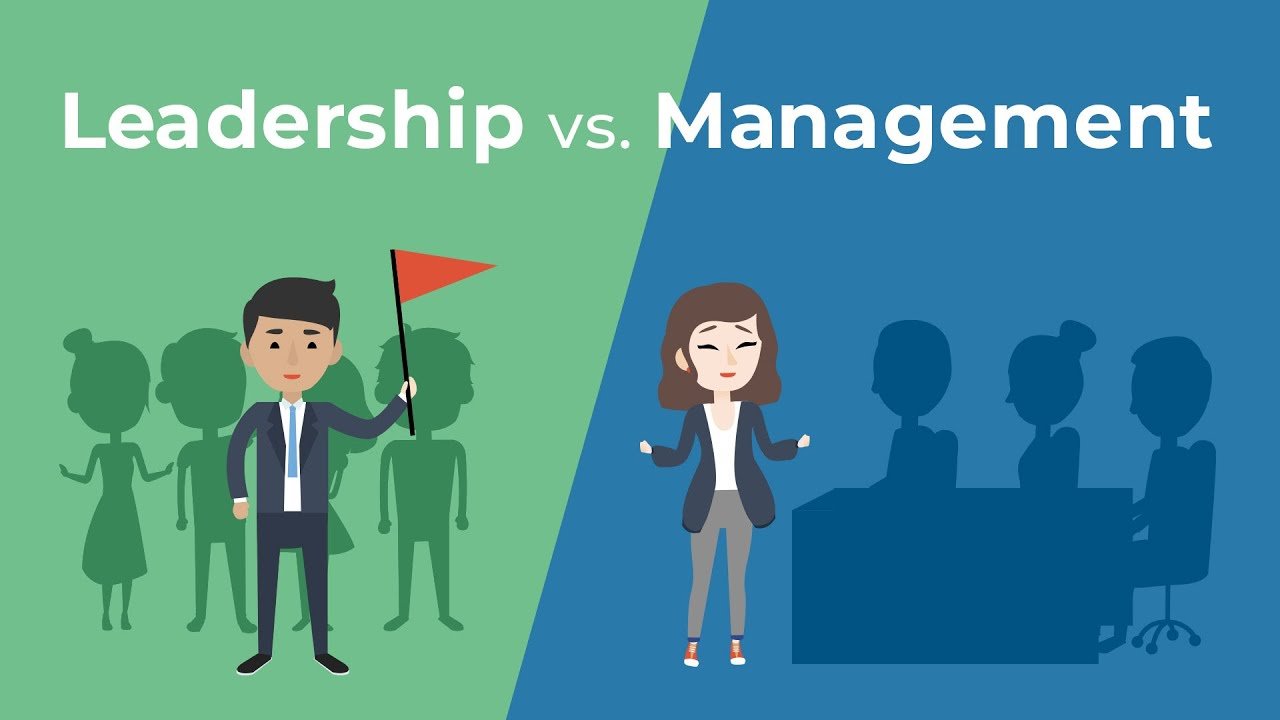
Leadership is necessary for any organization to achieve its mission and vision. It is a process when an individual influences peers to work towards and achieve common objectives or outcomes. The concept of leadership can be developed into a focused, dynamic, and cooperative performance system. Interaction through dialogue and discussion can lead to influence and changes in organizational structure, operational procedures, key performance indicators, and the feedback process. Essentially, leaders help to select a strategic direction for the purpose and function of any given group. That helps to establish a compelling vision that drives achievement, encourages and inspires staff, and helps to navigate arising challenges. Without the presence of clear leadership, the diversity of backgrounds and perspectives existing in any group of people leads to confrontation and disagreement which is inherently counterproductive. A leader can guide and unite varying approaches to work styles and problem-solving to harness productivity out of the joint effort.
Management is the process of oversight over a specific task from inception to execution. It is a tedious process of intricate planning, overseeing performance, and management of human, capital, and financial resources within the scope of the project and organization. Management implies discipline and competent adherence to performance goals. This includes creating, monitoring, and rewarding clear target objectives. Furthermore, managers must apply interpersonal skills to drive work ethic within subordinates. Management is utilized in a wide variety of sectors and industries; however, it is particularly crucial in the spheres of production and finances. An influential figure in the development of management practices, Peter Drucker, believed the essential purpose of management included a combination of marketing and innovation.
Significant theoretical and academic research on the topic was presented by John Kotter who created a framework for differentiating leadership and management. Kotter argued that management has a central role in creating order and security, while leadership is necessary to drive change and fluidity within an organization. Managers have to maintain consistency within set timetables, budgets, and agendas with a focus on organization, structure, and control which, in theory, should generate efficiency in productivity. Meanwhile, leadership thrives on overseeing adaptive change and strategic growth through team-building and communication that is meant to empower rather than control.
Leadership is an inherent component of management, providing the vision, guidance, and inspiration for others to achieve performance objectives. Management benefits of careful planning and execution remain mostly inefficient until workers seek to utilize them through the motivation driven by leadership. Despite a common misconception, many leaders are the foundation of an organizational pyramid rather than its top because they influence the company from the ground up. Managers help to administer function and structure within a company, overlooking activities and the overall mechanism of operations. Managers are common in the intermediary organizational levels, balancing management with execution.
The realities of the modern economy have created complexity and volatility within business operations. Technological innovations, competition, market irregularity, stock market dependence, demographic or political shifts, and rapid industry transitions are influential factors in the global economy. Leadership has become a demanded skill in various industries due to the ability to create change. To remain competitive, companies are forced to adapt and innovate at a relatively rapid rate in comparison to industries of the 20th century. Leadership can guide change since it is focused on driving forward a particular vision.
Meanwhile, management also has relevant applications within industries. Corporations and organizations are more complex than ever before, with extensive supply chains and international distribution networks. Management can help with maintaining control over the complexity and chaos by ensuring a mechanism of order and consistency which is tremendously valued by investors. Competent management addresses issues of quality control, budget planning, and product profitability. Managers can set objectives and create a list of steps and timetable that the target indicators can be achieved given the available resources.
In conclusion, leadership and management are conjoined although they are significantly differing concepts. This link is necessary and complementary by offering various approaches to operating a project or organization. It can be argued that attempting to separate these concepts would create critical issues in the modern economy where human capital is valued tremendously. During the industrial era, workers were mostly disposable and undifferentiated in the production process. However, current realities value expertise and experience which each employee can offer. Leadership is not an official job position while management remains a critical part of the organizational structure. Workers depend on managers for not only an oversight but to define their purpose. Therefore, managers must adopt the role of leaders to some extent and organize operations in a manner that not only optimizes efficiency but helps to guide, inspire, and develop professional competency in employees.
Mini Case Study: Management and Leadership Development Program at General Electric
The company General Electric (GE) was created in 1892. Currently, it is a global conglomerate of various unrelated businesses in a wide selection of industries. It participates in manufacturing, research, development, sales, energy, technology, and financial sectors. Its commercial finance, energy, and real estate divisions are one of the leading brands in the global economy. The company’s corporate culture for the last decades has emphasized and rewarded professional learning and development. Each employee not only answers to a direct supervisor but is monitored by an HR manager which can impact career progression. The HR manager identifies, recruits, trains, evaluates, and rewards employees who show promise.
HR tracks those seeking positions of leadership throughout their career. Competent candidates are recruited into one of many leadership programs that GE offers, lasting for approximately two years. They provide a distinct and varied education and experience. The programs use a rotational design that switches out candidates to different departments in the GE conglomerate to identify the best fit as well as provide valuable hands-on experience in addition to classroom education. It is meant to foster collaboration as well as a critical understanding of the company functioning like a well-oiled machine. If the program is completed successfully, it results in a basic supervisory position, and one enters the corporate management talent pool. With approximately 85,000 employees in that group, further evaluations, considerations, and higher-level training programs exist to identify the most competent and skillful leaders who go on to executive positions.
The two-year development program is known as Corporate Audit Staff (CAS) is critical for GE’s organizational culture and growth. It creates leaders which are aware of economic realities and work with a strong finance-focused and analytical approach. However, GE executives realized that it needed leaders with in-depth expertise but similar dedication to company values. This led to the creation of the Corporate Leadership Staff (CLS) which is meant to specifically nurture and train future executives for the company with financial, operational, and technical experiences. However, it results in the molding of high-potential talent into competent leaders.
CLS combines the most effective elements of CAS and other GE programs, emphasizing rotational approach, integration into real-world scenarios, and business organization. Since GE is a global company, and each geographic region has its intricacies, the rotational approach allows guiding candidates to acquire the skill set needed to function on their career path in the industry of choice. For example, China maintains a joint-venture market that is rarely used in other regions, requiring a leader to have operational expertise in this field. The program’s core purpose is to build leaders based on market-specific capabilities, ensuring the success of candidates that can finish.
General Electric is known as a corporation that has tremendously improved the process of identifying and developing leadership and managerial talent. Having GE leadership experience, especially one of its grueling manager programs is valuable in any industry. GE is an outlier as the company has generated one of the largest numbers of top executives in the last decades which went on to lead various Fortune 500 companies and often increased their performance and valuations which serves as a testament to the effectiveness of training.
GE utilizes what is known as leadership succession planning which is a strategic decision that is meant to protect the company and ensure stability in critical situations. Economic competition and global influences create a lot of pressure on large corporations to find executive leaders that are innovative, adaptive, and can push the organization ahead. The standard for the industry is the board of directors voting upon a CEO, usually someone already close to the top. A change of the CEO can be a turbulent time for any company, creating pressure from investors or a lack of clear strategy. CEOs usually step down due to poor performance or a crisis, which leaves a gap in company leadership even more detrimental, resulting in loss of stock value and other financial consequences. The CEO of GE Jack Welch (1981-2001) created a leadership succession initiative that took talented candidates from the aforementioned programs and prepared them for top executive positions include the CEO. It ensures that the organizational culture of GE is maintained, and the CEO comes from within its ranks, understanding all aspects of the company’s business and operations.
This process of leadership selection is unique because it ensures a seamless transition amongst executives. The past two CEOs at GE have built their career in the company. During the last shake-up in June of 2017, the announcement of CEO departure and a new chairman named occurred on the same day. Furthermore, almost six months were given to gradually transition the current CEO Flannery into his new role. It had a positive effect on the company as many felt inspired by the change and shareholders showed confidence as stock prices went up 3%. Such rapid transitions in large corporations are rare as boards and shareholders can take weeks to vet candidates and select ones with compatible visions. GE’s leadership programs allow cultivating a leader that the conglomerate needs with utmost dedication to its values and prosperity. In turn, this creates a tremendous advantage for the company regarding adaptability and versatility in the volatile conditions of the global economy.