Cybersecurity – Best Practices to Protect Business Organizations

In any organization, there are set duties, assignments and responsibilities to accomplish department goals, targeted objectives, and outcomes. Employees at every level within a business organization should take their responsibilities about Cybersecurity very seriously and be part of the organization Cybersecurity focus. Every department under the business structure should know what their part within the organization cybersecurity program. Every one, though matter what department they belong to should work as a team to meet and exceed the organization cybersecurity goals. Having a great cybersecurity program is the responsibility of management and it should be a part of every facet in all sectors of the business. In every organization with an IT department, the IT department is the regulator of the business cybersecurity program. They create the policy, in accordance with the business goals, mission, and objectives. They build, implement and monitor the organization cybersecurity program against the business set goals. Continue reading
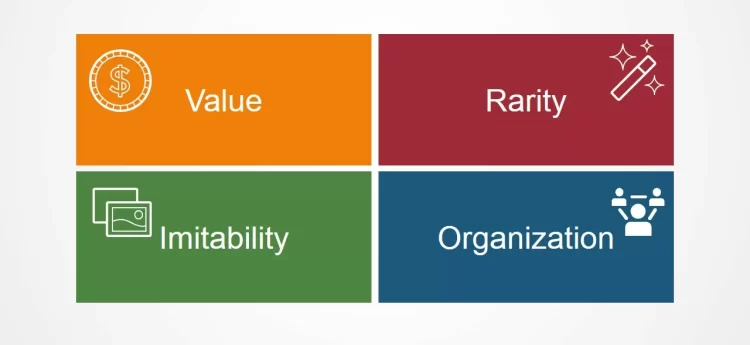
VRIO Analysis – Meaning, Components, Advantages, and Disadvantages

Resources and capabilities have been considered as one of the biggest factors that aids and assists the business entity in performing and executing the varied range of operations and functionalities. Moreover, the business corporation should utilize various mechanisms for stimulating the resources and capabilities of the enterprise. VRIO analysis will be proven very much beneficial for any business entity while analyzing the internal sources and capabilities of the enterprise. It has been noted down that Jay B Barney introduced the framework of VRIO in 1991. This tool was introduced in his work ‘Firm Resources and Sustained Competitive Advantage’. Valuable: Resources and capabilities minimize the impacts of threats and moreover, the stakeholders determine whether or not the resources are beneficial to the company or not. The resources are proven very much beneficial for the business in various areas, internally and externally and thus will assist in the firm’s development process. Rare: Continue reading

Stakeholder, Institutional, and Legitimacy Theories of Accounting

A theory is defined as a set of principles that form the underlying structure that can be referred to in a discipline of study. Accounting, being a human activity, considers such things as the behavior of people and their needs in regard to information that is financial in nature. It also considers why an organisation might choose to divulge or give information to a particular group of stakeholders. The theories of accounting date back to the early 1920’s when researchers were basically relying on observation. All through this period, there has been an attempt to prescribe how assets should be valued for the sake of external reporting, predict on what basis managers should be paid or motivated, predict the power of different stakeholders, and how the organisation aspires to be judged by the community. This article will discuss three accounting theories namely the stakeholder theory, legitimacy theory and institutional theory. Continue reading

Morale – Definition, Characteristics and Significance

Morale is the term usually applied to armed forces during wartime and to sports and athletic teams. It refers to team spirit and co-operation of people for a common purpose. Its importance has been realized by the management only in recent years. It is felt by the management that if the morale of the employees is high, production would be higher and vice-versa. Meaning and Definitions of Morale Morale represents the attitudes of individuals and groups in an organization towards their work environment. Morale is an indicator of the attitude of employees towards their jobs, superiors and their organizational environment. It is a collection of the employees attitude, feelings and sentiments. Various definitions of morale are; Flippo has described morale “as a mental condition or attitude of individuals and groups which determines their willingness to co-operate. Good morale is evidenced by employee enthusiasm, voluntary confirmation with regulations and orders, and Continue reading

Importance of Strategy in Business Environment

Environment is defined as something external to an individual or organization. From this angle, business environment refers to all external factors which will influence the activities of business. However, some experts have used the term “environment” in a broader sense. They defined business environment as external and internal factors that have direct or indirect influence on business or business activities. Business environment consists of all the factors that affect a company’s operations, actions and outcomes. It is comprised of macro environment and micro environment, the former includes legal and political environment, social environment, economic environment and technological environment, and the later includes customers, competitors, stakeholders, suppliers, banks and so on. Strategy is a action plan designed to achieve a particular goal. It is the direction and scope of an organization over the long-term: which achieves advantage for the organization through its configuration of resources within a changing environment, to meet Continue reading

History of Memory and Storage Systems

As we know the memory is a power to remember things. In psychology, memory is the process by which information is encoded, stored, and retrieved. But in computing, memory refers to the physical devices used to store programs or data on a temporary or permanent basis for use in a computer or other digital electronic device. Computer data storage, often called storage or memory. It is a core function and fundamental component of computers. A computer’s memory can be said as a list of cells into which numbers can be placed or read. Each cell has a numbered “address” and can store a single number. In almost all modern computers, each memory cell is set up to store binary numbers in groups of eight bits. A bit is the basic unit of information in computing and telecommunications. A bit can have only two values, either 1 or 0. Eight bits Continue reading