Case Study of Nokia: Lessons from the Collapse of a Global Tech Leader
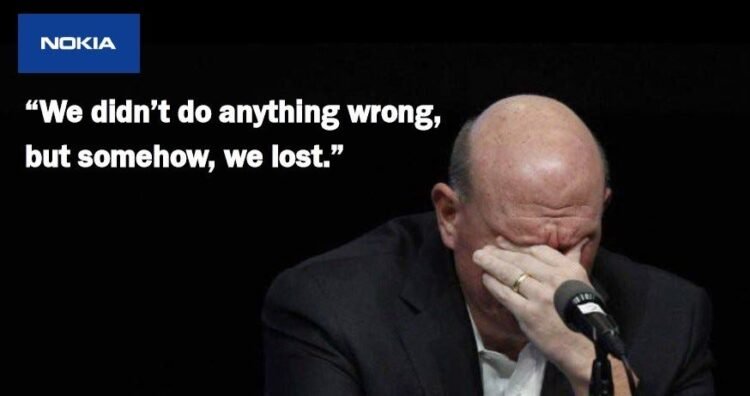
The company Nokia was established in 1865 and focused on the manufacture of paper; at the beginning of the 20th century, Nokia became a power industry company. Only at the end of the 20th century, the company’s core business became the development, production, and sales of mobile phones. The company experienced a peak in sales and popularity in the market at the end of the 1990s and in the 2000s but had to face a decline at the end of the 2000s. In 2013, the company sold its business to Microsoft. The main failure that led to the company’s decline was its inability to adapt to the demands of the market, i.e. provide products that would be efficient in the era of the mobile Internet. The company was not prepared for the emergence of new technology (smartphones) and failed to understand the consumers’ needs. The company’s investment in its operational Continue reading

Importance of Capital Investment Decisions

Investment decision otherwise known as capital budgeting decision is  perhaps the most important decision taken by a Finance Manager.  Whatever is the objective of the firm, whether profit maximization or  wealth maximization, capital budgeting decision affects performance of  the firm decisively. These investment decisions have the following  implications for the firm. They define the strategic focus and direction of the business. The capital  expenditure made in new investments may result in entry into new products,  services or new markets. Capital budgeting decisions require large funds and generally have long  repayment periods. The results of capital budgeting continue to impact the  finances of the firm for many years. Due to long project life, assessment  involves number of years of future events leading to difficulty and uncertainty  regarding the accuracy of assessment. Capital budgeting decisions are mostly irreversible. They involve investment in  plant and machinery or new soft wares or technology etc. Continue reading

Concepts of Minimum Wage, Fair Wage and Living Wage

According to economic theory, wages are defined broadly as any  economic compensation paid by the employer to his laborers under some  contract for the services rendered by them. In its actual sense which is prevalent  in the practice, wages are paid to workers which include basic wages and other  allowances which are linked with the wages like dearness allowances, etc.  Traditionally, in the absence of any bargaining power possessed by laborers,  they did not have any say in the determination of wages paid to them. In the Indian context, soon after the  independence, Government of India set up a Committee on Fair Wages in 1948  which has defined various concepts of wages which govern the wage structure in  the country specially in those sectors which can be termed as underpaid and  where workers do not have bargaining power through unions. These concepts  are: minimum wage, living wage, and fair wage. Continue reading

Audit Committee – Meaning, History, Roles, and Responsibilities

Corporate governance plays an important role in disciplining the management of the company like transparency in financial reporting and having robust internal controls. Enormous responsibilities like audit committee, duty of the auditors and induction of non-executive directors to act independently have been inflicted on the management of the company and any deviations will be viewed seriously and action against directors can be initiated by the compliance authorities. Audit committee, which is a group of directors who are not concerned with day-today management of the company but supervising how business is administered, conducted and reported. A committee of directors which is entrusted with the precise duty to evaluate the yearly financial reports of the business is known as the audit committee. An audit committee acts as a link between the board of directors and the auditor which includes the evaluation of the statutory audit report, the suggestion of the auditors, the Continue reading

Inventory Management Concepts in Supply Chain Management

Inventory management aims to handle all function correctly with tracking and management of material. Inventory management is very wide definition like to replenishment lead time, carrying costs of inventory, asset management, forecasting, valuation, visibility, future inventory cost, space, quality etc. The ultimate aim of supply chain management is how well you manage your inventory. Manufacturers face a number of challenges which require not just exceptional planning but also an effective communication setup that keeps you updated at the spur of a moment. From rapid changes of customer demands, globalization or even natural calamities can cause your inventory to be stuck up paving way for no wages to the employees. Therefore there should be a quick information system to discuss the inbound and outbound issues affecting the demand and supply. For this there should be a well managed supply chain inventory management in order to keep the business running without any Continue reading

Analysis of Problems in Management Case Studies

The case can be analysed from different points of view. Usually there are four parties involved in the case, viz., the proprietor or top management, the middle management departmental heads, the employees or workers and finally the society in general (it includes consumers, distributors, investors, potential employees and those who are directly or indirectly affected by the organization), which is mostly disguised. While analysing and suggesting solutions, the student should try to look at the case from these different points of view and try to pin point violation of rules, regulations, code of conduct or precedents in vogue. The solution to be suggested must be in the larger interests of safeguarding the provisions of laws, code of conduct, rules and regulations to restore the normal positron. The solution should be in the interests of the organization, the weaker sections of the organization and society in general. While analyzing the case, Continue reading