Case Study on Entrepreneurship: Mark Zuckerberg

Mark Zuckerberg was born on May 14, 1984, in White Plains, New York. He is arguably one of the most successful young entrepreneurs in the world. He is the current chairperson and Chief Executive Officer (CEO) of the social networking site Facebook. Zuckerberg has made a mark for himself on the global business arena as a strategic entrepreneur. Zuckerberg co-founded Facebook in 2004 with his five college friends at Harvard University. Although Mark did not finish his college education, he has managed to establish himself as one of the most influential people in the world. Statistics show that Facebook has reached more than one billion users. Through Facebook, Zuckerberg has made life better because keeping in touch with friends and family is much easier now. Zuckerberg is a world changer who identified a gap in society and provided people with an opportunity to have a better experience of life. In 2007, Continue reading

The Economic Significance of Brands as Marketing Resources

The contribution of trademark and the brand they signify to the economic growth can also be analysed in terms of a brand as a marketing resource. When used as a marketing tool, a brand bears some significance and is viewed in different angles by the marketers, who are also the owners. A brand is a trademark, symbol, design, a term, a name or a combination of all whose main intention is to identify the goods or service of a particular seller or a group of sellers and distinguish them from other goods. It attracts value termed as brand equity. Brand equity refers to indirect and the direct worth accumulated to the profit connected with the brand. The value of the brand is appreciated when the consumer gains the knowledge of the same through marketing efforts. Brand knowledge refers to feelings, descriptions, familiarity, discernment’s, and beliefs that are linked to the Continue reading

Major Theories of Mergers and Acquisitions

Nowadays, the business world is looking for continuous expansion to generate higher revenues and enhancing the quality of the production processes. Additionally, mergers and acquisitions contribute to the strengthening of the competences and stimulation of the core competitive advantage while facing the increasing and intense competition in the world. Nonetheless, the significant differences between mergers and acquisitions tend to exist due to the different nature of the phenomenon. The takeover and acquisition imply having control of the acquired firm’s equity by 50 %. In turn, the merger implies the creation of the new business unit. Despite having slightly dissimilar nature, the intentions remain the same, as they remain an essential instrument to stay competitive on the market. In turn, the concept of the synergy enhancement also has to be taking into account while improving the quality of acquisitions and justifying their importance. It is commonly known that one of the Continue reading

Case Study: How Boeing 787 Dominated the Aviation Market?

Boeing has been a primary manufacturer of the aerospace industry for more than 40 years. It was set up the first time in Seattle Washington in 1916 by William E. Boeing, and merged with Douglas Aircraft Company (owned by McDonnell Douglas) in 1997 and moved its  corporate headquarters from Seattle to Chicago, Illinois in 2001. The merger made the combined company a leadership in commercial aviation. Currently, Boeing has employees more than 170,000 people over 70 countries. Boeing operates in five segments: Commercial Airplanes, Boeing Military Aircraft, Network & Space Systems, Global Services & Support, and Boeing Capital Corporation. Not only producing airplanes, Boeing also works on producing components for spaceship and other significant products related to aircraft industry. Prior to the launching of 787 Dreamliner, Boeing had specialized with 767 and 747-400 models of air-crafts for its clientele. The decline in the market for Boeing 767 and 747-400 that Continue reading

Case Study: Carlos Slim’s Leadership Style and Personality Analysis

Carlo Slim was born in Mexico in 1940 by an immigrant parents from Lebanon. Since the tender age, Slim started receiving business lessons from his father on how to increase personal financial resources. His father started his business training with little capital, and taught him to increase the money from his own initiatives. The business training was developed in Slim’s spirit because of his aptitude for numbers. At the age of 12, Slim started buying shares and opened his first saving accounts at Banco Nacional de México. However, the efforts of his father ended because his father died when Slim was only 13 years old. To improve his educational skills, Carlo Slim proceeded his education by attending National Autonomous University of Mexico (UNAM) School of Engineering. While studying in the university, he was taught Algebra and Linear Programming, and at the age of 25 he had already laid foundation for Group Carso Continue reading

Trickle-Down Economics or Reaganomics

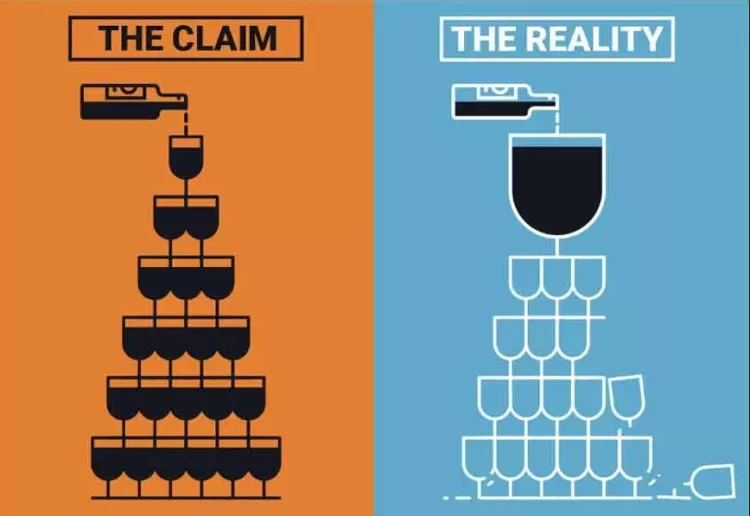
In economics and politics, the term trickle-down economics or Reaganomics is the pejorative term for the theory that taxing the wealthiest individuals in society less will in allow those individuals to invest more of their money into the economics development and create new jobs for the middle and lower class. Proponents for the theory use the term supply-side economy, considering that the idea of the middle to lower classes tangentially receiving benefits through economics policy which directly benefit the rich is somewhat insulting. The basic idea is that the recipients of the tax cuts will then be able to invest more money into infrastructure, opening more stores and companies, which will then provide more jobs as well as drive down the prices of goods. However, in terms of economic theory, there have been no major economists who have ever supported this theory or have attempted to defend the “trickle-down” aspect Continue reading