Integrating Balanced Scorecard (BSC) With Compensation Strategies

The Balanced Scorecard (BSC) is a tool utilized in corporations for the purpose of compensating workers in a way that is beneficial for both the management and the workforce. The Balanced Scorecard technique aids assessment of corporation performance in terms of monetary and non-monetary aspects. Connecting compensation to the Balanced Scorecard is useful because it acts as an equitable way of evaluating performance of companies by utilizing similar standards. The connection between company profitability and the amount of reward motivates employees to improve their performance. Realization of company’s goals is possible with the implementation of Balanced Scorecard and compensation. Usually, achievement of the goals and objectives of the company depends on the productivity of workers. Utilization of the Balanced Scorecard motivates workers to improve their performance and in turn achieve rewards. The linkage between the Balanced Scorecard and compensation operates well within the organization which possesses established quality programs. Assimilation Continue reading

Artificial Intelligence (AI) in the Workplace

Introduction to Artificial Intelligence A man is endowed with the ability to comprehend, respond, and perform. Creatures do not have the knowledge or responsiveness in this manner. Intelligence is characterized as the capacity to study, think, and find solutions. Artificial intelligence is defined as the execution of certain activities by a set of machines working together. Machine intelligence, as the name implies, is knowledge developed digitally when computers are programmed to act intelligently like people. Devices, if programmed with intellectual orders, would produce guaranteed results since they are effective. The nervous system might or may not be able to do so, depending on how the brain is functioning at the moment. In 1950, the word Artificial intelligence in 1950 was devised by John McCarthy who is frequently viewed as the initiator of AI skills because he was the primary person to discover the theory. It is the technique of programming Continue reading

Impact of Artificial Intelligence on Unemployment

Fast technological development and automatization have caused many changes in people’s lives. As soon as the industrial revolution impacted the manufacturing process, productivity skyrocketed, and corporations became major societal driving factors. However, a downside of the industrial revolution was the fast improvement of equipment that worked more efficiently, cheaply, and faster than any person could. From this perspective, the jobs that were previously executed by people were quickly replaced with machines. A similar concern correlates with the current technological development, namely artificial intelligence. Artificial intelligence (AI) is a machine’s ability to learn through certain algorithms, which creates an environment in which it can become fully autonomous and used in any industry while performing any task. There are multiple uses in which AI can be applied, including medicine, physics, the economy, and other essential areas of life. However, similarly to the development of automatization during the industrial revolution, AI may correlate Continue reading

Case Study of Amazon: Management Information Systems for Business Growth

Globalization can be credited for causing significant alterations in the way business is conducted and the increasingly competitive and constantly changing business environment. In many large corporations, it is not easy to detect strategic issues that confront business operations. It is also difficult to develop sustainable programs that steer organizational success. However, the advent of computers and information technology makes it easy to prepare strategic plans that facilitate the growth and success of companies. An ‘MIS’ is a strategic system that aids in collecting, analyzing, disseminating, and storing organizational data in the mode of information required to implement management functions. Management Information Systems (MIS) are concerned with planning for, development, management, and use of information technology tools to help people perform all tasks related to information processing and management. MIS aids in planning by offering the necessary information that assists in firm decision-making, especially in large organizations where the managers Continue reading

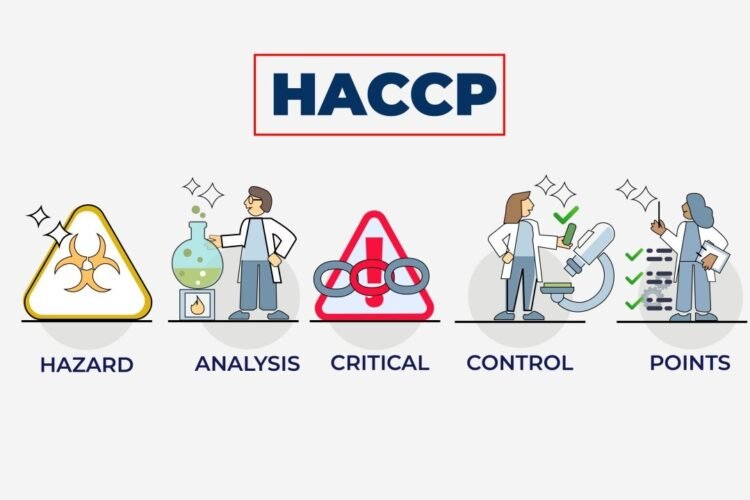
Hazard Analysis and Critical Control Points (HACCP) – Need, Principles and Implementation

Hazard Analysis and Critical Control Point (HACCP) aims at ensuring safety of products by using preventive means. The approach is used to ensure safety of foods, pharmaceutical products, chemical and biological products. The approach aims at using preventive means rather use inspection on finished products. In food industry, Hazard Analysis Critical Control Point is used to identity factors that can compromise health safety. After safety hazard are identified then preventive action, referred to as Critical Control Points, are taken in order to prevent any negative health effects. HACCP system has no specific stage where it is used but is used at all levels of food production and preparation. It is used in all stages including processing, packaging, storage and distribution. HACCP programs have been successful ensuring safety of foods and thus help in preventing possible health hazard. Mandatory HACCP programs for meat and juices in the country are acclaimed for Continue reading

360 Degree Feedback – Meaning, Process, Pros and Cons

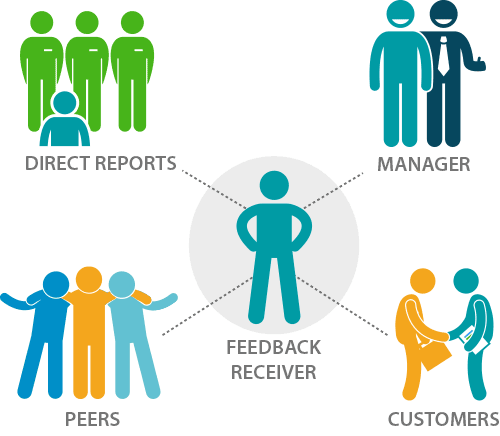
360 degree feedback is an assessment evaluation tool that is focused on employee job performance from a multisource perspective. It is also referred as a multisource assessment or a multi-rater feedback since it relies on information from various actors. Ideally a 360 degree feedback assessment is done by evaluating an employee job performance through a comprehensive investigation of their working relationship, from both an internal and external perspective. The idea is to generate an accurate assessment of an employee job skills, quality of work output and team work abilities that can be relied for employee assessment and job evaluation. The term “360 degree feedback” was introduced in the 1990-s as systematic collection of information on the results of an individual or a group obtained from the environment. It is intended to obtain an informative feedback from the manager, subordinates, peers and management.  In some cases there may be used a Continue reading