Deming’s System of Profound Knowledge – 14 Principles

William Edwards Deming (1900-1993) was a renowned American quality management consultant, professor, and statistician, and wrote several books on product quality and management and gave lectures on the same. He is attributed for helping to advancement in production in corporate America but his greatest achievements were in Japan. He made a major contribution to Japan’s a trade and industry development, and also the advancement of their high-quality products. Deming (1990) noted that “by adopting appropriate principles of management, organizations could increase quality and simultaneously reduce costs (by reducing waste, rework, staff attrition and litigation while increasing customer loyalty).” Deming recommended that organizations should focus on quality which leads to reduction of costs, instead of concentrating on costs that decrease the quality gradually. He mostly advocated for proper management as he argued that it was responsible for 85% of the problems that companies face. He argued that good management of an Continue reading

Case Study on Business Ethics: Apple and FoxConn Labor Scandal

Apple Inc. is devoted to creating the finest music and personal computing experience for every single one of its users, from students to educators, business professionals to government officials and other consumers by means of ground-breaking hardware, software, internet offerings, peripherals, and services. Apple’s business approach powers its distinctive ability, through the design and progression of its personal operating system, hardware, and countless technologies and software applications, to provide its customers the latest creations and simple solutions through outstanding innovative industrial design. Before being able to produce some of the finest computer products we have nowadays, Apple went through countless processes and hurdles. Apple was established in 1976 by two college dropouts, Steve Jobs and Steve Wozniak. Also part of the team was Ronald Wayne, who was older and had personal assets of his own. Wayne’s uncertainty of the company worried him about the risk of investing his assets, and resulted Continue reading

Machine Ethics – Overview, Developments, Issues and Future

History and Background of Machine Ethics Concept Machines are tools that make work easier by changing the direction of torque applied on a piece of workload. The general notion is that a machine is just a good size container with a system of gears and motors which are used for industrial purpose. The steam engine is a good indication of machines since its invention in the industrial revolution to power industries to different levels of output. However, the human race has been evolving thereafter and it is agreeable that the machines have also been evolving gradually hence the need to be au fait about the evolution to ensure we are at par. The definition of machines today has gone beyond the normal gearboxes we knew and has been taken to another level. The prominent machine invention or understanding of the twentieth century is the mathematical invention of the Turing machine. Continue reading

What is Private Label? Definition and Categories

Since 1960s, the retail market of the grocery industry in the Europe and the U.S. A. started experiencing the surge in distribution and concentration of private label products. Private label commenced in some grocery shops in the Europe and the U.S. A. Some retailers decided to sell their wares under their own brand names. The process gradually developed into complicated process. Retailer such as Wal-Mart begun to expand their range of brand names to develop into range of products with sub-niches. These involved developing their own products and test them on the market in the same way manufacturers do and later selling them under their own brand names or brand controlled by them. Products for the branding are obtained from manufacturers who supply them under a different brand name. This implies that the brand of the producer is discarded and the brand of retailer appreciated or emphasized. Whoever even if Continue reading

Assessing Triple Bottom Line (TBL) Progress Using KPIs

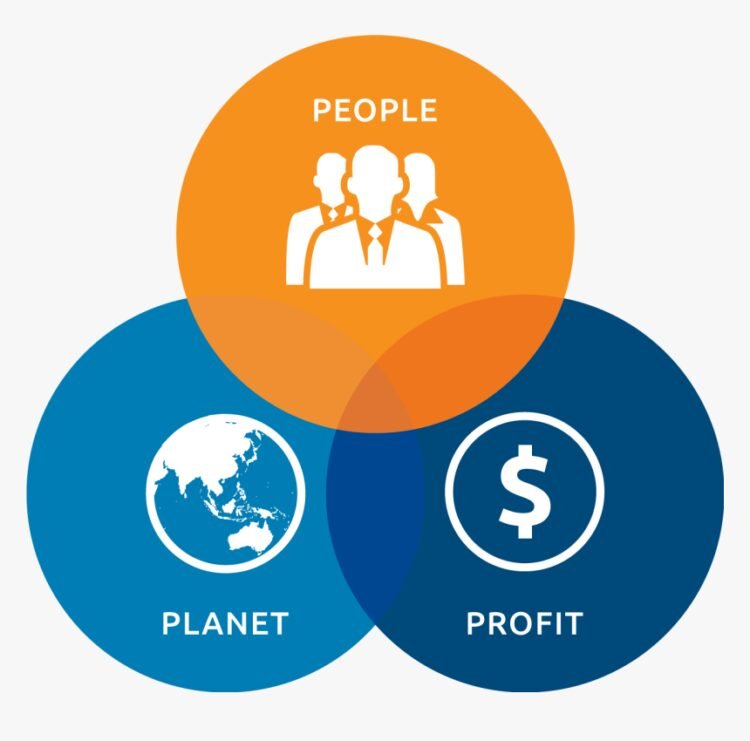
Every organization’s success depends on its ability to adopt decisions and execute essential procedures swiftly, effectively, and consistently, including introducing new strategies or projects. Implementation of new strategies, projects, or extending the definition and reaching of CSR is always associated with some risks and requires careful preparation and monitoring of the result. Key performance indicators (KPI) are the most suitable tool for assessing progress in achieving the specified Triple Bottom Line (TBL) objectives within corporate social responsibility (CSR). It would be best to start by asking a strategic question for each element of Triple Bottom Line (TBL). This is a powerful technique that helps both in developing a strategy and understanding the tools and criteria for monitoring its effectiveness. Strategic questions force one to think in a way that inspires movement and helps you find new approaches. It is imperative to implement TBL because many of the challenges that the Continue reading

Case Study on Business Ethics: Bernard Ebbers and the WorldCom Scandal

The question as to whether Bernard Ebbers, the co-founder and former chief executive officer of the WorldCom trial that led to his conviction for twenty-five years in federal prison was fair still remains unanswered and can only be proven by appraising his conduct and actions when he was the chief executive officer at WorldCom. Ebbers was charged with conspiracy, security fraud, and making false filings to the Securities and Exchange Commission. Several civil lawsuits were brought before Ebbers and other senior executives of WorldCom including the former chief financial officer Scott Sullivan but however dismissed after Ebbers and the other senior agreed to distribute over six billion dollars plus interest to stakeholders who had invested their money in the company stocks. Ebbers was also charged with the indictment of the state securities laws by defrauding investors of WorldCom on numerous occasions between the periods of January 2001 and March 2002. Ebbers Continue reading