Terms commonly used with reference to capital market

There are several terms which are commonly used with reference to capital market. Several such terms have already been discussed in the previous articles. Understanding of following terms (given in alphabetical order) will help the readers in better grasping the structure and trading system in the capital market in India : Arbitrage: Arbitrage refers to taking advantage of price differential in a particular security on to different stock exchanges. An investor/speculator can sell at one stock exchange and buy the same at lower price at other stock exchange. The difference in prices is the profit of the investor/speculator. Categories of Shares at BSE: At the Mumbai Stock Exchange, the shares have been categorised in different categories  such as A, B1, B2, S, T, TS and Z. Categories A , B1 and B2 depend upon the volume and turnover of different shares on the BSE. S group is called BSE Indonext, Continue reading

Television Advertising – Advertising Through Television Broadcast

Television is believed to be the most authoritative, ideal, influential and exciting medium for advertising, because of its ability to combine visual images, sound, motion and color. Television is not a homogenous medium and reaches a variety of audiences. It is a constant companion to some users, to others it is a source of news or occasional entertainment. It is a complex medium that occupies so much of audiences’ time and substantial amounts of advertising money. There is no strictly uniform method of buying TV time across countries. Television networks mainly function as suppliers of programmes to local stations. They sell commercial time to offset their costs of buying shows and pay a fee to stations to carry their programming. Buying Network Time Network television advertising is concentrated among few large advertising agencies and advertisers who spend huge sums of money. There are three basic elements to buying TV network Continue reading

Law of Substitution or Equi-Marginal Utility – Definition, Significance and Criticisms

The law of substitution is also known as the law of equi-marginal utility or the law of maximum satisfaction. This law was first developed by H.H Gossen. Therefore, this law is also known as second law of Gossen. Prof. Marshall has developed and given the present shape of this law. This law states that in order to get maximum satisfaction, a consumer should spend his limited income on different commodities in such a way that the last dollar spent on each commodity yield him equal marginal utility. The law of substitution  is also known as “The Law Of Maximum Satisfaction” because the consumer can maximize his/her satisfaction by spending income in accordance with this law. It is called “The Law Of Substitution” because the consumer will go on substituting one commodity with higher marginal utility for another commodity with lower marginal utility till the marginal utility of each commodity is Continue reading

Human Resource Development Systems

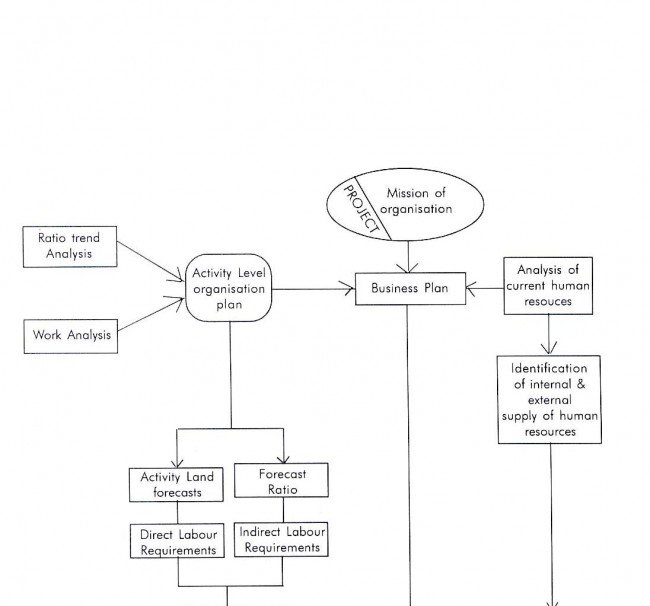
Ever since the organisations had been involved in some activity, the human being working there   as employees are continued to be considered as valued assets. This is the reason for relevance of   human resource management just like any other resource management. Organisational effectiveness and efficiency, growth of business, sustenance of competitive advantage can be attributed to   the development of an appropriate corporate culture within an organisation by integrating business and human resource strategies. HRD management emphasizes on optimum utilization of human resources by formulating consistent and coherent policies aimed at promoting commitment to the organisation. This commitment of employees yield optimum level of efficiency from them and unleash a wave of creativity in the midst of the working environment which is less compliant and most confident of the human resource. Traditionally, information systems for HRD had been   restricted to personnel management systems whose purview include recruitment, Continue reading

Securities Contracts (Regulation) Act, 1956

SECURITIES CONTRACTS (REGULATION) ACT, 1956 The Securities Contracts (Regulation) Act, 1956 [SC(R)A] was enacted to prevent undesirable transactions in securities by regulating the business of dealing therein and by providing for certain other matters connected therewith. This is the principal Act, which governs the trading of securities in India. The definitions of some of the important terms are given below: ‘Recognised Stock Exchange’ means a stock exchange, which is for the time being recognised by the Central Government under Section 4 of the SC(R)A. ‘Stock Exchange’ means — (a) any body of individuals, whether incorporated or not, constituted before corporatisation and demutualization under sections 4A and 4B, or (b) a body corporate incorporated under the Companies Act, 1956 (1 of 1956) whether under a scheme of corporatisation and demutualization or otherwise, for the purpose of assisting, regulating or controlling the business of buying, selling or dealing in securities. As per Continue reading

Case Study: Dell Social Business Strategy

Dell Inc. is one of world’ largest multinational technology corporation that manufactures sells and supports personal computer and other computer related. Dell was founded as PC’s Limited in 1984 by Michael Dell, with a start-up money totaling $1,000, when he was attending the University of Texas. Michael Dell started his business with a simple concept that selling computer systems directly to customer would be the best way to understand their needs and give them the most computing solutions. The first product of the company is a self-designed computer called Turbo PC which had lower prices than major brands. PC’s Limited was not a first company to do this but was the first to succeed, grossing $73 million in its first year trading. The company changed its name to Dell Computer Corporation in 1988. They tried to sell computer through stores in 1990 but was unsuccessful and they returned to sell Continue reading