Understanding Capability Maturity Model Integration (CMMI)

The Capability Maturity Model Integration (CMMI) is a popular framework for evaluating or appraising where an organization’s maturity ranks within a defined program. The CMMI could show where an organizational program is ad-hoc and unorganized as compared to a highly structured and repeatable program. The CMMI was originally developed by the Software Engineering Institute, a cohort of government groups, and industry experts. The CMMI was originally designed to have an application towards software engineering but was quickly generalized to other areas of program appraisal. In January of 2013, the CMMI Institute was formed at Carnegie Mellon to continue the research and dissemination of the framework. Practitioners should take notice that the CMMI is not a standard and does not provide detailed information about achieving the goals being measured. The framework was more designed to serve as a guideline to understanding current implementations and alternative mechanisms to implement maturity levels in Continue reading

The Factor of Authenticity in the Modern Business

Authenticity has been a popular trend for the past twenty years, and it continues to grow even larger encompassing new areas every year. Nowadays, almost any sphere in the economy has a niche which is devoted strictly to authentic products, which often imply being organic, chemical-free, and manufactured in accordance with ethical principles. This trend was initially started by so-called hipsters who often sold items which they believed to be unique in some way, such as customized jeans or retro sunglasses. Over time, this tendency was identified by market analysts and started being utilized by corporations, for example, Henkel, a German conglomerate, recently launched a brand called Authentic Beauty Concept. The fact that such large companies seek to exploit this idea shows that the authenticity concept is extremely powerful in society. Yet, at its core, authenticity is about people’s desire to discover and consume unique experiences which form their true Continue reading

Failure Modes and Effect Analysis (FMEA) – Operation, Advantages, and Disadvantages

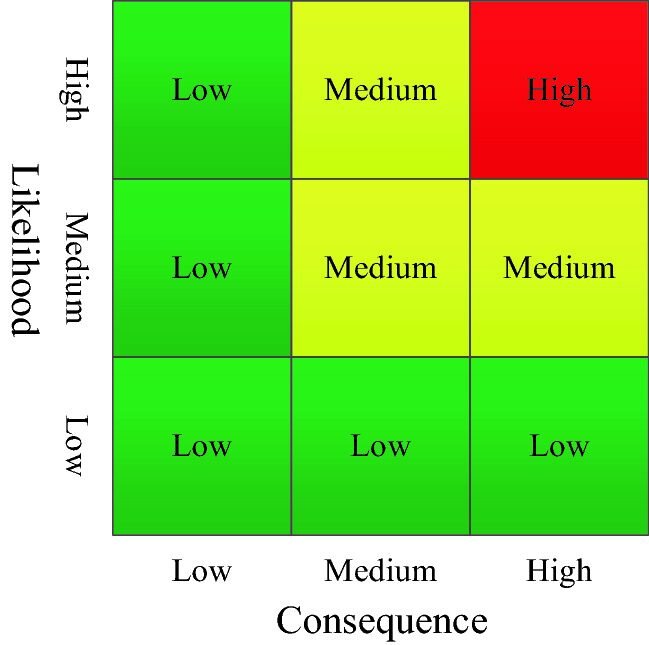
Risks are common occurrences that happen in the daily operations of an organization. They are uncertainties that occur as a result of certain activity and may result in loss of value or other immeasurable.  Organizations must have risk control measures to ensure that risk identification, analysis, and mitigation are carried out effectively. Organizations spend a substantial amount of their budgets in developing risk management strategies. There are different tools that organizations employ in risks reduction practices. For instance, Failure Mode and Effect Analysis (FMEA) is a part of the quality assessment tool that allows a company to detect possible failures. The Failure Mode and Effect Analysis (FMEA) is one underlying concept of continuous quality improvement.FMEA is an analytic activity carried out on a product, service or process in order to know its strengths and weaknesses, deal with a potential problem before it occurs and ensure that it meets the set Continue reading

Sharing Economy Concept – Meaning, Drivers, Principles, and Forms

“Sharing economy” is the term that entered scientific literature not so long ago that is why it is still rarely used. Being also known as ‘collaborative economy’, this term is used to describe a type of business model that builds on the sharing of resources between individuals through peer-2-peer services – allowing customers to access goods and services when needed. The transaction between individuals takes place through sharing economy firms, which are called intermediaries. The intermediaries provide the platform, such as a website or a smartphone app, rather than providing the service directly. Sharing economy firms started to appear in 2008 and 2010, in the aftermath of the global financial crisis, which prompted people to look for new business opportunities. As a business model, the sharing economy takes different forms and is characterized by unique features.  More and more people and organizations become involved in the sharing processes currently. The Continue reading

Case Study: Bossard Company’s Digital Transformation

Bossard is a hardware international conglomerate that specializes in the development of fastening technology and devices. It also uses a wide variety of smart and sensor technology to achieve a competitive advantage. It plans to utilize “smart factory” logistics and verge into various new sectors or initiatives where their innovative approach may be useful. Bossard Company’s Business Model Originally, Bossard was founded as a family-owned hardware store in Switzerland. It sold various small hardware and fastening products which consist of bolts, screws, rivets, and nuts. It then expanded to a regional, national, and international level in the $72 billion global fastening industry. It has continued to expand and experience profit with a 15% increase in sales year over year. It has over 70 service locations, 35 logistics centers, and 10 applications engineering laboratories. Bossard went from serving local individual consumers and regional businesses to cooperation with international industrial companies. It Continue reading

Case Study: Analysis of IBM’s Strategic Acquisition of Red Hat

International Business Machines Corporation (IBM) is an American multinational corporation that operates in 170 countries globally and significantly impacts the market of technologies. Its central office is located in Armonk, New York; however, there are many departments in other strategically important regions. The corporation manufactures, designs, and sells hardware, middleware, software and provides diverse consulting services in the area of innovation and nanotechnologies. At the moment, it is one of the leaders in this market segment with annual revenue of about $62.753 B. The company is managed by the Board of Directors who accept all critical strategic decisions and are responsible for substantial growth. At the moment, Arvind Krishna is the chair and president of IBM who correctly realizes the peculiarities of the company and contributes to its further evolution. IBM’s strategic acquisition of Red Hat company with a total value of about $34 billion is taken as the background for Continue reading