Customer Retention Strategies: How to Keep Your Clients Coming Back

Attracting new customers might be tough, but in reality, it’s only half the battle – you have to keep them. Cultivating brand loyalty is something that even multibillion-dollar corporations haven’t perfected; it’s definitely more of an art than a science. Regardless, there’s still plenty we know about what a business can do to promote customer loyalty.  How do you do it? Well, you could get an MBA online to figure it out in great depth and detail…but if you don’t have time for all that, you could just keep reading, and we’ll help you dip your toes into the basics. Know What They Want If you want to sell people something even once, let alone ongoing, you need to know what they want. Novelty counts for something, and sometimes products can grab some initial revenue, or even become trendy or fashionable just by virtue of scratching that itch for something Continue reading

Creativity and Innovation in Organizations

Creativity and Innovation are two very inter related concepts, however have subtle differences. Creativity can be understood as the ability to act or think in new or novel ways, while innovation and invention are two types of creativity. Innovation is the ability to implement creativity in something that already exists, while invention is the usage of creativity to make something new. Experts often Creativity and Innovation are two very inter related concepts consider creativity as a sort of ‘muse’ for the team or individual, or a source from which concepts or ideas emerge, possibly in an unpredictable or haphazard way. Creativity is often associated with three aspects, namely: problem solving, imagination and struggle. Imagination can involve aspects such as spontaneity, unconventionality, giftedness or intuition, while problem solving can involve intellect, organization and skills, and struggle implies that creativity can be a difficult process of extracting ideas through struggle. Creativity is Continue reading

Market Segmentation – Definition, Process, and Forms

One of the core objectives of business organisations is to maximise their profit. Attainment of this goal is only possible if is firm has integrated customer-driven focus. Over the past 2 decades, firms have increasingly considered the concept of market segmentation as an important element in their marketing success. Market segmentation is defined as the process through which a firm partitions its market into small groups depending on the customers’ characteristics and needs. Firms intend to satisfy the consumer’s needs. Currently, adoption of mass marketing can lead into a firm failing. For example, a firm’s margin may be pushed downwards because some needs of a certain category of consumers are not wholly addressed. This may also give the competitor a winning margin. Market segmentation is based on the notion that a market is heterogeneous in nature. Therefore, it is possible for a firm to divide the market into small homogenous groups Continue reading

Business Innovation – Unveiling the Innovation Radar

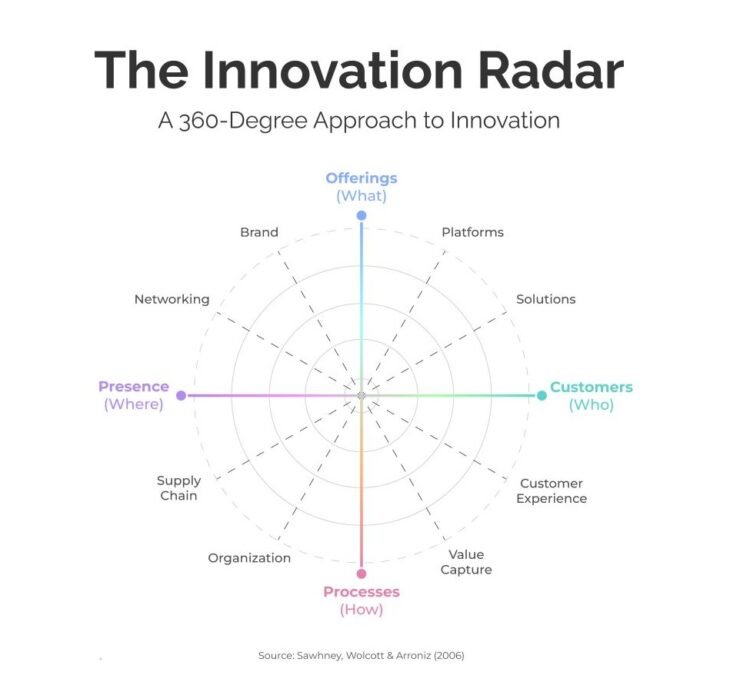
Business innovation has been defined as the building of substantial new value for customers and the organization by creatively changing one or multiple dimensions of the business system. This definition leads to three important characterizations of business innovation. Business innovation is all about new value and not something new: Innovation is relevant if it only is creating any value for the customers and simultaneously for the firm. Therefore, creation of anything new is neither important or enough for business innovation. Customers are the only ones who make sure of the importance of any innovation by contributing to it. There is no difference made by an organization’s thought process regarding it. What actually matters is if the customers will at all pay or not. Business innovation comes in different forms: Innovation can happen on any dimension inside a business system. As an instance, the Home Depot Inc., innovated by targeting those Continue reading

Social Innovation – Definition, Characteristics and Types

Social innovation is the new concepts, strategies and ideas that must meet the social needs of various elements that must be formed education, working condition and community development. Social innovation strengthens and extends civil society and it includes the social process of innovation. Social innovation is the complex methods of introducing the new products or services that can change basic resources, routines and authority of flows in which innovation can occur. Social innovation tries to provide a novel solution that must be effective, sustainable and efficient and this value would provide cure to the society rather than the single individual. Social innovation is the process of creating a new idea that can create a positive impact on the society. The concept of social innovation has emerged from the growing dissatisfaction from the technological emphasis in the innovation of economic area. Technological innovation focuses on main profit of the organization, whereas Continue reading

Mastering Online Marketing: Strategies for Business Success

In today’s fast-paced digital world, online marketing has become an essential tool for businesses looking to reach a broader audience, enhance their brand presence, and ultimately drive sales. With the right strategies, online marketing can transform a small startup into a thriving enterprise. This article will delve into key online marketing strategies that every business should consider, emphasizing the critical role of email marketing in this ecosystem. Additionally, we will highlight how reliable tools like Mailrelay can significantly enhance your marketing efforts. Understanding Online Marketing Online marketing, also referred to as digital marketing, includes all marketing activities that utilize electronic devices or the internet. Here are some fundamental online marketing strategies: 1. Search Engine Optimization (SEO) SEO, or Search Engine Optimization, is the process of enhancing your website to achieve higher rankings on search engine results pages (SERPs). This improves your website’s visibility and attracts more organic traffic. SEO involves Continue reading