Competitive Advantage of First Mover and Late Mover Strategies

Nowadays due to technology advancement, the way of how businesses were conducted has evolved to be more globally attributed and dependable to technological innovation aids. Furthermore, technology could help a firm to be sustained by having competitive advantage, and this especially true in the situation of where firm had the strong dependency towards technology innovation. Technology had becomes more important to specific firm or business when it has the ability to significantly affect their competitive advantage or industry structure. Thus, it is important for firms to choose and execute their strategy systematically to stay competitive and sustainable in the market. There are 3 ways of how first-mover could achieve their advantages. The first sources of how first-mover competitive advantage could be triggered are (i) technological leadership, (ii) preemption of assets, and (iii) buyer switching cost. Technological leadership will benefit first-mover in term of leadership in innovation, which ensure the sustainability Continue reading

What Makes Event Organizers Say Yes Before You Step on Stage As a Guest Speaker

When deciding on a guest speaker, event organizers begin their decision the moment your name crosses their desk. The selection process starts through email exchanges, proposal reviews and background research. Each interaction reveals whether the speaker will be an asset or liability for their event. First Impressions Small details matter more than most speakers realize. Event planners Google you, check your website, scroll through your LinkedIn, and watch any video samples they can find. A polished online presence tells them you take this seriously. Broken links and outdated headshots tell them something else entirely. The credibility gaps that sink speakers are surprisingly mundane. Missing contact information or testimonials from four years back, a speaking reel that requires three clicks and a password to access. Organizers won’t hunt to hear and see you speak, they will just email the next person on their list who made it easy to access their Continue reading

Top AI Tools for Automated Product Catalog Management: A 2026 Guide

Product catalog management has evolved dramatically with the rise of artificial intelligence. For ecommerce businesses handling thousands of SKUs, manual data entry and attribute management are no longer viable. Modern AI-powered tools can now automate product data enrichment, standardization, and optimization at enterprise scale. This guide examines the leading approaches to automated product catalog management in 2026, comparing methodologies, capabilities, and business impact. The Evolution of Product Catalog Management Traditional product catalog management relied heavily on manual processes: Manual attribute entry from supplier spreadsheets Copy-paste workflows across multiple systems Human quality checks for data consistency Reactive error correction after customer complaints Time-intensive enrichment processes bottlenecking launches These legacy approaches created operational bottlenecks, increased costs, and introduced quality inconsistencies that hurt both search rankings and customer experience. Core Capabilities of AI Catalog Management Tools Modern AI-powered catalog management platforms share several foundational capabilities: 1. Automated Attribute Extraction AI systems can intelligently Continue reading

Value Investing – Definition, Features, Rules, Approaches, Strategies, and Examples

Value investing as a philosophy of investing started its evolution at the beginning of the twentieth century when Benjamin Graham started teaching this investing strategy in Columbia Business School in 1927. Later, in 1934, one of his students, David Dodd, published Graham’s lectures as Security Analysis that is considered to be a bible for value investors. Today, any investor who is keeping to this strategy may be referred to as Graham-and-Dodd investor. This philosophy has one attractive advantage – one does not need to be a finance genius to become a successful value investor; all he needs is money to invest, patience and time and desire to read some books and do some accounting. It gained popularity because of success of one of its most famous followers, Warren Buffett, who once said about it: ” The investment shown by the discounted-flows-of-cash calculation to be the cheapest is the one that the investor Continue reading

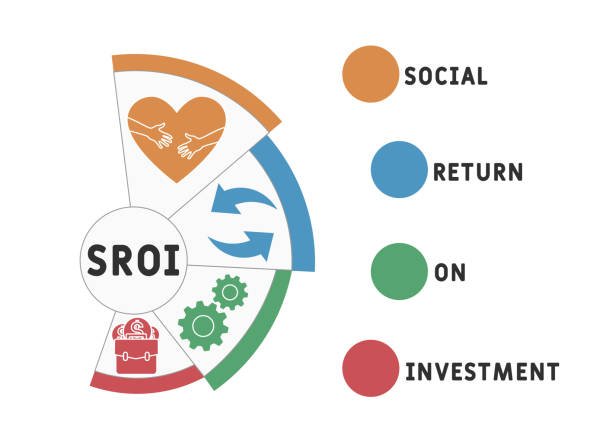
Social Return on Investment (SROI) – Definition, Benefits, and Challenges

The performance of corporation organizations is an essential piece of information for investors and stakeholders. Return on investment is one of the most applied tools to measure the performance of business organizations. It helps investors establish the profitability of a given investment regarding capital. Social return on investment (SROI) measures how an organization adds value to the environment and communities. The change is measured by evaluating the company’s social, economic, and environmental outcomes, which are also the pillars of sustainable development. Social return on investment is an ideal tool for measuring social impacts and should be employed in medium and large corporations. To achieve true sustainability, organizations report on three main aspects: financial gains, as well as social and environmental impacts of their activities, processes, and products. Over the years, financial reporting has been the most dominant way of measuring the performance of corporate organizations. However, with the rising concern Continue reading

Understanding Capability Maturity Model Integration (CMMI)

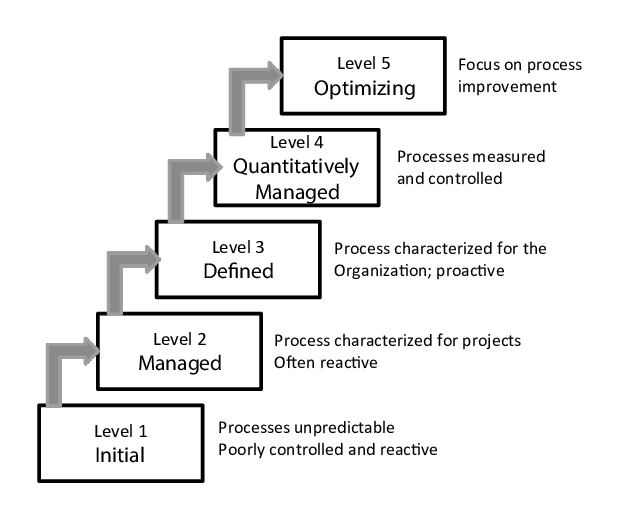
The Capability Maturity Model Integration (CMMI) is a popular framework for evaluating or appraising where an organization’s maturity ranks within a defined program. The CMMI could show where an organizational program is ad-hoc and unorganized as compared to a highly structured and repeatable program. The CMMI was originally developed by the Software Engineering Institute, a cohort of government groups, and industry experts. The CMMI was originally designed to have an application towards software engineering but was quickly generalized to other areas of program appraisal. In January of 2013, the CMMI Institute was formed at Carnegie Mellon to continue the research and dissemination of the framework. Practitioners should take notice that the CMMI is not a standard and does not provide detailed information about achieving the goals being measured. The framework was more designed to serve as a guideline to understanding current implementations and alternative mechanisms to implement maturity levels in Continue reading