The Great Depression – Facts, Causes, and Effects
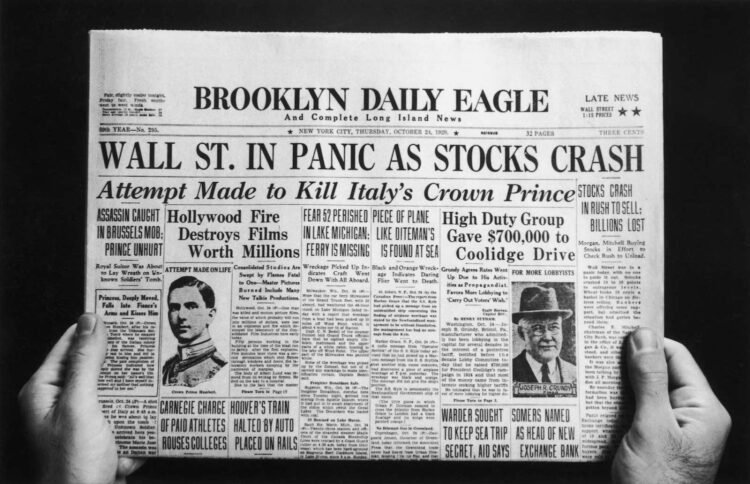
The Great Depression is a term denoting the economic crisis that emerged in the United States and some European countries. The crisis began in 1929 and continued until the end of the 1930s. The term “depression” is mostly used to refer to events solely in the U.S., where virtually entire American nation was particularly strongly affected by a depressive state in addition to the economic decline. The term “global economic crisis” is commonly used for other countries that have experienced the same events (UK, Germany, France, and other European countries to a lesser extent). Large industrial cities had suffered the most from the crisis, but rural areas were also affected. Crises in world history occur from time to time. However, according to the researchers, the Great Depression is one of the most prolonged crises in the history of the industrialized countries. It is considered that it started with the collapse Continue reading

Problems and Challenges Faced by Entrepreneurs

Today, with the internet boom, entrepreneurs have become one of the most dynamic forces in the economy. Entrepreneurs are now driving the technology boom, which is itself driving much of the world’s economic growth. This makes entrepreneurs very important from a macro-economic perspective. They have become a broader economic phenomenon that has a major impact on the economy. As the globalism of business becomes even more widespread, this impact will be felt even more deeply. Entrepreneurs are already becoming a major force in developing nations and in the economy worldwide. The scope of what entrepreneurship involves will continue to change and evolve as the world continues to change and evolve, and yet there are some common issues of how to start a business, how to finance the business, how to run the business that within this community we can share and learn from each other. While we still have many Continue reading

Project Production

Project production is characterized by complex sets of activities that must be performed in a particular order within the given period and within the estimated expenditure. Where output of a project is a product, such products are generally characterized by immobility during transformation. Operations of such products are carried out in “fixed position assembly type of layout” which can be observed in production of ships, locomotive and aircraft, construction of roads, buildings, etc. Characteristics of Project Production Definite beginning and definite end: Each project has a definite beginning and a definite end. “Fixed position” layout: Where the output of a project is a product, such products are generally characterized by immobility during transformation. Operations on such products are carried out in “fixed position assembly type of layout” which can be observed in production of ships, locomotive, aircraft, construction of roads/ buildings, etc. High cost overruns: Often delays take place in Continue reading

Working Capital Investment

Investment in working capital involves determination of the total quantum of current assets, the size of individual items of current assets and the operating cycle. These may be planned, adopting any of the following approaches, viz. industry norm approach, economic mode approach and strategic choice approach. Under the Industry norm approach the size and composition of current assets are determined according to the convention or norms adopted by die firms in the industry. For instance, 2 months production requirements of raw materials, 1 months production needs of work-in-process, 3 months sales of finished stock, 2 months credit to customers, etc. may be norms and you follow the norms. When this approach is adopted, automatically total volume arid component size of currents assets become proportional with level of activity. But this approach is not scientific. It is a rule of thumb. But we cannot say it is a wrong course. Under Continue reading

PESTEL analysis of Indian capital market

POLITICAL: The capital market of India is very vulnerable. India has been politically instable in the past but it is a little politically stable now-a-days.the political instability of the country has a very strong impact on the capital market. The share market of India changes as the political changes took place. The BSE Index, SENSEX goes up and down with any kind of small and big political news, like, if there is news that a particular political party has withdrawn its support from the ruling party, and then the capital market will go down with a bang. The capital market of India is too weak and is based on speculations. The political stability of the country is very important for the stability and growth of capital market in India. The political imbalance or balance of the country is the major factor in deciding the capital market of India. The political Continue reading

Wage Differentials – Types and Implications

If we take various contingent factors into account, we find that there may  be differences in wage and salary structures. These differentials may be  industrial and occupational, regional, organisational and personal. Industrial and Occupational Differentials :  Industrial and occupational differentials exist because of requirement of  different skill set and imbalance in demand and supply of personnel having such  skills. Wages and salaries are usually fixed on the basis of skills required to  perform a job. Thus, highly specialized jobs requiring higher level of skills are  linked with higher pay too. Coupled with this, shortage of supply of such  personnel also induces the payment of higher pay. Regional Differentials :  Apart from industrial arid occupational differentials,  there may be differences in wages and salaries region-wise also within the same  industry and occupation group. Such differences are visible in different  countries of the world as well as different regions within a country. Continue reading