Need for Business Code of Ethics There are many regulations and polices in place that set the minimum standards for ethical business behavior. Unfortunately, businesses still partake in unethical behaviors. Unethical behavior in a business can have many effects on the organization. Over the years, there have been several business scandals that have tarnished the credulity of their business. As a result of their unethical behavior, businesses have lost loyal customers and potential investors. Customers no longer trust the business and what they have to offer. It is important for companies to have an ethics program in place that will outline ethical business behaviors and their code of ethics. This will ultimately reduce and prevent unethical behaviors within a business. The employees have committed many unethical acts due to their lack of a code of ethics and an ethics program. They are unaware of what is expected of them so, Continue reading
Business Ethics
The Ethics of Sweatshops in Fashion Industry
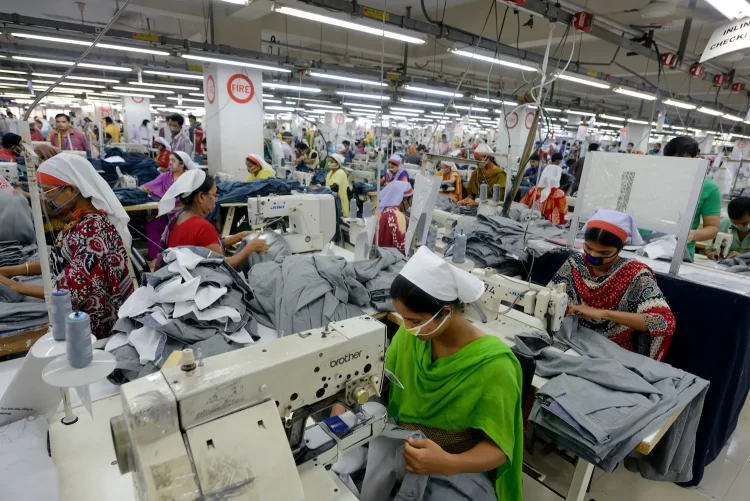
Although the fundamentals of sweat labours have changed since the 18th Century, it still has many similarities between the history and the present. In fashion industry, as the market desire and has developed into new forms, resulting in the use of sweat labours to continue. Sweatshop is a general description of the workplaces which paying poor salary, unsafe or unhealthful working environment, force to a longer working period or using child labour. The term sweatshop is not a new phenomenon but in fact a derivation from history. In 1997, Nike as one of the world largest sport garment company, was caught in a scandal of using sweatshop labour for its garment production in East South Asia. Paying unreasonable salaries, forcing labourers to overwork. As a result, for many years, this has become a label that has tagged on Nike’s logo. Such a worldwide company was soon to be boycotted by its Continue reading
Case Study on Business Ethics: Valeant Pharmaceuticals – The Pharmaceutical Enron

Brief History of the Company Strip away the outer covering of Valeant Pharmaceuticals and find a business enterprise that started its profit-making in the decade of the 1960s. One can argue that it started as an obscure organization focused on understanding the business side of the specialty chemical research enterprise. However, the company started to gain global attention at the turn of the 21st century when its corporate leaders initiated a series of mergers and acquisitions. In the present time, the said pharmaceutical company sells a variety of drugs, such as over the counter medication and prescription drugs. The company’s radical assent into the top of Wall Street’s list of the favorable company started in earnest when it hired Michael Pearson as the new CEO of Valeant Pharmaceuticals. He orchestrated a series of major mergers and acquisitions that required the use of billions of dollars in resource allocation to take control Continue reading
Case Study: History of British Petroleum and Deepwater Horizon Oil Spill

The history of British Petroleum (BP) is inextricably linked to innovative environmental projects aimed at changing the activities of the entire global industry. Back at the end of the 20th century, the corporation announced a program to transform the production of petroleum products in accordance with the principles of environmental protection. The campaign was called “More Than Oil” and implied the expansion of alternative energy production facilities, including the expansion of solar energy production. This policy cost the management team a large investment of over a hundred million dollars and, by the beginning of the 21st century, brought significant reputational benefits. British Petroleum became the most popular and respected supplier of petroleum products to various countries around the world. However, while actively expanding its oil fields, management encountered the first global problems, which served as the starting point for many environmental catastrophic events in the history of British Petroleum. In Continue reading
Case Study on Business Ethics: Olympus Corporation Financial Statement Fraud
Olympus is a Japanese company that specializes in medical imaging tools and photo/video cameras. Back in the 1980s, when the operating income of the company decreased due to the sharp appreciation of the yen, the Olympus executives started an aggressive financial assets management in order to shift losses off the company’s balance sheet. As a result, Olympus has managed to hide $1.7 billion of investment losses for more than a decade. The case of Olympus is the example of the financial statement fraud in which an employee intentionally causes a misstatement or omission of material information in the organization’s financial reports that eventually results in median loss of $1 million. To conceal the losses, the company has developed a tobashi scheme in which they booked the company’s assets at historical cost instead of fair market value. In 1997, the Japanese legislation was reformed, and since then all the assets should Continue reading
Case Study on Business Ethics: Examining Enron Corporation’s Business Failure
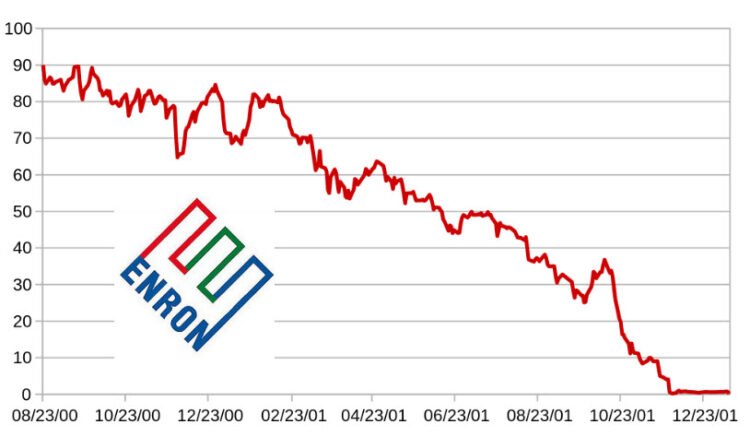
The case of Enron Corporation was one of the most vivid examples of accounting errors and unethical behavior followed by the company’s management. This case had a great impact on other companies and auditing and reporting standards and procedures. After the collapse of the energy company Enron in January 2002, financial statements seem a lot less hard and objective than they once did. Enron caused many problems occurred among equity shareholders, as a company with an equity market capitalization of over $70 billion became worthless in just over a year. The Enron fiasco focused attention on US accounting practices, and highlighted the relationship between companies and the accounting firms who as auditors were meant to confirm the accuracy of financial statements. For many years corporate governance experts had worried over potential conflicts of interest when accounting firms acted as both consultants and auditors to the same firm, but these conflicts Continue reading