
Acquisitions and mergers are organizational expansion frameworks that allow companies to gain control of more resources and grow their reach to diverse markets. An acquisition involves obtaining another organization’s shares or resources, and a merger refers to establishing an alliance with aligned goals while sustaining independence. Therefore, though creating a partnership and buying out other companies are effective growth strategies, they have different implications, target specific outcomes, require varying managerial approaches, and do not often succeed. For example, eBay’s acquisition of Skype in 2005 was one of the biggest business flops of the 21st century because they did not investigate the feasibility of their expansion strategy. Although eBay made a sound decision to purchase a fast-growing internet company, its initiatives did not yield fruits because it could not use Skype to enhance its business or facilitate efficiency. In the late 1995, Pierre Omidyar established “Auction Web”, as an online auction Continue reading
Business Strategies
Case Study: Starbucks Resilient Turnaround Under Howard Schultz in 2008

Founded in 1971 in Seattle, Starbucks had grown to become a respected global brand, present in 50 states in the US and 43 countries. However, its premium pricing was a considerable disadvantage during the economic slowdown. By March 2008, Starbucks had to close 600 underperforming stores, and its profit had plummeted by 28% compared to the same period in 2007. The following year saw another 300 store closures and 6,700 employees laid off. On January 8, 2008, Howard D. Schultz returned as CEO, taking over from Jim Donald. Schultz, who had been with Starbucks since 1982 and previously served as CEO from 1987 to 2000, found that rapid expansion had diverted the company’s focus from creating inviting cafes and developing new products. In 2007, several factors stood behind Starbucks’ decline, among which one might note a loss of human connection. Howard Schultz observed that the company steadily lost its connection Continue reading
Case Study: Alliance between Swatch and Mercedes Benz

The process of making Smart car started in 1994 after a deal was sealed between Daimler-Benz, maker of Mercedes-Benz and Swatch, Swiss watchmaker. A joint venture of the two companies created a firm known as Micro Compact Car AG whose headquarters were located in Biel, Switzerland. After announcing the deal, three co-directors were appointed to head the new company, which was later to be known simply as the ‘Smart’ after moving to Germany from Biel. The directors were engineer and designer Johan Tomforde and financial administrator Christopher Baubin from Daimler-Benz and swatch marketing manager Hans Jurg Schar. SMH (makers of the swatch watches) contributed 49% of the initial capital of 50 million Swiss francs while Daimler-Benz contributed the remaining 51%. The company comprised of two branches namely MCC GmbH based in a suburb of Stuttgart known as Renningen charged with the responsibility of designing the car. Hayek’s SMH Auto SA, was to Continue reading
Case Study of Mercedes Benz: The Role of Innovation in Organization Success

Mercedes is one of the companies that stood at the origins of the automotive industry, its name is no longer just a world-famous brand, but a real legend with a million-strong army of fans owning cars of this brand and an even wider audience of those who dream of it. Mercedes is the embodiment of German quality, reliability, and technical excellence, a symbol of high style, elegance, and respectability. Owning a Mercedes-Benz car demonstrates the status of a host who is not used to saving on himself and his safety. It is difficult to imagine such a person acquiring Mercedes spare parts on the market or in doubtful points. The manufacturer made sure that the original Mercedes auto parts were available to car owners wherever they live or wherever they are. Mercedes-Benz has been a classic in the automotive industry for more than a hundred years. The history of the Continue reading
General Issues of Balanced Scorecard (BSC) Implementation in Organizations
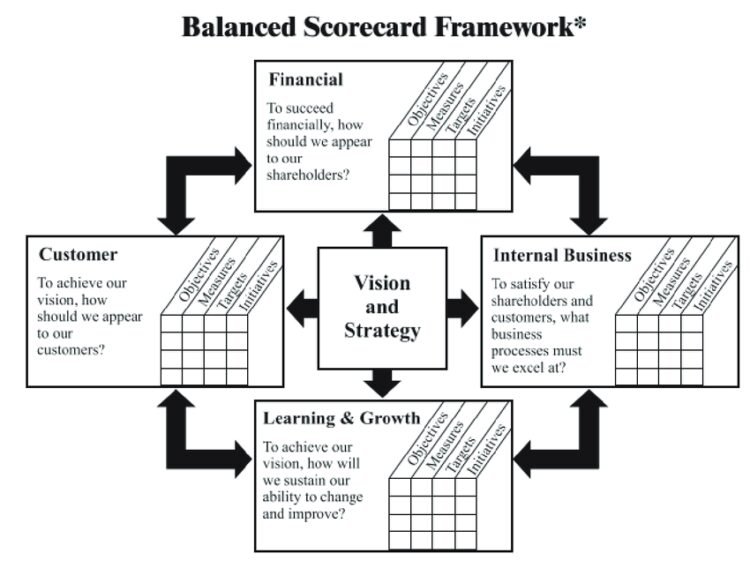
For modern organizations, it is essential to have methods for collecting data and making decisions based on the strategic objectives that lead to the achievement of competitive advantage. The balanced scorecard (BSC) represents strategic planning and management that companies use for communicating their intended accomplishments, aligning everyday procedures with the formulates strategy, monitoring progress, and prioritizing projects. In general, BSC is used for measuring and providing feedback to organizations, with data collection being crucial to the provision of quantitative results. This data is interpreted by managers and executives who make further decisions for an organization. The concept of Balanced Scorecard (BSC) was first introduced by Kaplan and Norton who received great praise for their research. The key principle behind the concept lies in finding balance across all functions of an organization since the majority of companies focus on financial measures such as growth and profitability, forgetting about such sectors as Continue reading
Business Level Strategy vs Corporate Level Strategy
Business level strategy is defined as an organizational strategy that seeks to determine how an organization should compete in each of its businesses. In contrast, corporate level strategy is an organizational strategy that seeks to determine what business a company should be or wants to be. At the heart of business level strategy is the role of competitive advantage. This is what sets a company apart from its competitors and gives it a distinct edge. Sustaining competitive advantage will be based on the interplay of the five forces in an industry. According to Porter (1990), these five forces are the threat of new entrants, the threat of substitutes, the bargaining power of buyers, the bargaining power of suppliers and rivalry among firms. By performing an industrial and internal analysis, a firm can then identify its competitive advantages so that it can pursue the right strategy. There are a few major Continue reading