
Data mining is the process of extracting patterns from data. Data mining is becoming an increasingly important tool to transform the data into information. It is commonly used in a wide range of profiling practices, such as marketing, surveillance, fraud detection and scientific discovery. Data mining can be applied on a variety of data types. Data types include structured data (relational), multimedia data, free text, and hypertext. Nowadays, text is the most common and convenient way for information exchange. This due to the fact that much of the world’s data is contained in text documents (newspaper articles, emails, literature, web pages, etc.). The importance of this way has led many researchers to find out suitable methods to analyze natural language texts to extract the important and useful information. In comparison with data stored in structured format (databases), texts stored in documents is unstructured and to deal with such data, a Continue reading
Information Technology
ERP System – Implementation Methodologies, Benefits, and Bottlenecks
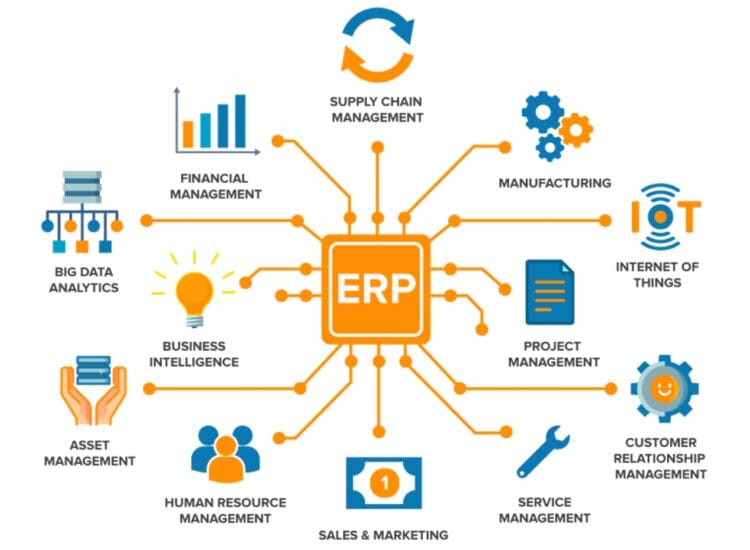
ERP system is an Industry term that denotes an Information technology solution use to integrate a broad set of activities and resources in an organization. An ERP system basically helps to shape and redefine businesses in the management of vital parts of its core business. The Structure and the information that is accrued from an ERP system facilitate optimal performance necessary for attaining organizational objectives. ERP is an acronym for Enterprise Resource Planning. The main feature of an ERP system is capacity to integrate businesses through application of modern technology and relevant business management practices. The integration of business processes with new information technology is critical towards success in the world of today. This integration has been transforming businesses to operate in modern information age. Necessarily to adapt to the new information age, organizations are forced to discard the traditional way of conducting business or managing organizational resources. Advancement of information technology Continue reading
An Introduction to Computer Forensics
Forensic auditing deals with an extensive range of analytical work that is performed by expert accountants. This line of work typically involves an examination of the financial affairs of a company and is frequently connected with scrutinizing fraudulent activity. Forensic auditing consists of the entire investigation process, including having the investigator serve as an expert witness in a trial. Forensic accountants are even qualified to look into situations that are not fraud-related. These might include the settling of fiscal issues of a business or disputes between insurance claims. The forensic investigation encompasses the necessary steps taken to collect evidence in a suspected fraud case. The forensic audit is comparable to a financial audit, where a planning stage, an evidence gathering phase, a review procedure, and a client report, are implemented. The auditor uses a variety of audit techniques to recognize and assemble evidence. The auditor may want to find proof Continue reading
An Introduction to E-Services
E-services are important in B2C e-commerce for managing customer relations and enhancing sales. Rapidly advancement of technology such as wireless, broadband, smart cards, data warehousing, data mining and agent technologies, are contribute toward the effective accessibility and servicing of the correctly targeted customers for business while providing more choices, options and ultimately power to customers in their transactions with business. Further e-service provides a new business paradigm for the organizations operating in the electronic environment. There are three primary reasons for firms to develop e-services. Firstly, margin, consumer acquisition and service costs are generally much lower in an online medium versus that in an offline medium. Secondly, e-service inexpensively and effectively delivers high-quality, timely and in-depth product information desired by consumers. E-services also provide consumers with benefits such as better price quality comparisons and customized search processes based on criteria of importance. Finally, the use of e-services enables firms to Continue reading
Concept of Systems Analysis in Business
Systems analysis has a broad definition depending on where it is being applied. Systems analysis can be defined as the procedure which entails breaking down into smaller ones for purposes of understanding and expedited execution. The whole part of a component can be the system in this case. Systems analysis in business language can be defined as a systematic inquiry conducted to assist someone or organization in identifying the best approach towards solving a problem which they ought not to have made on their individual capacity. It also involves specific way of performing a task and shedding more light through a systematic approach in a study of interacting entities. Several elements are studied to bring overall analysis of the whole subject. Systems analysis is used in most all fields where activities involved in developing new ideas are involved. Through this analysis, the effective and efficiency of a system can be Continue reading
The Difference Between Traditional File Systems and DBMS
Traditional File Systems File-based systems were an early attempt to computerize the manual filing system. File-based system is a collection of application programs that perform services for the end-users, such as updating, insertion, deletion adding new files to database etc. Each program defines and manages its data. When a computer user wants to store data electronically they must do so by placing data in files. Files are stored in specific locations on the hard disk (directories). The user can create new files to place data in, delete a file that contains data, rename the file, etc which is known as file management; a function provided by the Operating System (OS). Database Management System The improvement of the File-Based System (FBS) was the Database Management System (DBMS) which came up in the 60’s. (DBMS) consists of software that operates databases, providing storage, access, security, backup and other facilities. This system can Continue reading