
An organizational culture entails the organization’s philosophy, expectations, experiences, and the values that guide member behavior and is expressed in member self-image, future expectations, interactions with the outside world, as well as inner workings. Culture is shared on written and unwritten rules that are not only developed over time but also considered valid, beliefs, customs, and attitudes. In an organization, culture also entails the organization’s language, habits, beliefs, symbols, vision, systems, norms, values, as well as assumptions. It basically means the manner in which things are done in an organization. The organization culture impacts the way in which people and groups interact, with clients, as well as with stakeholders and it further influences how much employees identify themselves with the organization. The foundation of organizational culture is the management but the culture can also be built by a leader. Culture is important in the success of the organization and thus Continue reading
Leadership Development
What is Transformational Leadership?

In any organization, the focus is based on yielding high profits. The key to this lies in the leader, who in turn inspires the staff. Leadership in an organization is usually classified into different categories based on the style the leader uses. Different leadership styles are used to attain desired goals, but the secret to an organization that is effective in achieving its goals lies in the use of transformational leadership. A leader usually uses power and influence to exercise authority. In transformational leadership, however, the idea is to emphasize influence to manage the teams and bring them aboard to understand the leader’s vision. Transformational leadership can be defined as implementing new ideas through adopting a more flexible and universal method of influencing and continually ameliorating those around them. This type of leadership calls for the leader and the staff to improve one another’s motivation levels. Motivational leaders bravely work towards making Continue reading
Case Study: Carlos Slim’s Leadership Style and Personality Analysis
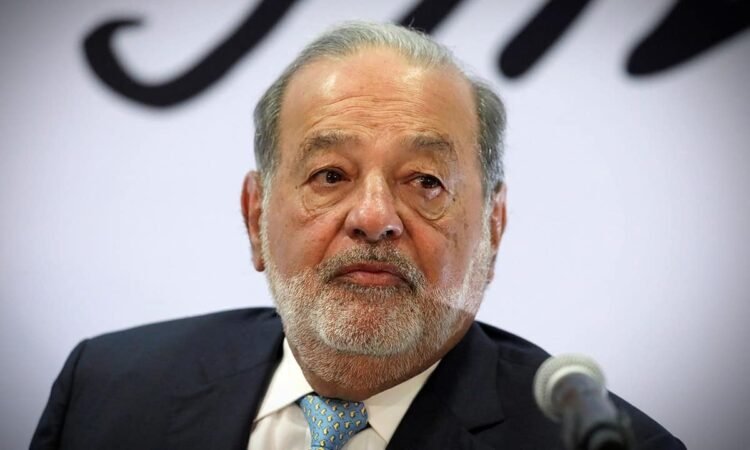
Carlo Slim was born in Mexico in 1940 by an immigrant parents from Lebanon. Since the tender age, Slim started receiving business lessons from his father on how to increase personal financial resources. His father started his business training with little capital, and taught him to increase the money from his own initiatives. The business training was developed in Slim’s spirit because of his aptitude for numbers. At the age of 12, Slim started buying shares and opened his first saving accounts at Banco Nacional de México. However, the efforts of his father ended because his father died when Slim was only 13 years old. To improve his educational skills, Carlo Slim proceeded his education by attending National Autonomous University of Mexico (UNAM) School of Engineering. While studying in the university, he was taught Algebra and Linear Programming, and at the age of 25 he had already laid foundation for Group Carso Continue reading
Should Management and Leadership Be Separated?
Achieving business victory calls for diverse individuals to handle diverse functions for organisational operations to be handled as planned. While some roles are easy to define, others may at times have confusing boundaries due to their vague nature. An example of a case where such confusion may arise is differentiating between a leader and a manager. Management and leadership have an imperative function in getting things done. However, both of them have varying aspects with respect to the role they play and their impact. This claim does not imply that one cannot play both roles simultaneously. It is possible for one to be a leader and a manager at the same time performing both roles. However, it is worth noting that being a great leader does not necessarily imply that such a person makes a phenomenal leader and vice versa. For this reason, it is paramount for people to get a clear Continue reading
Comparison Between Leadership and Management
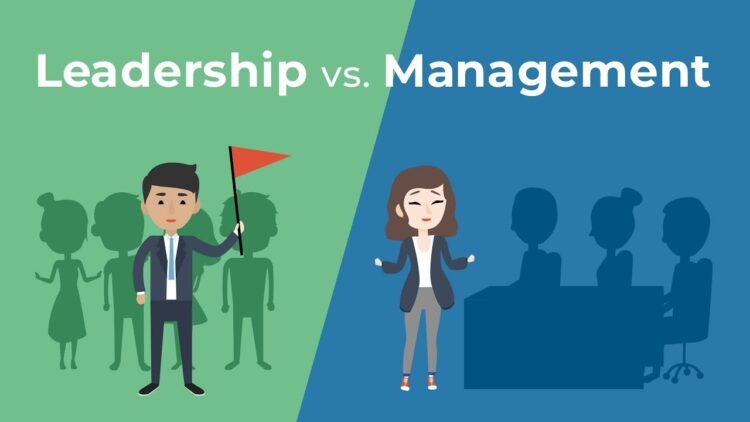
The concepts of leadership and management are an essential discussion in business. Each company or organization maintains people who are in charge and the approach they choose to take strongly depends on personality as well as education and training. The field of leadership research has offered competent theories to outline the dynamics of being in a position of power. As industry players expand and become more complex, company executives need to acquire critical skills and balance leadership styles with management approaches. Leadership is necessary for any organization to achieve its mission and vision. It is a process when an individual influences peers to work towards and achieve common objectives or outcomes. The concept of leadership can be developed into a focused, dynamic, and cooperative performance system. Interaction through dialogue and discussion can lead to influence and changes in organizational structure, operational procedures, key performance indicators, and the feedback process. Essentially, Continue reading
Relational Leadership Paradigm – Five Practices of Exemplary Leaders

Effective leadership is about creating reciprocal relationships between the leader and followers, subordinates, or constituents that in turn creates the foundation for organizational and group success. The Kouzes and Posner’s Five Practices of Exemplary Leadership Model has been noted for its contributions to the Relational Leadership paradigm. Kouzes and Posner (1987) conducted research in the area of “personal best” leadership experiences. They developed a “Personal-Best Leadership Experience” questionnaire, asked thousands of managers to complete the questionnaire, and conducted many follow-up interviews to gather additional information. The personal-best questionnaire asked managers to pick a project, program, or event that they characterized as their “personal-best” leadership experience. After analyzing the data collected from questionnaires and interviews, Kouzes and Posner found that despite the variety in situations and types of leadership experiences, similar patterns were identified related to actions taken by the leaders during the experience. Through the analysis process they identified “Five Continue reading