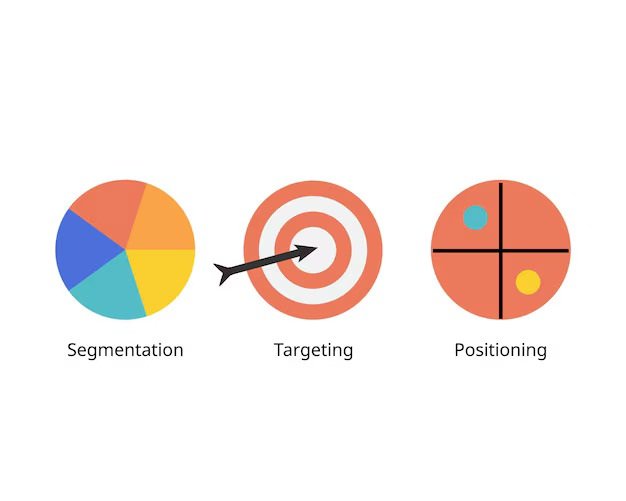
Segmentation, Targeting & Positioning (STP): Exploring the Concepts and Locating the Connections between Them Although often underrated by general audiences, the subject of marketing is very complex, and the strategies used by companies to promote their brand are quite intricate. Understanding the reasons for these approaches to have the tremendous positive effect by which they can currently be characterised is critical to the overall promotion of progress within the specified area. By deconstructing the essential elements of marketing in the contemporary economic environment, one will be able to delineate a common trend and suggest options for enhancing the existing marketing process. As a result, opportunities for improving the framework for catering to customers’ needs will be provided. The STP framework itself is rather basic and, therefore, quite simple to follow. As the title suggests, it consists of three key elements, specifically, Segmentation, Targeting, and Positioning. The decision to combine the Continue reading
Marketing Functions
Real-World Examples of Marketing Segmentation

While developing effective marketing strategies and plans, managers refer to segmenting the market in order to determine the areas in which the product or services will be proposed. The overall levels of segmentation include the mass market, the segments, niches, and individuals. The managers choose whether to compete within the mass market, the certain segment, the specific niche, or be oriented to individuals. When segments are selected, the managers focus on their characteristics and differences in order to address the chosen category directly. In their turn, the segments as groups of customers with specific needs and expectations in the market can be determined with the help of focusing on variables or differences of potential customers. The process of dividing the market into segments includes the focus on variables or characteristics of customers. Traditionally, the managers divide the market into segments while referring to such variables as behavioral, geographic, psychographic, and Continue reading
Understanding the Importance of Branding for Businesses
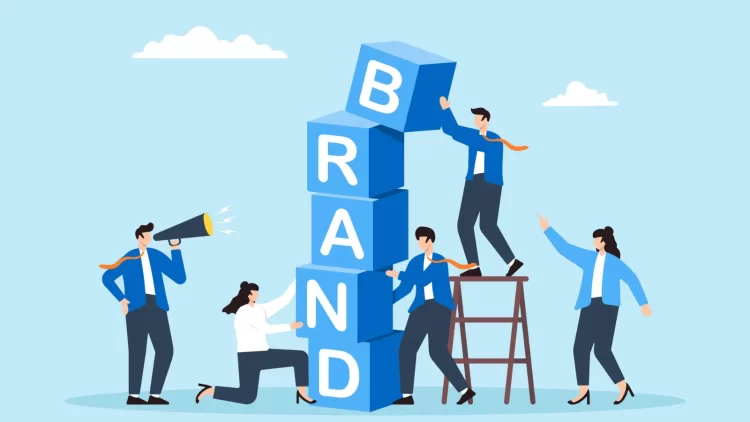
Branding is part of strategic management, and the primary responsibility of the brand is not merely communicating with customers, luring their attention, but representing the company. Nevertheless, for most firms, marketing and corporate communications are the most powerful, but not the only, branding tools. That is why, in order to achieve the greatest benefit for the company, the communicator must have a global vision of the brand, its essence, role, features. Branding may be perceived as an action aimed at creating a long-standing choice in favor of a product founded on the joint influence on a customer of trademarks, packaging, and advertisement, unified by a particular notion, which distinguishes the product from rivals. It should also be mentioned that the concepts of brand and trademark should not be confused; the former is a broader concept. In addition to the name, images, and certain symbols, the brand also includes the product Continue reading
The Economic Significance of Brands as Marketing Resources
The contribution of trademark and the brand they signify to the economic growth can also be analysed in terms of a brand as a marketing resource. When used as a marketing tool, a brand bears some significance and is viewed in different angles by the marketers, who are also the owners. A brand is a trademark, symbol, design, a term, a name or a combination of all whose main intention is to identify the goods or service of a particular seller or a group of sellers and distinguish them from other goods. It attracts value termed as brand equity. Brand equity refers to indirect and the direct worth accumulated to the profit connected with the brand. The value of the brand is appreciated when the consumer gains the knowledge of the same through marketing efforts. Brand knowledge refers to feelings, descriptions, familiarity, discernment’s, and beliefs that are linked to the Continue reading
Understanding the Basic Concepts of Branding
Branding has emerged as one of the most important issues of modern world. In fact, it influences a multitude of spheres, including marketing, society, and even psychology. First, it is worth mentioning that nowadays creating a brand image has become of a paramount importance for the international market in general and for the major companies in specific. Secondly, branding influences the consumers as well: even though the brands are being designed and developed for people, this phenomenon also has a reverse process. For instance, while the brand products need buyers, the consumers need the products with a good brand image. The better the position of a certain brand in the international market, the greatest is the demand for it, and visa versa. Finally, brands are now proved to have a great impact on the psychology and subconsciousness of people. Thus, there is an evident interdependence of the two main components Continue reading
Customer Involvement in New Product/Service Development
Organizations today are constantly facing increasing global competition in the marketplace that demands more frequent innovation of goods and services that are of a high quality. The challenge such organizations face is to be more customer focused, responsive to their needs and provide goods and services that are cost effective. This can be achieved by value delivery and creation where value delivery entails order fulfilment by ensuring the flow of materials, products and services through production and distribution while value creation entails new product or service development activities that identify the customer’s needs in the form of new products or services. The new product development process is a series of interdependent and often overlapping stages during which a new product or service is brought from the idea generation stage, business or technical assessment, product or service conceptualization, product engineering and design, to the readiness stage for production or manufacturing. As the Continue reading