World is changing very rapidly with every passing day. The things which people only dreamed about a few years back are appealing reality today. Companies, their functions and their operations have improved tens of times and this advancement is increasing with every passing day. Same happened with people. Their level of awareness towards products and behavior is now quite thoughtful and demanding. Today’s buyers have forced all the business to make necessary changes. They are very cautious and take a lot of time to make decisions and want everything to be quick and easy. Understanding customer satisfaction, product launches, effectiveness of pricing, product, distribution and promotion activities, countering competitors techniques, assessing market potential, and predicting consumer behavior etc. have become extremely challenging and is often a cause of the decline of an organization. To deal with such problems, organizations conduct Market Research. Market research is an evaluation system which helps Continue reading
Marketing Principles
Main Elements of Brand Equity
A brand might be a first image of the product or service to show out to public in the market. Branding is one of differentiation to the company, products or service in the market. Building brand successfully could bring several advantages to companies, such as enhanced the competitive position and reinforce the retailers power. Also can against defending power of company and extend the market share. A major part of building brand is building brand equity to a company. Brand equity is same to “brand valuation” or “brand value”. It is a value to the famous brand name, at the same time, it also have added-value to the brand. Basically it is structure by five basic assets of company — perceived quality, brand awareness, brand associations and brand loyalty. Perceived Quality Perceived quality is one of important element of brand equity. It is not real quality for product or services Continue reading
Product Life Cycle – Meaning, Stages and Significance

Many products generally have a characteristic known as perishable distinctiveness. This means that a product which is distinct when new degenerates over the years into a common commodity. The process by which the distinctiveness gradually disappears as the product merges with other competitive products, has been rightly termed by Joel Dean as “the cycle of competitive degeneration”. The cycle begins with the invention of a new product and is often followed by patent protection, and further development to make it saleable. This is usually followed by a rapid expansion in its sales as the product gains market acceptance. Then competitors enter the field with imitation and rival products and the distinctiveness of the new product starts diminishing. The speed of degeneration differs from product to product. While some products fail immediately on birth or a little later, others may live long enough. BPL’s picture in picture TV was eliminated Continue reading
Marketing Mix – 4 P’s of Marketing Mix

Concept of Marketing Mix Marketing mix is one of the major concepts in modern marketing. It is the combination of various elements which constitutes the company’s marketing system. It is the set of controllable marketing variables that the firm blends to produce the response it wants in the target market. Though there are many basic marketing variables, four factors are most important, called the four P’s of Marketing Mix: Product, Price, Place and Promotion. However, in recent times, the ‘four P’s’ have been expanded to the ‘seven P’s’ with the addition of process, physical evidence and people. The “Four P’s”, which are still regarded by many theorists as the main ingredients in the Marketing Mix, were introduced by McCarthy. Dividing the multitude of marketing variables or mix into four distinct categories makes it much easier to formulate a marketing strategy. The four categories are (1) product, (2) place, (3) price, Continue reading
The Demographic and Technological Environment in Marketing
The Demographic Environment in Marketing Demography is the study of populations in terms of their size and characteristics. Among the topics of interest to demographers are the age structure of a country, the geographic distribution of its population, the balance between males and females, and the likely future size of the population and its characteristics. Changes in the size and age structure of the population are critical to many firms’ marketing. Although the total population of most western countries is stable, their composition is changing. Most countries are experiencing an increase in the proportion of elderly people, and companies who have monitored this trend have responded with the development of residential homes, cruise holidays, and financial portfolio management services aimed at meeting this group’s needs. At the other end of the age spectrum, the birth rate of most countries is cyclical, resulting in a cyclical pattern of demand for age-related Continue reading
Customer Based Brand Equity – Sources, Benefits and Measurement
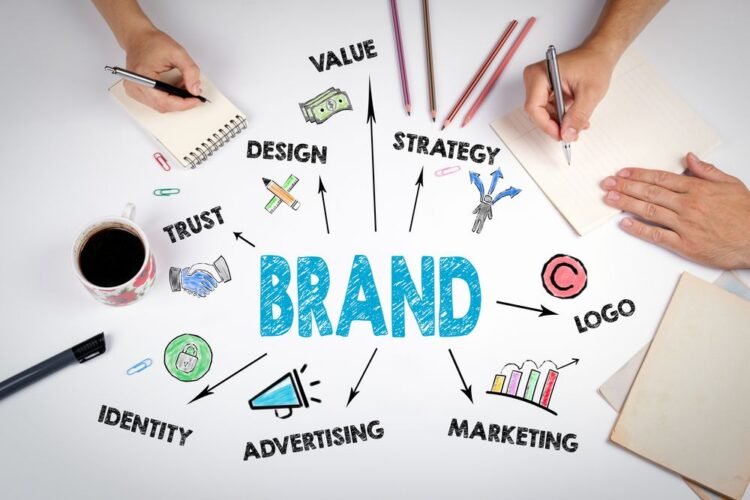
Brand equity is defined and a comprehensive framework is described that incorporates recent theoretical advances and managerial practices in understanding and influencing consumer behavior. This framework identifies sources and outcomes of brand equity and permits tactical guidelines as to how to build, measure, and manage brand equity, as will be developed further in other sections of the article. Customer-Based Brand Equity Understanding the needs and wants of consumers and customers is at the heart of marketing. A brand equity framework should therefore recognize the importance of the customer in the creation and management of brand equity. Accordingly, customer-based brand equity is defined as the differential effect that brand knowledge has on consumer response to the marketing of that brand. A brand is said to have positive customer-based brand equity when customers react more favorably to a product and the way it is marketed when the brand is identified as compared Continue reading