
Most devices have now advanced as a result of the development of technology. Several sophisticated devices have been introduced to assist with various tasks. Utilizing these tools to fulfill specific responsibilities within their businesses has helped many organizations advance. Robots, self-driving cars, intelligent assistants, virtual travel agents, illness mapping, automated financial investments, and social media monitoring are some of these gadgets. These tools are designed to make work more accessible, accurate, cost-effective, and time-efficient. As a result, these machines continue to take the place of human work. According to a study, employment has decreased by 10% due to most businesses now adopting these machines to carry out various tasks that people could undertake. This has a significant impact on the economy, both favorably and negatively. Artificial intelligence has, however, had a significant impact on global trade through enhanced production and service delivery. Future economic performance measures how effectively a company Continue reading
Modern Management Approaches
Views on Business Model: As a Business System and Profit Model

A business model creates a picture of how an organization operates to provide quality services and value to customers. Therefore, the business model assists the company to beat their competitors in the markets. Consequently, the model enhances the value of the company to rapid profits and revenue growth. Therefore, a business model comprises of two elements such as a profit model and business system. The business model does not only work as a system of works but rather as behavioral indicators of customers and suppliers. A successful business model integrates the profitability level of a company and its operations. As a result, it can realize the strategic objectives of the company. When an individual conceptualizes a business model as a system, he/she focuses on delivery and production of the company. Therefore, the system has several interdependent activities to go beyond the boundaries and focal industry. As a result, the business Continue reading
Open Innovation and Co-Innovation – Definition and Differences

Open Innovation and Co-Innovation Defined Innovation and innovators play a critical role in the business world. When speaking of innovators, the role of outside innovators is considered to be fundamental, and the success of companies like Apple Inc. confirms this fact. The aspect of having a reliance on outside innovators is what has given companies like Apple Inc. a name, especially when looking at the iPhone. Open innovation is the tendency of businesses to make use of knowledge inflows and outflows as the sources for ideas and acceleration of innovation strategies. Co-innovation, on the other hand, is considered to be a type of open innovation. Co-innovation is to involve the collaboration of two or more partners that work purposively in the management of the flow of mutual knowledge across the boundaries of the organizations through joint innovation and commercialization of the said innovation. Overall, open innovation allows companies to commercialize Continue reading
Incumbent vs. Challenger Business Models – Major Differences with Examples

An incumbent can be described as an individual who is responsible for his or her office in a governmental or organizational position. The concerned person has the obligation to the position or the office he or she holds. Thus, an incumbent from a business perspective is generally referred to a leader or a person who is being discussed. The incumbent in a specific industry can change in the responses to bring changes in the market. An incumbent can also be referred to as the business relationship like those that exist between a supplier which is providing materials to another business. A challenger can thus be described as the firm or a leader which has a low market share or a person which is aiming similar leadership position. Challengers are the competitors that are aiming towards for the power and authorities which is already held by an incumbent person (incumbent vs Continue reading
Role of Open Data in Business Innovation
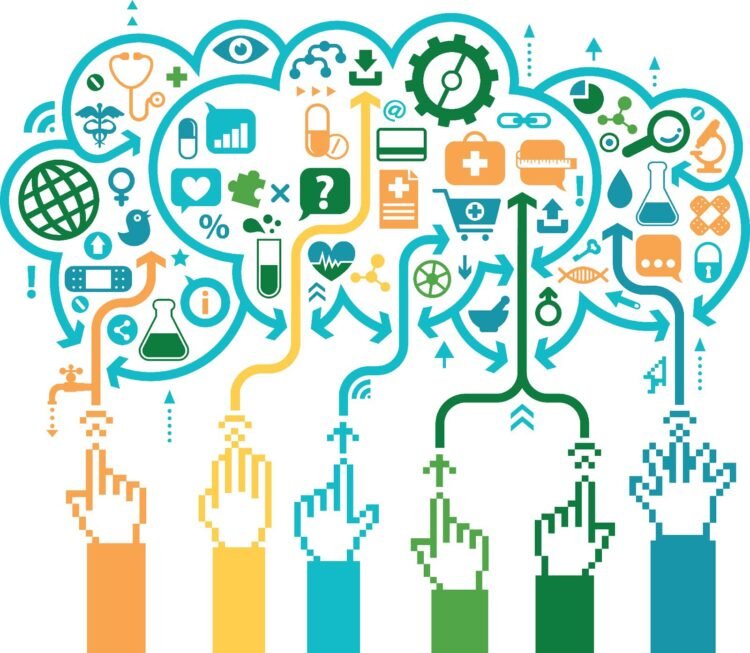
In today’s competitive business world, organizations are constantly struggling to generate a competitive advantage over others in order to sustain their future growth. Companies are facing fierce competition from local as well as international organizations due to globalization and digitalization. In fast pace and rapidly changing industries, corporations rely on an innovative approach to generate and maintain their competitive advantage. Incumbents in industries are threatened by challengers because they use innovation to create a competitive advantage over them. In order to stay relevant and match industry demand, corporations invest in new technology to ensure that they satisfy customers’ requirements and improve their operations. Along with the popularity of internet which is fueled by the growth rate of smartphone users, the popularity of open data has grown as well. Open data is referred to an idea which provides that some data should be freely available and accessible to everyone to republish Continue reading
Creativity and Innovation in Organizations

Creativity and Innovation are two very inter related concepts, however have subtle differences. Creativity can be understood as the ability to act or think in new or novel ways, while innovation and invention are two types of creativity. Innovation is the ability to implement creativity in something that already exists, while invention is the usage of creativity to make something new. Experts often Creativity and Innovation are two very inter related concepts consider creativity as a sort of ‘muse’ for the team or individual, or a source from which concepts or ideas emerge, possibly in an unpredictable or haphazard way. Creativity is often associated with three aspects, namely: problem solving, imagination and struggle. Imagination can involve aspects such as spontaneity, unconventionality, giftedness or intuition, while problem solving can involve intellect, organization and skills, and struggle implies that creativity can be a difficult process of extracting ideas through struggle. Creativity is Continue reading