
Fast technological development and automatization have caused many changes in people’s lives. As soon as the industrial revolution impacted the manufacturing process, productivity skyrocketed, and corporations became major societal driving factors. However, a downside of the industrial revolution was the fast improvement of equipment that worked more efficiently, cheaply, and faster than any person could. From this perspective, the jobs that were previously executed by people were quickly replaced with machines. A similar concern correlates with the current technological development, namely artificial intelligence. Artificial intelligence (AI) is a machine’s ability to learn through certain algorithms, which creates an environment in which it can become fully autonomous and used in any industry while performing any task. There are multiple uses in which AI can be applied, including medicine, physics, the economy, and other essential areas of life. However, similarly to the development of automatization during the industrial revolution, AI may correlate Continue reading
Modern Management Concepts
Platformization of Strategic Business Communications
A digital business or communication platform offers a method to recombine technology in novel and transformational ways to create new business functionalities and competences. It offers a logical boundary that divides the technological applications driving digital transformation and technological change from the organizational logic behind those applications. For instance, the Amazon corporation elaborates and designs its digital media, business, and communication platforms as marketplaces and communication channels for clients and colleagues. The implications of platformization for communication and business industries are positive, but can encompass negative aspects related to ethical and privacy issues. Any online communications technology, including desktop, mobile, interpersonal, and email applications, is referred to as a “digital platform.” This notion, in fact, encompasses social networks, media, and websites. Particularly in the media and entertainment sectors, digital platforms have frequently been identified as the key participants in a wide range of marketplaces. Corporate and governmental players in contemporary Continue reading
Machine Ethics – Overview, Developments, Issues and Future

History and Background of Machine Ethics Concept Machines are tools that make work easier by changing the direction of torque applied on a piece of workload. The general notion is that a machine is just a good size container with a system of gears and motors which are used for industrial purpose. The steam engine is a good indication of machines since its invention in the industrial revolution to power industries to different levels of output. However, the human race has been evolving thereafter and it is agreeable that the machines have also been evolving gradually hence the need to be au fait about the evolution to ensure we are at par. The definition of machines today has gone beyond the normal gearboxes we knew and has been taken to another level. The prominent machine invention or understanding of the twentieth century is the mathematical invention of the Turing machine. Continue reading
Whistle-Blowing: Definition, Reasons, and Issues

Definitions of Whistle-Blowing Whistle-blowing has been defined as the act of a man or woman who, believing that the public interest overrides the interest of the organization he serves publicly ‘blows the whistle’ if the organization is involved in corrupt, illegal, fraudulent or harmful activity. It has also been defined as the disclosure by organizational members (former or current) of illegal, immoral or illegitimate practices under the control of their employers, to persons or organizations that may be able to affect the action. Many other definitions of whistle-blowing exist, though they run into problems of inclusion and exclusion and create problems for the researcher attempting to operationally the concept as a form of organizational communication. The following definition comes close to providing sufficient clarity: Whistle-blowing occurs when an individual performs an action or series of actions intended to make the information public. The information is made a matter of public Continue reading
Open Innovation and Co-Innovation – Definition and Differences
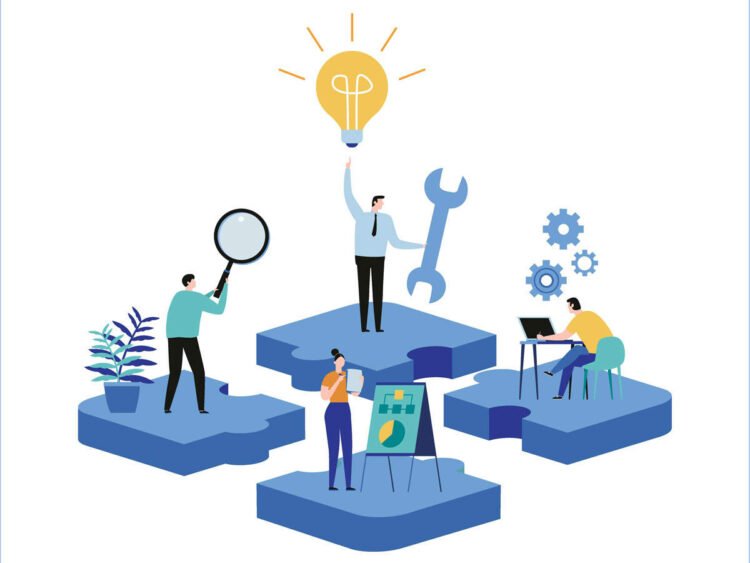
Open Innovation and Co-Innovation Defined Innovation and innovators play a critical role in the business world. When speaking of innovators, the role of outside innovators is considered to be fundamental, and the success of companies like Apple Inc. confirms this fact. The aspect of having a reliance on outside innovators is what has given companies like Apple Inc. a name, especially when looking at the iPhone. Open innovation is the tendency of businesses to make use of knowledge inflows and outflows as the sources for ideas and acceleration of innovation strategies. Co-innovation, on the other hand, is considered to be a type of open innovation. Co-innovation is to involve the collaboration of two or more partners that work purposively in the management of the flow of mutual knowledge across the boundaries of the organizations through joint innovation and commercialization of the said innovation. Overall, open innovation allows companies to commercialize Continue reading
Creativity and Innovation in Organizations
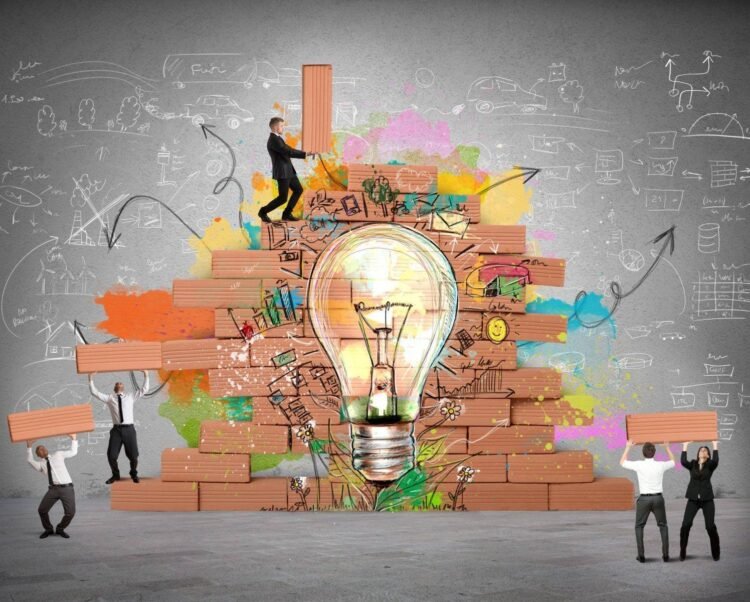
Creativity and Innovation are two very inter related concepts, however have subtle differences. Creativity can be understood as the ability to act or think in new or novel ways, while innovation and invention are two types of creativity. Innovation is the ability to implement creativity in something that already exists, while invention is the usage of creativity to make something new. Experts often Creativity and Innovation are two very inter related concepts consider creativity as a sort of ‘muse’ for the team or individual, or a source from which concepts or ideas emerge, possibly in an unpredictable or haphazard way. Creativity is often associated with three aspects, namely: problem solving, imagination and struggle. Imagination can involve aspects such as spontaneity, unconventionality, giftedness or intuition, while problem solving can involve intellect, organization and skills, and struggle implies that creativity can be a difficult process of extracting ideas through struggle. Creativity is Continue reading