Different companies, similarly to people, have their own unique culture that is founded on ethnic, regional, temporal and industry-relevant factors. Therefore, when two or more businesses work together or decide to merge, these specific attributes may clash, leading to conflicts and worsened performance outcomes. The process of acquisition has to be planned in detail from the first contact between the companies to their full integration. In most successful cases, firms prepare thoroughly to enter the new relationship by mapping out the process of the merger and trying to predict the potential issues. However, the importance of the steps following the official merger may be overlooked by managers who fail to account for the fundamental cultural and structural differences between the businesses. In foreign mergers, this lack of attention to the whole strategy may be detrimental to the outcome of the project. This problem is especially evident for cultures that have Continue reading
Management Case Studies
Management case studies are real-life examples of issues and problems found in particular workplaces or business organisations. Case study assignments give the opportunity to relate theoretical concepts to practical situations. Most case studies are written in such a way that the reader takes the place of the manager whose responsibility is to make decisions to help solve the problem. In almost all case studies, a decision must be made, although that decision might be to leave the situation as it is and do nothing.
Case Study: Strategies That Barista, Cafe Coffee Day and Qwikys Have Adopted in Indian Market
Strategies adopted by Barista: Barista established in 2000 in New Delhi was the largest and fastest growing coffee chain in India. Barista positioned itself as a lifestyle brand with Italian neighborhood. Barista was the leader in espresso coffees. Barista was made with top grand Arabica beans and brew masters from Italy were invited to create blends. Alliance with Tata coffee would supply food items like baguettes, croissants, cookies, sandwiches, pastries and desserts. Every month it introduced and focused on a particular type of coffee. The idea was to change customer’s occasional indulgence and make it a habit and educate them about the original coffees. It also developed store-in-store concept by focusing on themes that compliment coffee, such as music, books and art. Barista entered into marketing tie-ups with planet M, crossword and Ebony to set up it Espresso’s at the corner. It also wanted to enter into co-branded marketing tie-ups Continue reading
Case Study: “Dove Chooses Beautiful” Advertising Campaign

In 2015, Dove launched its new Dove Choose Beautiful advertising campaign, writing a new chapter to one of the most successful marketing campaigns ever, the Real Beauty campaign that started in 2004. The campaign was groundbreaking: its purpose went beyond promoting its commercial products but aimed at drawing people’s attention to some topical themes. Dove Choose Beautiful, follows the path outlined by the original campaign, questioning the unachievable female beauty canons promoted by the media and encouraging self-esteem and genuine Beauty instead. Since 2004, the renowned New York-based advertising firm Ogilvy & Mather has been developing a successful mix of print ads, billboards, and videos which raised public attention, generated debates and, ultimately, increased sales. Understanding the 2004 Real Beauty campaign, its premises, social background, and grounding philosophy is an obligatory path to discuss the Dove Chooses Beautiful marketing strategy. Case Background Dove is a beauty care brand owned by Unilever, a British-Dutch Fast-Moving Consumer Goods (FMCG) multinational company. Continue reading
Case Study of Dyson: Competitive Advantage through Innovation

Dyson, an electrical manufacturer, is solely owned by Sir James Dyson, and its headquarters are based in Malmsbury, Wiltshire. Dyson was the first company to introduce a bagless solution to conventional vacuum cleaners. After securing a significant market share in the vacuum cleaner industry, the company decided to diversify in to new products and countries. Dyson’s vision is to make products more environmentally friendly and easy to use; his ongoing mission is to promote design and innovation through the production of his products. Today Dyson has a presence in 45 countries and still maintain a 46 % and 32% share in the UK and US Vacuum cleaner market, respectively. Dyson has strong brand recognition, as the qualities projected by James Dyson become associated with the product itself. The product is instantly identifiable by the brand name, because of the innovative design portrayed. Even though Dyson is a leading vacuum cleaner Continue reading
Case Study: Jack Welch’s Leadership Legacy
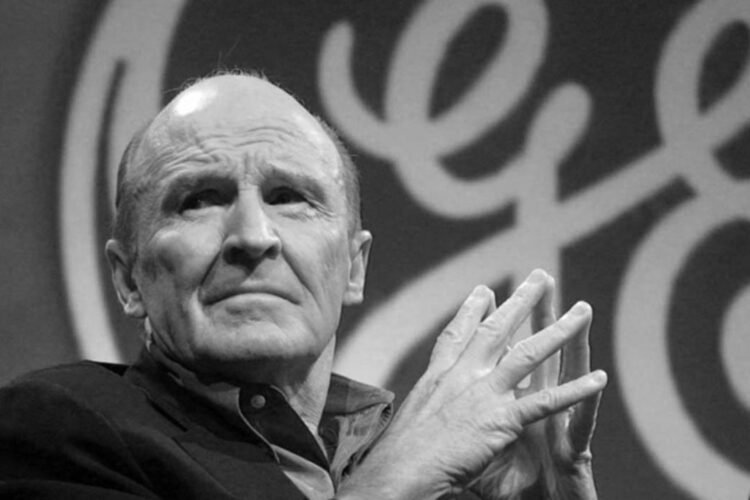
Jack Welch was the CEO of General Electric (GE) between 1981 and 2001. He was the youngest CEO to be appointed in the company. He joined the company in 1960 and later promoted to be the vice president in 1972. Welch ascended the organizational hierarchy, first serving as the vice chairman in 1979 and later became the CEO in 1981. Jack Welch was born in 1935 and brought up in Peabody, Massachusetts by his two parents who were Roman Catholic. His father worked as a railroad conductor and his mother was a housewife. Jack’s father worked for many hours in order to support his family. Jack and his mother used to go to the train station to wait for his father and as they waited, they had talks with his mother, which served as his early education. He studied at Salem High School, attended Massachusetts University, and attained a degree in Continue reading
Case Study: How Total Quality Management Help Xerox Back on Track
Xerox Corporation is an American company founded in 1906 as Haloid Company. The company began as a manufacturer of photographic paper and equipment. Joseph Wilson inherited the business from his father who was the founder of the company and propelled it to new heights. Wilson signed an agreement with Chester Carlson to develop Carlson’s idea of printing using the toner commercially. The technology was named Xerography. The company changed its name to Haloid Xerox in the year 1958 and subsequently in 1961 to Xerox Corporation. Xerox has a presence in over 180 countries worldwide, and it employs over 140,000 people. The company deals in document management, business process solutions and software services. Xerox Company provides a multitude of products and services to its clients worldwide. They include business services, office equipment, and production equipment. The company’s dynamic nature has enabled it to survive technological changes in the industry. Xerox has made several Continue reading