Organizational structure of a company can be shown in a chart. Such chart indicates how different departments are interlinked on the basis of authority and responsibility. It is a simple diagrammatic method of describing an Organizational structure. It indicates how the departments are linked together on the basis of authority and responsibility. Such organizational chart provides information of the organizational structure at a glance. Organizational chart is like a blue print of a building. It indicates the number and types of departments, superior-subordinate relationship, chain of command and communication.
According to George Terry, organizational chart is “a diagrammatical form which shows important aspects of an organization, including the major functions and their respective relationships, the channels of supervision and the relative authority of each employee who is in-charge of each respective function”.
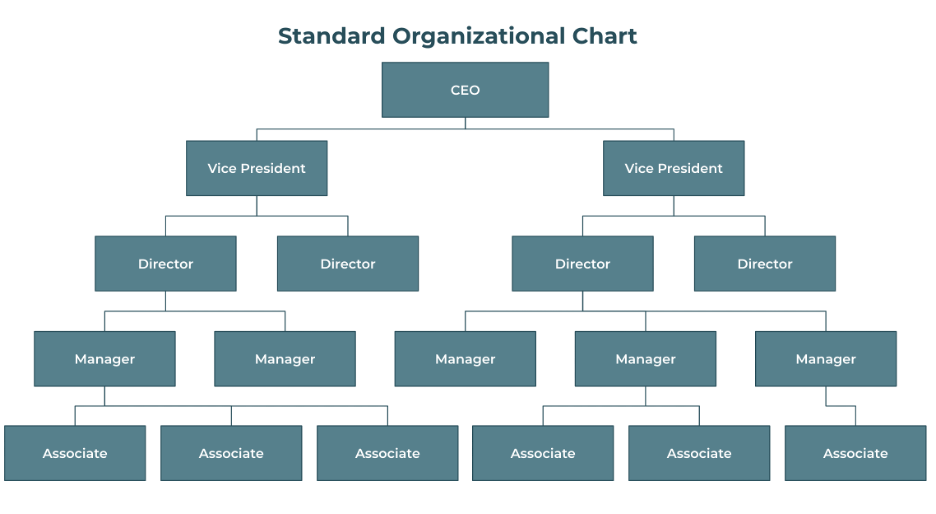
Features of Organizational Chart
- Organizational chart is a diagrammatical presentation.
- It represents the formal organization structure.
- It shows the lines of authority in the organization.
- It indicates the channel of communication.
- It indicates who supervises whom and how various units are inter-related.
Types of Organizational Chart
- Vertical chart: One of the most popular methods is the vertical chart in which the highest job is shown at the top with other jobs shown in a descending order, connected by lines to show the authority and the line of communication.
- Horizontal chart: This chart shows the organization structure in the form of a pyramid.
- Circular chart: The top management is shown at the center of the circle and other management levels are shown in concentric circles.
- Departmental chart: This chart is devoted exclusively to particular department and gives details of relationships, authority, responsibility, etc. within the department.
Uses of Organizational Chart
- An organizational chart facilitates ready reference. It enables the management to find out different positions of authority and their relationships in the organization structure.
- It provides proper guidance to managers in executing, their assignments and helps them to avoid overlapping and duplication of work.
- It provides complete information to understand the character of an organization.
- An organization chart indicates ways to better utilization of available manpower.
- An organization chart points out the consistencies and deficiencies of an organization and enables the management to correct them.
Advantages of Organizational Chart
- Brings clarity to the organization: The very process of preparing a chart makes the executive think more clearly about the organizational relationships.
- Provides dear picture of the organization: Once the charts are prepared, they provide lot of information about the organization, both to the members of the organization as well as to the outsiders. This information relates to number and types of departments, superior subordinate relationships, chain of command and communication and job titles of each employee.
- Facilitates training of employees: Organizational charts are useful in familiarizing and training new employees.
- Ensures organizational changes: Organizational charts provide a starting point for planning organizational changes after having discovered the weaknesses of the existing structure.
- Provides quick understanding: A chart serves as a better method of visualizing an organization than a lengthy written description of it.
Limitations of Organizational Chart
- Details are not provided: The organizational chart does not provide all the details of organization structure created. For example, the chart will show the line of authority but not the extent of authority.
- Informal relationship is not shown: The chart fails to give details of informal relationship available in a firm. In fact, human relationships cannot be shown on a chart.
- Updated position is not available: The chart shows the position of organization structure when it was formed. It gives a static picture of the organization. Changes made thereafter may not be available in such charts.
- Fosters buck-passing: The charts tend to foster ‘buck-passing’ and emphasize only formal channels of communication.
- Lacks flexibility: Organizational chart lacks an element of flexibility. Such chart also brings an element of rigidity in the working of an organization.
- Creates rank consciousness: An organizational chart leads to rank consciousness among the staff. It destroys team spirit and collective approach on the part of the staff.