Segmentation, Targeting & Positioning (STP): Exploring the Concepts and Locating the Connections between Them
Although often underrated by general audiences, the subject of marketing is very complex, and the strategies used by companies to promote their brand are quite intricate. Understanding the reasons for these approaches to have the tremendous positive effect by which they can currently be characterised is critical to the overall promotion of progress within the specified area. By deconstructing the essential elements of marketing in the contemporary economic environment, one will be able to delineate a common trend and suggest options for enhancing the existing marketing process. As a result, opportunities for improving the framework for catering to customers’ needs will be provided.
The STP framework itself is rather basic and, therefore, quite simple to follow. As the title suggests, it consists of three key elements, specifically, Segmentation, Targeting, and Positioning. The decision to combine the specified notions to construct a single entity is justified by the intrinsic interdependence within the specified constituents. Particularly, all of the three elements are supposed to be attributed to specific characteristics of the target demographic learned prior to designing the STP approach.
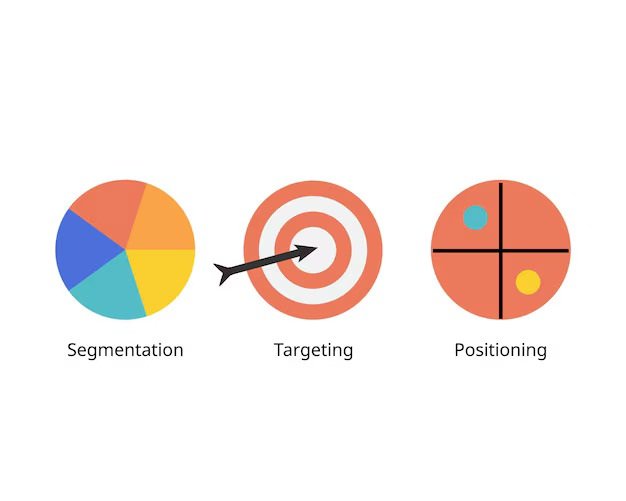
Segmentation is typically defined as the classification of the target population based on age, gender, social background, and other characteristics. Targeting is regarded as the assessment of each type of the population in terms of its attractiveness, whereas positioning is the choice of the marketing tool and the brand image for promoting the product or service. Therefore, the STP strategy as a concept can be defined as the location of key segments of the target market based on their age, gender, or any other characteristics. Afterward, the selection of a particular segment to which a product or service is most likely to appeal ensues. Finally, the presentation of the specified product or service in the way that is expected to capture the attention of the target population immediately occurs. When combined together, the identified components comprise the STP approach designed to boost a company’s competitive advantage and make it look especially appealing when compared to its key competitors.
The links between the elements of STP are intrinsic and evident. Since each of the elements of the process is tied to a very specific population that a firm selects as its potential buyers, the choice of the targeting strategies depends on the unique properties of the group identified in the process of segmentation. Targeting can be seen as the identification of the tools that will allow restructuring the perception of a brand by the target demographic.
Similarly, the positioning process hinges on the set of tools chosen to perform targeting since it implies shaping the perception of a product within the selected group of customers. As a result, the selected demographic acquires a different attitude toward the proposed goods and services, relating to them to a greater degree and developing loyalty toward the brand. At the specified stage, it is especially important to be aware of the crucial characteristics of the selected population since positioning will require determining the tools that will make the product instantly recognisable among a range of similar goods.
It is also important to bear in mind that what may seem as immediately relatable and truly inimitable to one group of customers may become absolutely invisible to others due to the difference in the cultural frame of reference and the lack of the necessary perception technique. Herein lies the importance of performing the previous two steps by splitting the target audience into several segments based on a specific characteristic. Once the identified tasks are performed properly, an organisation can design an astoundingly successful marketing strategy, as the cases of several world-renowned companies have shown.
The Most Significant Industry Examples and the Secret of Their Appeal
Volkswagen
The automotive industry can be seen as an extraordinarily competitive environment. Although being admittedly positive, the recent innovations have introduced an even greater number of challenges to its members since the creation of electric cars. Nonetheless, several organisations managed to retain their influence and develop a sustainable STP approach that made them even more valuable in the context of the changes within the industry.
Volkswagen is one of such organisations; having diversified its product to the point where it can meet the needs of any customer, the firm has cemented its status of a superior organisation in the German market and an important competitor on the global scale. Although the idea of catering to the needs of any demographic may be deemed as barely possible, the firm has succeeded in shaping its STP framework so that it could convince its customers in the universality of the proposed products.
The targeting process, in turn, also deserves being described since it provided a rather elegant solution to a large problem that Volkswagen had to face. Specifically, the company needed to adjust its framework to the fact that the choices made by buyers were defined by a combination of factors as opposed by separate issues. Specifically, customers tended to consider the correlation between safety, comfort, price, and prestige when purchasing a car, which implied that the organisation could not place emphasis on a single aspect of its product explicitly.
As a result, a multi-segment approach toward targeting was developed. The specified approach implies that the company focuses on the active improvement of several aspects of its product at once, thus using each to market the goods to the designated part of the target audience. For Volkswagen, the described scheme has been made slightly more complicated, with its cars being marketed based not on a single characteristic but a combination of at least two of them, such as the correlation between a car’s price and power. The specified approach allows retaining customer satisfaction and loyalty rates high, at the same time keeping buyers enthusiastic about enjoying new products provided by the company.
Volkswagen also has a unique approach to positioning based on the multifaceted approach mentioned above. Typically viewed as the organisation that offers transportation vehicles for all types of customers, Volkswagen also manages to retain its reputation of a firm with high-quality products. Thus, the firm is positioned as the company aimed at meeting the needs of customers from all backgrounds. As a result, Volkswagen will be able to enjoy the continuous growth for the next several decades.
Coca-Cola
Coca-Cola is one of the brands that does not need an introduction. Having been in existence for several decades and managing to retain its position at the top of the food and beverage industry. What made the company so incredibly popular and amazingly successful is its use of the STP framework, particularly, the careful approach toward customer segmentation.
Specifically, Coca-Cola uses the segmentation technique based on a multifaceted characterisation of its target demographic, including age, gender, family size, social class, and lifestyle of its demographic. The proposed strategy turned out to be especially powerful when expanding the company’s area of operations to the global market and has been proven to have a massively positive effect in attracting all types of customers.
The approach that the firm has chosen for targeting can also be seen as rather smart due to the clever idea of using the principles for operating on a global scale and at the same time adjusting the firm’s product to the needs of specific local customers. The concept of thinking globally and acting locally, which Coca-Cola heralds as its continuous targeting motto, has proven its significance after being used in a range of exotic locations and meeting the needs of different customers.
For instance, the firm’s decision to appeal to students and families has defined its focus on the creation of a fun brand image that immediately evokes the idea of entertainment. The specified concept appeals to the people with a busy schedule such as students and people with families. In its turn, the emphasis on fun and relaxation, which the Coca-Cola brand has managed to incorporate into its image, also speaks to the people preferring to enjoy life at a less rapid pace. Thus, in its targeting strategy, Coca-Cola managed to embrace seemingly opposing concepts.
As a result, the company’s positioning framework turned out to be very successful since it incorporates the global line of thinking with local-based strategies. Consequently, Coca-Cola maintains the image of the world’s greatest soft beverage organisation, at the same time creating the products and flavours that meet the needs of culture-specific demographic. By embracing global ideas to tailor its product to the specific needs of particular consumers, Coca-Cola has built the brand name that has gained worldwide recognition.
JetBlue
JetBlue chose a very fortunate moment to introduce its services to the transportation industry. While other companies started curbing the number of options for making the flight experience as comfortable for its passengers as possible, JetBlue decided to bank on its side services, such as flight food and extra space for passengers. While seemingly simple, the identified strategy turned out to be a tremendous success, which allowed JetBlue to nearly oust its less customer-oriented competitors from the market. In retrospect, the STP approach that the company utilised in order to succeed in the chosen niche could be described as the willingness to place the comfort of passengers at the top of the list of its priorities.
The segmentation framework that the organisation adopted in order to address the needs of its potential customers included age-, gender-, and culture-related specifics. As a result, the firm managed to find the solutions to the problem that was seemingly impossible to solve. Particularly, JetBlue tailored its services to the requirements of all possible passengers. The observed segmentation tool required an in-depth cross-cultural analysis and the adoption of skills necessary for communication in a multicultural environment. The resulting shift in the number of clients has shown that JetBlue has designed the framework for attracting customers from all backgrounds and classes.
The targeting framework, in turn, began to revolve around the idea of comfort. While other companies used the concept of safety as their key competitive advantage, JetBlue was smart enough to view the specified aspect of its operations as something that went without saying and, therefore, did not require extensive marketing. The specified strategy not only elevated JetBlue in the eyes of the general audiences but also questioned the quality of other services, which emphasised safety as a complementary characteristic of their company rather than an intrinsic one.
As a result, the approach that JetBlue chose toward positioning also concerned comfort and accessibility. Since other companies operating in the transportation domain seemed to have abandoned the idea of increasing comfort at the time, JetBlue was easily distinguishable among the rest of companies offering air transportation services. The firm created the image that was memorable and instantly recognisable for millions of people due to the simplicity of its brand and the importance that the simple innovation made for passengers. Since the high safety levels were implied as opposed to being treated as the key accomplishment, the organisation warranted the undivided attention of its target clients, which included families, tourists, and business people.
On the one hand, the proposed framework was innovative and unusual at the time. While other firms placed emphasis on other aspects of flight, particularly, security and speed, JetBlue summarised the advantages of its services in a single word, which was “comfort.” the specified positioning tool helped to cement the image of the organisation as caring for the needs of its customers. On the other hand, the concept of comfort requires regular updates in accordance with the latest technological innovations. By presenting a general idea of comfort, JetBlue deprived itself of the opportunity to market innovative solutions that it designed to improve the quality of services.
While the organisation also maintained the security levels high and guaranteed a completely safe flying experience, it was not the characteristic on which they chose to bank their future success. Instead, their attention to detail paid off since the organisation managed to conduct an in-depth analysis of its customers, introduce an elaborate segmentation and targeting strategy, and, thus, design the positioning framework based on the results of the analysis.
Indeed, since most people that JetBlue targets tend to seek transportation services that provide a comfortable experience, the company’s revenues and the levels of its customers’ loyalty to the brand skyrocketed immediately. Therefore, JetBlue is a graphic example of why the STP framework is critical to the successful operations in the global market. Instead of regurgitating the same mantra of flight safety, JetBlue offered the services that customers viewed as essential to the positive experience, thus succeeding in the specified market.
The Role of STP in Marketing and Successful Sales
By utilising innovative STP tools that allow increasing their competitive advantage, global companies such as Coca-Cola, Volkswagen, and JetBlue have built the image that would continue to represent them even in the future due to a profound understanding of their target audience and a unique framework for marketing their products. An overview of the approaches toward STP adopted across the globe has shown that a proper understanding of the organisation’s advantages and the ability to determine the needs of the target demographic precisely allow for the design of an outstanding ST strategy.
Particularly, with the specified information in mind, an organisation can create the approach toward STP not only using the current trends but also forecasting the future ones and determining the changes in the needs and tastes of its demographic. Arguably, companies of the calibre of Coca-Cola, JetBlue, and Volkswagen have created their STP framework by defining the trends within the industries and convincing the rest of the audiences that the ideas that they promoted were worth accepting.
Therefore, while providing a uniform framework that any organisation can use to encourage its economic growth and the development of a competitive advantage, the actual approaches toward building a sustainable framework for marketing a service or a product remain company-specific. The specified phenomenon is justified by being used in a unique cultural setting where the target audience can be characterised as rather homogenous. However, surprisingly enough, the suggested approach also works in the global setting that are characterised by high levels of diversity and the need to meet the demands of very diverse audiences. Therefore, the adoption of the STP tools always implies identifying the available advantages carefully and be capable of using them to the benefit of an organisation.