Risks are common occurrences that happen in the daily operations of an organization. They are uncertainties that occur as a result of certain activity and may result in loss of value or other immeasurable. Organizations must have risk control measures to ensure that risk identification, analysis, and mitigation are carried out effectively. Organizations spend a substantial amount of their budgets in developing risk management strategies. There are different tools that organizations employ in risks reduction practices. For instance, Failure Mode and Effect Analysis (FMEA) is a part of the quality assessment tool that allows a company to detect possible failures.
The Failure Mode and Effect Analysis (FMEA) is one underlying concept of continuous quality improvement.FMEA is an analytic activity carried out on a product, service or process in order to know its strengths and weaknesses, deal with a potential problem before it occurs and ensure that it meets the set requirements. Failure Mode Effect Analysis (FMEA) is defined as an efficient and practical technique used in assessing different features of a given system. Moreover, the assessment is majorly done to establish and eliminate or reduce possible prevailing tragedies and dangerous failures within the system.
FMEA has its origin at the National Aeronautics and Space Administration (NASA) in the USA where it was used as a risk analysis and mitigation technique, however more recently; it has become widespread in industries being used to attain process improvement. FMEA is a vital tool for project teams and companies as a whole and who are faced with questions like how a failure can occur, the effect of such a failure on a system and what actions can be taken to counter such potential failures if they happen. It provides a suitable approach to developing remedies to these questions.
How FMEA is Used
For a proper integration of this risk assessment tool in the environment system, it is imperative that certain critical steps must be followed. This process will ensure that the risk management team identifies all possible failures, their causes and effects and possible control or risk mitigation measures.
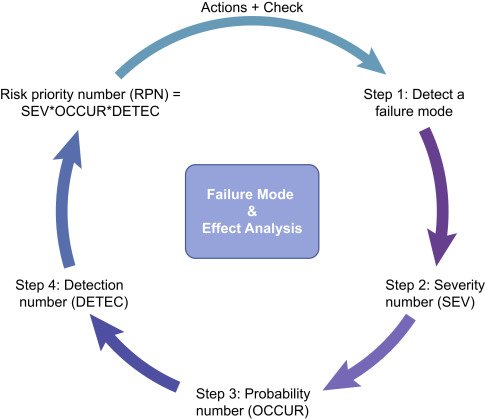
To start with, the organization must ensure that they look at the system and determine the start and end processes. This gives the team an opportunity to face the possible failures, causes, and their effects head on. The integration process is a team work where engineers, designers, developers and team managers are expected to cooperate. The participation of all these people will ensure that their different capabilities will result in an effective control system. It will also enable them identify the possible failures. Use of diverse expertise will help give ample prevention and control measures to possible failures.
The next important step in Failure Mode and Effect Analysis integration is a brainstorming session. All the team members in the environment organization must have a brainstorming session where the process and its possible failures are discussed at length. During this session, flow charts can be designed to evaluate the possible risks and their causes. This forms an important step since it offers a chance to determine whether the environmental failure is by design or the process. The brainstorming session also offers possible prevention and control measures.
The integration process also requires an outline of the areas likely to be affected greatly by the possible failure. At this stage, it is important that we understand where the failure will have great effect. It is also important to identify the effect itself now and in future.
FMEA integration must also consider the severity of the risks involved in the environmental management system. To achieve desired results, it is important the least severe risks are recorded first and classified in order of their severity. This step will also help determine the failures with greater impact to the process.
In order to have the best prevention and control measures, it is important that all possible causes of failures are properly identified. All aspects and anything are likely to cause failure in the process are identified by the risk management team. After identification of these causes, proper fixation should be carried out and effect changes where necessary. This process may entail looking at the various parts of the process to enable the team unearth any possible cause of failure. It is at this point that technical problem-solving skills are essential. In essence, this step involves identifying all the facts regarding a particular cause and possible solutions to such problems.
FMEA is likely not to give desirable results if the failure occurrence rating is not fully determined. This process involves identifying the probability of a certain failure and the frequency at which it occurs. It is at this point that it becomes essential to determine the likelihood of failure and the failure rate. This rating is given numbers one to ten as is the case with severity rating with the least occurrence rated as one while ten represent a high probability of occurrence. This is a very important step since it enables effective decision-making especially in matters pertaining minimization of such high probabilities.
After identifying the failure occurrence rating, the next step must involve identifying the causes of these failures. The occurrence and severity ratings will be vital components in this step since they provide guidelines to the necessary changes aimed at reducing such occurrences. The causes may be as a result of the system failure that requires putting devices in place to detect failures before they occur. It is also at this stage that it may be necessary to install instruments necessary to prevent problems and malfunctions within the environment system.
FMEA integration will also require its checks and control measures. This is an important step that involves determining the effectiveness of the control measures put in place. Detection ranking becomes an integral part of determining the success level of the risk assessment technique. At this stage, the team has an obligation of ensuring that all instruments, devices and control measures in the system fulfill their intended purpose. All the instrument and devices installed in the latter stage of failure detection are assessed, and their effectiveness analyzed. This is a vital stage since it ensures timely detection of failures to prevent further failures in the process now and in future. It also plays a significant role in ensuring that such failures do not lead to other failures in other parts of the process.
After identifying the different failures, their causes, and impacts, the other step in the FMEA integration process involves calculating the risk priority number (PRN). This is a very important stage in the integration process since it classifies the failures in terms of occurrence and severity ratings. It plays a pivotal role in decision making since the failures with the highest risk priority number are considered first. These failures require great attention and more focus to ensure that the process is successful.
The last step in the integration process involves dealing with the problems in accordance with the PRN ratings. To deal with the failures, causes and impacts in a system, one must derive corrective and control measures. The last step in the integration process does not only reduce the risk failure but also introduce the changes in a controlled and traceable way. This serves as a reference point just in case such problems are noticed in future. It is, however, important to ensure regular review of the process. Any new changes implemented in the process must also be reassessed prior their installation to approve their authenticity. It is also imperative to have a system that will detect new problems swiftly to ensure speedy corrective measures.
Advantages and Disadvantages of FMEA
From the above discussion, it is clear that FMEA integration process is a tedious process and requires a lot of efforts to be implemented. Nevertheless, the process is associated with several benefits that make its implementation a good idea. For instance, Failure Mode and Effect Analysis allows analysis of possible failures and their effects on the process and the customers both in the short run and long run.
It is also important to understand that the implementation process involves a lot of documentation and recording. The documents provide essential information on particular failures, causes as well as the corrective measures that can be employed against them. This serves as an important cost-saving measure since such information can be sued to prevent such problems just in case they occur in future. The information remains a vital organization asset both in the short run and in the long run.
Another major reason FMEA is a good idea is that new ideas presented and put forward can be recorded for future environmental projects if not used. This plays an important role in ensuring that the organization always strives for improved and effective results. It will also be important in time-saving just in case such ideas are needed to solve future problems. The completion of one process gives birth to new designs and expectations thus making the implementation a reliable process.
Additionally, it is important to understand that Failure Mode and Effect Analysis plays a pivotal role in designing the best possible process and system to maximize on service delivery and clients satisfaction. The implementation process also allows the team to identify clearly all the possible failures and their short and long-term effects on the process. The critical analysis helps in ensuring effective risk assessment and control measures are put in place.
Despite the many benefits associated with the FMEA process, it is essential to understand that there are few limitations on the exercise. FMEA implementation requires an experienced team to make it a success. A lot of past information is very important in determining the possible failures, their occurrence and severity ratings that are critical in the process. It is also important to understand that what is severe to one person could be less severe to another thus making it difficult to understand which among the failures should be addressed before the other. It is therefore important to understand that the issue of experience and the preference list must be effectively addressed for a successful FMEA process.
Despite the several advantages associated with the risk analysis method, there are few limitations that should be of concern during its implementation. For instance, the process is time consuming and tedious due to the detailed exercise. It is worth noting that the completion of FMEA process can take hours or even days before it is accomplished. This pose a great challenge in the implementation of the process since time is a critical concept in risk analysis and management. Additionally, the process also requires recruiting the right participants for effective results. This may be additional cost to the organization since getting the right participants is not an easy task.
Moreover, examination of human error is limited and sometimes overlooked. The analysis of causes and effects is superlative and prone to human error. It is therefore critical to understudy that such occurrences can be devastating to the effects. It is also worth noting that follow up sessions are vital for effective FMEA analysis. These sessions are additional costs to the organization and erode the expected profits.