Case Study: How Total Quality Management Help Xerox Back on Track
Xerox Corporation is an American company founded in 1906 as Haloid Company. The company began as a manufacturer of photographic paper and equipment. Joseph Wilson inherited the business from his father who was the founder of the company and propelled it to new heights. Wilson signed an agreement with Chester Carlson to develop Carlson’s idea of printing using the toner commercially. The technology was named Xerography. The company changed its name to Haloid Xerox in the year 1958 and subsequently in 1961 to Xerox Corporation. Xerox has a presence in over 180 countries worldwide, and it employs over 140,000 people. The company deals in document management, business process solutions and software services. Xerox Company provides a multitude of products and services to its clients worldwide. They include business services, office equipment, and production equipment. The company’s dynamic nature has enabled it to survive technological changes in the industry. Xerox has made several Continue reading
3 Important Models of Organisational Growth

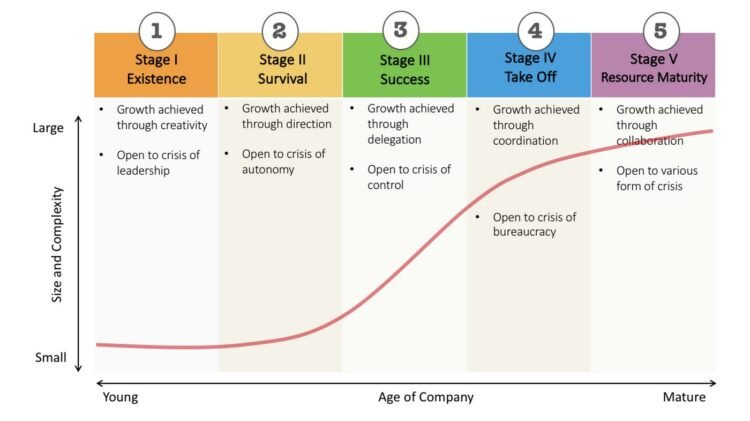
An organization is a group of people who work together with coordinated efforts to achieve certain objectives or goals. Organisations are established by individuals or groups of individuals. During their formation, there is usually very little to talk about by the owner(s) and too much for them to do. Just like human beings, organisations need to grow so as to enable the owner or owners realize their objectives. If the aspect of growth is removed, then it becomes almost impossible for an organisation to exist beyond its formation stage. The signs of growth are expansion and increase in financial base. It also includes increase in the number of employees and diversification of a business as well as the separation of the owner from the business. Organisations also grow through mergers and acquisitions, all in the spirit of attaining their mission and vision. Business management commentators have described various models of organisational Continue reading

History and Background of Luxury Fashion Brand GUCCI

The history of Gucci has spanned more than 95 years. It began in 1921 when the brand’s founder Guccio Gucci established a company that specialized in the production of leather goods. The first store was opened in Gucci’s native Florence. It sold luggage items such as suitcases and bags. The positioning of the brand was the combination of aristocratic esthetics and Italian craftsmanship. Gucci had explored the refined and sophisticated style of English nobility when he was living in London and working in the high-class Savoy Hotel. Upon his return to Italy, he wanted to mix this style with the manufacturing traditions of Tuscan artisans to create classy, high-quality, original products. Gucci quickly attracted customers from certain social groups. Particularly, Gucci’s clients were local aristocrats and rich sophisticated foreigners who came to Florence on vacation. Since the region of Italy where Gucci emerged had been famous for its horse-riding amusements, Continue reading

Activity Based Costing (ABC) – Advantages and Disadvantages

In the past, the vast majority of departments used direct labor hours as the only cost driver for applying costs to products. But direct labor hours is not a very good measure of the cause of costs in modern, highly automated departments. Labor-related costs in an automated system may be only 5 percent to 10 percent of the total manufacturing costs and often are not related to the causes of most manufacturing overhead costs. Therefore, many companies are beginning to use machine-hours as their cost-allocation base. However, some managers in modern manufacturing firms and automated service companies believe it is inappropriate to allocate all costs based on measures of volume. Using direct labor hours or cost-or even machine hours-as the only cost driver seldom meets the cause/effect criterion desired in cost allocation. If many costs are caused by non volume-based cost drivers, Activity Based Costing (ABC) should be considered Activity Continue reading

Stock Beta – Meaning, Calculation, Applications and Types

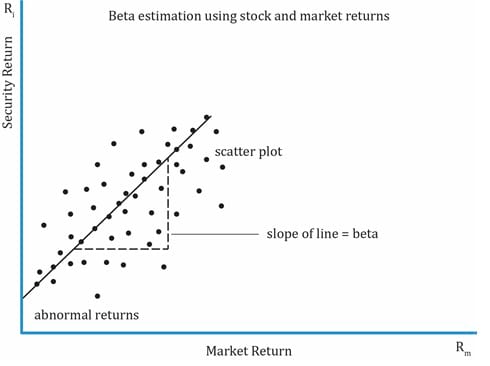
In finance, the Beta (β) of a stock or portfolio is a number describing the correlated volatility of an asset in relation to the volatility of the benchmark that said asset is being compared to. This benchmark is generally the overall financial market and is often estimated via the use of representative indices, such as the S&P 500, Nifty, Sensex, etc. Beta is also referred to as financial elasticity or correlated relative volatility, and can be referred to as a measure of the sensitivity of the asset’s returns to market returns, its non-diversifiable risk, its systematic risk, or market risk. On an individual asset level, measuring beta can give clues to volatility and liquidity in the marketplace. In fund management, measuring beta is thought to separate a manager’s skill from his or her willingness to take risk. The beta coefficient was born out of linear regression analysis. It is linked to a regression analysis of the returns of a portfolio (such as a stock index) (x-axis) in a specific period versus the returns Continue reading

Fixed-Rate Currency Swaps and Currency Coupon Swaps

Fixed-Rate Currency Swaps A fixed rate currency swap consists of the exchange between two counter-parties of fixed rate interest in one currency in return for fixed rate interest in another currency. Following are the main steps to all currency swaps: Initial Exchange for the Principal: The counter-parties exchange the principal amounts on the commencement of the swap at an agreed rate of exchange. Although this rate is usually based on the spot exchange rate, a forward rate set in advance of the swap commencement date can also be used. This initial exchange may be on a notional basis of alternatively a physical exchange. The sole importance of the initial exchange on being either on physical or notional basis, is to establish the quantum of the respective principal amounts for the purpose of (i) calculating he ongoing payments of interest and (ii) the re-exchange of principal amounts under the swap. Ongoing Continue reading