Spiral of Silence Theory

Elizabeth Noelle—Neumann’s Spiral of Silence theory analyses  and demonstrates how interpersonal communication and media operate  together in the development of public opinion.  Elizabeth Noelle-Neumann is a  German political scientist.  Through  this Spiral of Silence theory  Neumann indirectly explains the  Jews status during World War II  under  Nazi’s  control.  Adolf Hitler  dominated the whole society and  the minority Jews became silent  due to the fear of isolation or  separation. This theory states that in elections certain views seem to get more  play than others. Sometimes people mute their opinions rather than talk  about them. It occurs when  individuals express when they perceive that their opinion is popular and  those who think otherwise remain quiet. This process occurs in a spiral,  so that one side of an issue ends up with much publicity and the other  side with little. This expression/non-expression rests on two premises.  The first is that people know which Continue reading
Case Study: Jack Welch’s Leadership Legacy

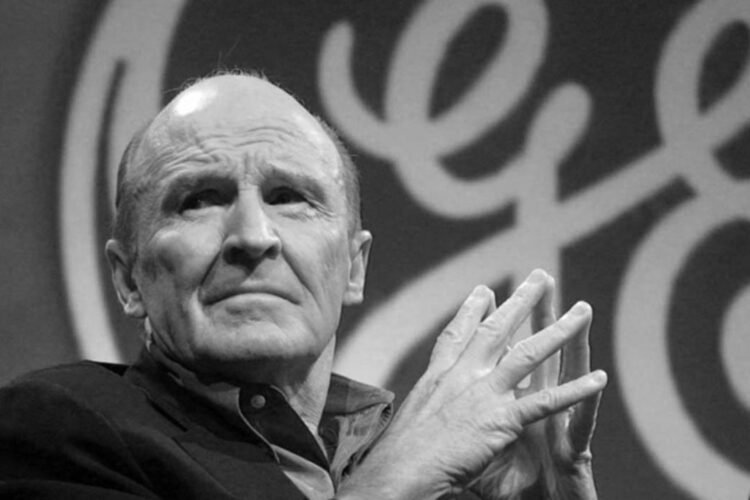
Jack Welch was the CEO of General Electric (GE) between 1981 and 2001. He was the youngest CEO to be appointed in the company. He joined the company in 1960 and later promoted to be the vice president in 1972. Welch ascended the organizational hierarchy, first serving as the vice chairman in 1979 and later became the CEO in 1981.  Jack Welch was born in 1935 and brought up in Peabody, Massachusetts by his two parents who were Roman Catholic. His father worked as a railroad conductor and his mother was a housewife. Jack’s father worked for many hours in order to support his family. Jack and his mother used to go to the train station to wait for his father and as they waited, they had talks with his mother, which served as his early education. He studied at Salem High School, attended Massachusetts University, and attained a degree in Continue reading

Case Study on Business Ethics: The Wells Fargo Fake Accounts Scandal

Wells Fargo, one of the largest and most profitable banks in America, struggles to repair its dented image after it was caught in a mega fraudulent accounts scandal. The San Francisco-based bank had its management pressure on its employees to meet unrealistic sales targets, which led to the fake account incident. The customers were forced to pay bank charges they did not know about, and it was much later that the scandal was unraveled. Between 2011 and 2015, more than 1.5 million accounts were opened by Wells Fargo employees, and 565,000 credit cards were applied in customer’s names without their authorization. During a lawsuit by the government regulatory bodies, the Securities and Exchange Commission (SEC), the Department of Justice (DOJ), and the Federal Reserve, it was established that Wells Fargo blatantly falsified its bank records. Apart from the hefty fines that have been imposed on Wells Fargo, there are lessons Continue reading

Case Study: How Total Quality Management Help Xerox Back on Track

Xerox Corporation is an American company founded in 1906 as Haloid Company. The company began as a manufacturer of photographic paper and equipment. Joseph Wilson inherited the business from his father who was the founder of the company and propelled it to new heights. Wilson signed an agreement with Chester Carlson to develop Carlson’s idea of printing using the toner commercially. The technology was named Xerography. The company changed its name to Haloid Xerox in the year 1958 and subsequently in 1961 to Xerox Corporation. Xerox has a presence in over 180 countries worldwide, and it employs over 140,000 people. The company deals in document management, business process solutions and software services. Xerox Company provides a multitude of products and services to its clients worldwide. They include business services, office equipment, and production equipment. The company’s dynamic nature has enabled it to survive technological changes in the industry. Xerox has made several Continue reading

3 Important Models of Organisational Growth

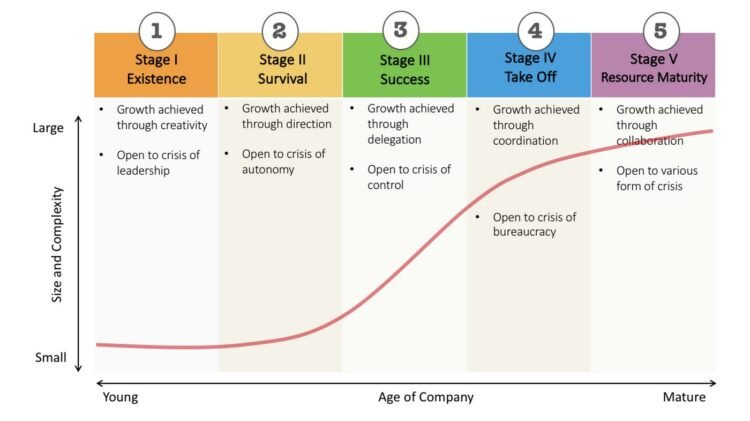
An organization is a group of people who work together with coordinated efforts to achieve certain objectives or goals. Organisations are established by individuals or groups of individuals. During their formation, there is usually very little to talk about by the owner(s) and too much for them to do. Just like human beings, organisations need to grow so as to enable the owner or owners realize their objectives. If the aspect of growth is removed, then it becomes almost impossible for an organisation to exist beyond its formation stage. The signs of growth are expansion and increase in financial base. It also includes increase in the number of employees and diversification of a business as well as the separation of the owner from the business. Organisations also grow through mergers and acquisitions, all in the spirit of attaining their mission and vision. Business management commentators have described various models of organisational Continue reading

History and Background of Luxury Fashion Brand GUCCI

The history of Gucci has spanned more than 95 years. It began in 1921 when the brand’s founder Guccio Gucci established a company that specialized in the production of leather goods. The first store was opened in Gucci’s native Florence. It sold luggage items such as suitcases and bags. The positioning of the brand was the combination of aristocratic esthetics and Italian craftsmanship. Gucci had explored the refined and sophisticated style of English nobility when he was living in London and working in the high-class Savoy Hotel. Upon his return to Italy, he wanted to mix this style with the manufacturing traditions of Tuscan artisans to create classy, high-quality, original products. Gucci quickly attracted customers from certain social groups. Particularly, Gucci’s clients were local aristocrats and rich sophisticated foreigners who came to Florence on vacation. Since the region of Italy where Gucci emerged had been famous for its horse-riding amusements, Continue reading