Need of Customer Relationship Management (CRM) in Banks

Retail banking refers to mass-market banking where individual customers typically use banks for services such as savings and current accounts, mortgages, loans (e.g. personal, housing, auto, and educational), debit cards, credit cards, depository services, fixed deposits, investment advisory services (for high net worth individuals) etc. Before Internet era, consumers largely selected their banks based on how convenient the location of bank’s branches was to their homes or offices. With the advent of new technologies in the business of bank, such as Internet banking and ATMs, now customers can freely chose any bank for their transactions. Thus the customer base of banks has increased, and so has the choices of customers for selecting the banks. This is just the beginning of the story. Due to globalization new generations of private sector banks and many foreign banks have also entered the market and they have brought with them several useful and innovative Continue reading

John Holland’s Theory of Career Choice

It is John Holland’s view that career choice and career adjustment represent an extension of a person’s personality. People express themselves, their interests and values, through their work choices and experience. In his theory, Holland assumes that people’s impressions and generalizations about work, which he refers to as stereotypes, are generally accurate. By studying and refining these stereotypes, Holland assigns both people and work environments to specific categories. John Holland (1966, 1973, 1992, 1997) has published five books that explain his typological theory. Each book represents an update and a further-refined version of earlier work in the development of his theory. The -August 1999 issue of the book – The Journal of Vocational Behavior – contains 12 articles which describe John Holland’s 40-year contribution to career development theory. Two psychological inventories were important in the development of his theory: the Vocational Preference Inventory (Holland, 1985) and the Self-Directed Search (Holland, Continue reading

Case Study: Success of Amazon’s Kindle Fire

In 2007 Amazon introduced the first Kindle e-reader for $359, their first foray into selling a tangible product under their own brand. The media quickly named the product an e-reader, a limited use mobile device designed for downloading and storing content from online.  Perpetuating a successful, yet deceptively simple business model, the Kindle e-reader made “online [book] shopping so easy and convenient,” customers could browse, download and read books, magazines and newspaper content, at the click of a button on the Kindle. The e-reader market perked up as Amazon offered an affordable price point of $9.99 for book downloads and blended it with an easy to read e-ink, glare free device along with a simple user interface and operating system. Kindle’s launch success became the catalyst that opened up the e-reader market for big box book retailers, Barnes and Noble and Borders bookstores who shortly followed with introductions of their Continue reading

Case Study: Inventory Management Practices at Walmart

About Walmart Wal-Mart Stores, Inc. is the largest retailer in the world, the world’s second-largest company and the nation’s largest nongovernmental employer.   Wal-Mart Stores, Inc. operates retail stores in various retailing formats in all 50 states in the United States. The Company’s mass merchandising operations serve its customers primarily through the operation of three segments. The Wal-Mart Stores segment includes its discount stores, Supercenters, and Neighborhood Markets in the United States. The Sam’s club segment includes the warehouse membership clubs in the United States. The Company’s subsidiary, McLane Company, Inc. provides products and distribution services to retail industry and institutional foodservice customers. Wal-Mart serves customers and members more than 200 million times per week at more than 8,416 retail units under 53 different banners in 15 countries. With fiscal year 2010 sales of $405 billion, Wal-Mart employs more than 2.1 million associates worldwide. Nearly 75% of its stores are Continue reading

Portfolio Investment Process

The ultimate aim of the portfolio manager is to reduce the risk and increase the return to the investor in order to reach the investment objectives of an investor. The manager must be aware of the portfolio investment process. The process of portfolio management involves many logical steps like portfolio planning, portfolio implementation and monitoring. The portfolio investment process applies to different situation. Portfolio is owned by different individuals and organizations with different requirements. Investors should buy when prices are very low and sell when prices rise to levels higher that their normal fluctuation. Portfolio Investment Process Portfolio investment process is an important step to meet the needs and convenience of investors. The portfolio investment process involves the following steps: Planning of portfolio. Implementation of portfolio plan. Monitoring the performance of portfolio. 1. Planning of Portfolio Planning is the most important element in a proper portfolio management. The success of Continue reading

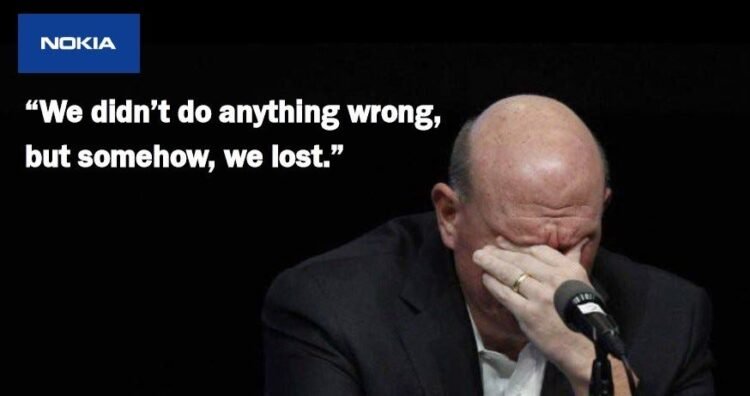
Case Study of Nokia: Lessons from the Collapse of a Global Tech Leader

The company Nokia was established in 1865 and focused on the manufacture of paper; at the beginning of the 20th century, Nokia became a power industry company. Only at the end of the 20th century, the company’s core business became the development, production, and sales of mobile phones. The company experienced a peak in sales and popularity in the market at the end of the 1990s and in the 2000s but had to face a decline at the end of the 2000s. In 2013, the company sold its business to Microsoft. The main failure that led to the company’s decline was its inability to adapt to the demands of the market, i.e. provide products that would be efficient in the era of the mobile Internet. The company was not prepared for the emergence of new technology (smartphones) and failed to understand the consumers’ needs. The company’s investment in its operational Continue reading