The Fundamental and Enhancing Qualitative Characteristics of Financial Information

The purpose of financial statements is to give financial statements information about the change in financial position, financial performance and financial position of the organization. These can provide data use in decision making such as investment, credit and economic decision making which are useful for various users. There are seven main groups of users which are public, investors, lenders, employees, customers, supplies, government and other agencies and the needs of information is different for each group, for instance, employee will interest on the profitability, retirement benefits and employment opportunities and so on. The qualitative characteristics can be categorized as fundamental (relevance and faithful representation) or enhancing (comparability, verifiability, timeliness and understandability) based on how they influence the usefulness of financial information. However, it can limited by two pervasive constraints which is cost and materiality in providing useful financial information. Fundamental Qualitative Characteristics of Financial Information Relevance: Relevant financial reporting information Continue reading

Portfolio Selection and Revision in Investment Portfolio Management

Portfolio Selection Portfolio analysis provides the input for the next phase in portfolio management, which is portfolio selection. The proper goal of portfolio construction is to generate a portfolio that provides the highest returns at a given level of risk. A portfolio having this characteristic is known as an efficient portfolio. The inputs from portfolio analysis can be used to identify the set of efficient portfolios. From this set of efficient portfolios the optimum portfolio has to be selected for investment. Harry Markowitz portfolio theory provides both the conceptual framework and analytical tools for determining the optimal portfolio in a disciplined and objective way. Portfolio Revision Once the portfolio is constructed, it undergoes changes due to changes in market prices and reassessment of companies. Portfolio revision means alteration of the composition of debt/equity instruments, shifting from the one industry to another industry, changing from one company to another company. Any Continue reading

Principles of Management Control

Management Control Principles The basic principles of management control can be grouped into three categories reflecting their purpose and nature, structure and process. These principles of management control are given below. Principle of Assurance of Objective. The basic purpose of management control is the attainment of objectives does this by detecting failures, in plans. Potential or actual, deviations from plans should be detected enough to permit effective corrective action. Principle of Efficiency of Controls. A management control system should detect and highlight the causes of deviations from plans with minimum possible costs and unwanted consequences. The principle of efficiency is particularly important in control because techniques tend to become costly and burdensome. A manager may become so engrossed in control that he spends more than it is to detect a deviation. Controls which seriously interfere with authority of subordinates or morale of those who execute plans, is inefficient. Principle of Continue reading

Payment Terms in International Trade: Open Account, Barter Trade and Bank Guarantee

Open Account From the seller’s point of view the Open Account is the most unsatisfactory international business payment system. Under this payment system the arrangement is that the buyer pays at the end of an agreed period. The seller consigns the goods directly to the buyer or to his order and documents pertaining to the goods are sent directly to the buyer enabling him to take delivery of the goods. Under this payment system the seller after having supplied goods is purely at the mercy of the buyer. Such a payment is normally in those trading arrangements requiring a high degree or trust between the buyer and the seller and a regular continuous business relationship between the two parties. Advantage of this payment system, is that since there is no involvement of a bank, there is less paper work and consequently lesser costs. This system is more beneficial to a Continue reading

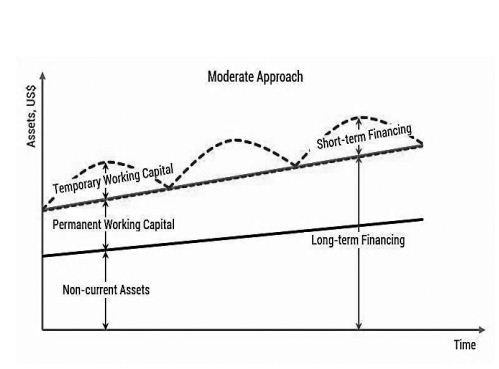
Three Approaches to Working Capital Management

Working capital is said to be the life blood of a business. Working capital signifies funds required for day-to-day operation of the firm. In financial literature, there exist two concepts of working capital namely: gross and net. Accordingly, gross concept working capital refers to current assets viz: cash, marketable securities, inventories of raw materials, work-in-process, finished goods and receivables. According to net concept, working capital refers to the difference between current assets and current liabilities. Ordinarily, working capital can be classified into fixed or permanent and variable or fluctuating parts. The minimum level of investment in current assets regularly employed in business is called fixed or permanent working capital and the extra working capital needed to support the changing business activities is called variable or fluctuating working capital. There are broadly 3 working capital management strategies/ approaches to choose the mix of long and short-term funds for financing the net working Continue reading

Shell’s Directional Policy Matrix (DPM)

The Shell Directional Policy Matrix (DPM) is another refinement upon the Boston Consulting Group (BCG) Matrix. Along the horizontal axis are prospects for business sector profitability, and along the vertical axis is a company’s competitive capability. Business sector profitability includes the size of the market, expected growth, lack of competition, profit margins within the market and other favorable political and socio-economic conditions. On the other hand company’s competitive capability  is determined by the sales volume, the products reputation, reliability of service and competitive pricing. As with the GE Business Screen the location of a Strategic Business Unit (SBU) in any cell of the matrix implies different strategic decisions. However decisions often span options and in practice the zones are an irregular shape and do not tend to be accommodated by box shapes. Instead they blend into each other. Each of the zones in  Shell’s Directional Policy Matrix is described as Continue reading