Case Study: A Look at Tesla’s Challenges Despite Success
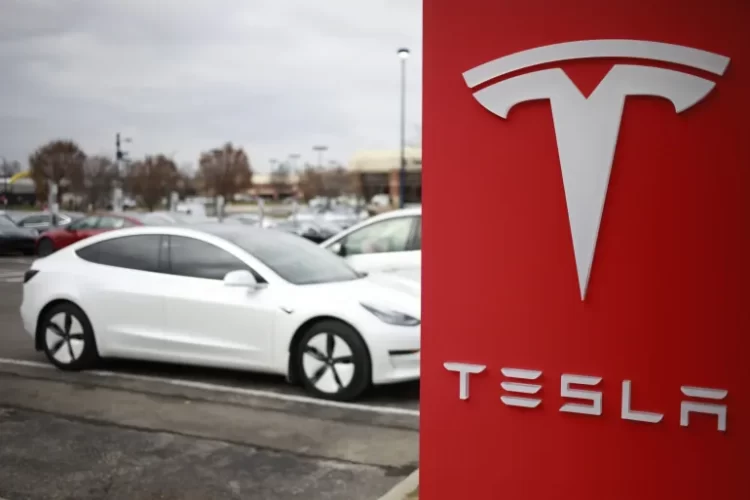
Tesla is the leading American vehicle company manufacturing electric cars, solar roof tiles, and solar panels. Tesla Motors’ foundation belongs to two engineers Martin Eberhard and Marc Tarpenning, who established the company in 2003, attributing its name to Nicola Tesla. The integration of ingenious technologies and forward-thinking led to the creation of an environmentally conscious, powerful, and modern automobile, preserving the sustainability of energy. Elon Musk, as the CEO of Tesla Motors, managed to uplift the company’s name and the vehicles on the global level. Even though Tesla has been a successful manufacturer for over a decade, it still faces issues that are to be solved in the future. Among the main problems the car industry encountered was the issue of cash flows that turned into net losses according to the constant colossal investment in research and development of new vehicles. A currently best-selling model-Tesla 3-was a source of continuous Continue reading

Factors Contributing to the Growth of Derivatives

Factors contributing to the explosive growth of derivatives are price volatility, globalization of the markets, technological developments and advances in the financial theories. 1. Price Volatility A price is what one pays to acquire or use something of value. The objects having value maybe commodities, local currency or foreign currencies.   The concept of price is clear to almost everybody when we discuss commodities. There is a price to be paid for the purchase of food grain, oil, petrol, metal, etc. the price one pays for use of a unit of another persons money is called interest rate. And the price one pays in one’s own currency for a unit of another currency is called as an exchange rate. Prices are generally determined by market forces. In a market, consumers have ‘demand’ and producers or suppliers have ‘supply’, and the collective interaction of demand and supply in the market determines Continue reading

Reward System – Meaning, Objectives and Requirements

Reward is an objective way to describe the positive value an individual ascribes to an object, behavioral act or an internal physical state. Primary rewards include those that are necessary for the survival of species, such as food and successful aggression. Secondary rewards can be derived from primary rewards. Money is a common type of reward. Most of the times, organization rewards its staffs by pay increment or higher bonus. Money is the most direct and easiest way to reward the staff and create a sense of satisfaction. Nowadays, companies are making many modifications on their rewards system to adopt internal and external changes. Reward system is used as a critical tool for driving business growth and boosting staff morale. It is important to align the right measures and reward systems with firm’s structure and culture. However, the reward system is not emphasized when the operational system is designed. Finical Continue reading

Risk management system at NSE

A sound risk management system is integral to an efficient clearing and settlement system. NSE introduced for the first time in India, risk containment measures that were common internationally but were absent from the Indian securities markets. NSCCL (National Securities Clearing Corporation Ltd.) has put in place a comprehensive risk management system, which is constantly upgraded to pre-empt market failures. It ensures that trading member obligations are commensurate with their networth. Risk containment measures include capital adequacy requirements of members, monitoring of member performance and track record, stringent margin requirements, position limits based on capital, on-line monitoring of member positions and automatic disablement from trading when limits are breached, etc. Daily margins payable by members consists of (1) Value at Risk Margin, (2) Extreme Loss Margin, and (3) Mark to Market Margin. Mark-to-Market Margin : Mark to market loss is calculated by marking each transaction in security to the closing Continue reading

Case Study: Lifecycle of Video Game Consoles

The rise of personal computers in the mid 1980’s spurred interest in  computer games. This caused a crash in home Video game market.  Interest in Video games was rekindled when a number of different  companies developed hardware consoles that provided graphics  superior to the capabilities of computer games. By 1990, the  Nintendo Entertainment System dominated the product category.  Sega surpassed Nintendo when it introduced its Genesis System.  By 1993, Sega commanded almost 60 per cent of Video game  market and was one of the most  recognized  brand names among  the children. Sega’s success was short lived. In 1995, Saturn (a division of General  Motors) launched a new 32-bit system. The product was a miserable failure  for a number of reasons. Sega was the primary software developer for  Saturn and it did not support efforts by outside game developers to design  compatible games. In addition, Sega’s games were often delivered quite Continue reading

Functions of Debt Recovery Agents

The core function of a debt recovery agent is to collect dues/receivables from specified debtors of the bank as per agency agreement entered with the principal.   Remitting the collected funds to principal, keeping account of the receivables collected and yet to be collected and reporting the position and developments to the principal are essential but ancillary to the core function.   All these functions will be specified in most agency agreement and would require to be accordingly discharged by the debt recovery agent. Apart from the easily collectible receivables, most banks have on their books over due receivables from debtors who are not traceable, or who show unwillingness pay or who resist surrendering the security charged.   In such cases, the recovery process is difficult and requires handling by specialized collection agencies to process the required expertise.   The functions of re-processing the security, initial legal action and tracing Continue reading