Difference between Trademark and Trade Secret?

A trademark is one of the most valuable components of a company’s functioning, which can provide it with a significant competitive advantage. Trademarks are a method of protecting symbols that are proprietary to a company. Hence, it consists in confidential information that describes the processes or things that characterize the organization. It can be a phrase, a slogan, a symbol, or a mixture of these aspects. To qualify for a trademark, the information must correspond to specific points. It must have commercial value for the company, must be known to a limited number of people, and fall under such documents as consent to conceal data for the persons by whom it is used. The 3M logo is an example of a trade mark.  The red or black combination, the font, the fact the curves of the “3” lay tangent to the “M” are is something that is universally recognized by a Continue reading

Strategy Development and Leveraging Core Competencies

Strategy allows an organisation to deliver its vision. To develop a deliberate strategy which could potentially increase the sustainability of an organisation clearly requires the identification of core competencies but often a single strategy is not the answer. Organisations require a headline strategy to fit a brief which resonates the vision but several strategies are required over many departments such as research and development, production and marketing to deliver the main strategy. The process of strategy development is complex and methodology depends on several factors including the availability of resources and the external environment. The second step in strategy development following identification of core competencies, which is the process of leveraging resources so they can be exploited for maximum benefit. An organisation’s resources can be tangible, intangible or human and that these can be matched to its capabilities to eventually provide competitive advantage. This process of exploiting the unique combination Continue reading

Case Study: Critical Success Factors of Tesco

Tesco PLC is a British merchandise retailer that was founded in 1919 by Jack Cohen. It has operations in 12 countries around the world. It is the largest retailer in the U.K. with more than 530,000 employees. Currently, Tesco serves more than 75 million customers every week. Tesco is present in Malaysia, India, Czech Republic, Hungary, Ireland, Poland, and China. The retailer is the third largest in the world in terms of revenues and a market capitalization of more than £20.5 billion in 2013. After its founding, Tesco operated for many years selling grocery only in the U.K. Today, the multinational retailer has diversified its operations into other areas that include electronics, furniture, software, clothing, books, internet services, and financial services. The company has good online presence and makes great sales through its website. The success of Tesco has been studied for a very long time because of its size and Continue reading

Transferring Core Competencies for Organization Success

Development and expansion organizations’ core competency is one of the main success factors of many organizations. However, if organizations do not apply correct measures when transferring core competencies for one business to another, the likelihood of failure is high. Transfer of core competencies is one of the most important business diversification strategies of ensuring organizations reduce costs of starting over again in new business ventures. Transferring core competencies and resource strengths from one country market to another is a good way for companies to develop broader or deeper competencies and competitive capabilities that can become a strong basis for sustainable competitive advantage. It mostly works via capitalizing on operational relatedness, primarily applying the constrained multi-product strategy. This strategy offers organizations a chance of realizing and exploiting economies of scope, a crucial pathway for gaining a competitive advantage over other businesses. In addition, it guarantees organizations opportunities for utilizing existing expertise Continue reading

The Deming Prize – Philosophy, Assessment Criteria, and Benefits

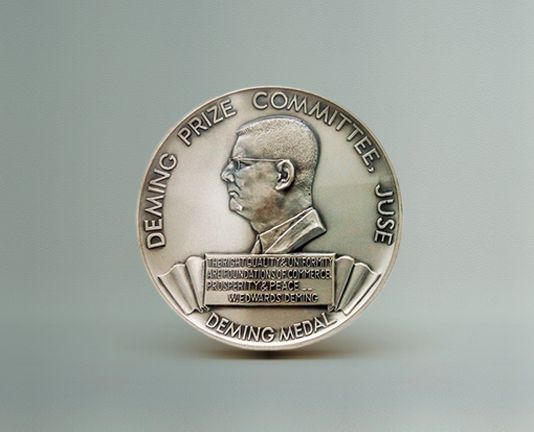
The Deming Prize, named after Dr. W. Edwards Deming, was established in 1951. To reconstruct Japan’s economy after WWII, the Japanese government encouraged the formation of industrial organizations. This initiative resulted in the formation of the Union of Japanese Scientists and Engineers (JUSE). JUSE gathered experts and executives from Japan’s key sectors to achieve this goal by exchanging best practices for quality improvement. Dr. Deming was named an expert by JUSE to educate and coach executives, engineers, and academics in the industrial sector on quality control following his commissioning by the United States Army to help with Japan’s postwar enumeration. His strategies were extensively adopted, culminating in greater production, enhanced quality, and cost savings. As a result of the worldwide awareness of the excellent quality attributed to Japanese goods, demand increased. Deming’s Philosophy The award recognizes achievement in comprehensive quality management and is given to people or organizations who effectively Continue reading

Critical Thinking in Business

Critical thinking is one of the most important skills required in making various decisions that pertain to business, management, relationships, and every other aspect of life. Many definitions have been ascribed to critical thinking by various scholars. Generally, critical thinking refers to the capacity to form thoughts clearly and logically. It encompasses the ability to undertake reflective and self-regulating thinking. Watson-Glaser defined critical thinking as a combination of attitudes, skills, and knowledge. It is purposeful, independent judgment, which brings about interpretation, analysis, assessment, and conclusion, in addition to rationalization of the abstract, evidential, practical, or background reflection at which that decision is based. Critical thinking is pegged on the assumptions that the quality thinking of an individual impacts on their quality of life and secondly, every individual can continually learn how to improve their quality of thinking. Critical thinking skills enable one to appreciate the rational connections involving ideas and Continue reading