The main responsibility of the management is to ensure smooth operations of a firm. In addition, the management must ensure that the goals being pursued by the organization are attained. Essentially, the goals of the organization can only be reached when the inputs are transformed into the final products and services. In other words, the major function of the management is to ensure that they put in place strategies that will ensure effective transformation of the organization’s inputs into the desired outputs. In addition, the management must also be efficient in all other operations related to the company’s functioning. However, managing the organization effectively has remained a challenge for the most of managers. Understanding the dynamics occurring within the organization including the group and individual behaviors, changing processes as well as the relationships that exist between the processes is complex .
Despite the complexity of these processes, the changes occurring within the company must be managed. Inevitably, the organization’s goals will be achieved through the efforts of all workers whether in groups or individually by applying the available technologies. Therefore, taking cognizance of the changing processes that occur within the workforce as well as other processes is critical to the roles of the management. Effective changes require a greater understanding of the tools as well as theoretical framework that tend to explain the transformation processes in a company. One of such tools examples could be called the Nadler-Tushman Congruence Model of change.
The Nadler-Tushman Congruence Model
The congruence model, as depicted by Nadler and Tushman, asserts that an organization is a system that applies inputs drawn from both internal and external environment and convert them into useful components or outputs through sub-systems that are mutually dependent. The organization is capable of converting inputs into outputs using components that include people and work. In addition, the model takes into consideration the interwoven characteristics of the formal and informal organizations.
In essence, The Nadler-Tushman Congruence Model of change brings out the processes that occur in an organization during the transformation period. The model also indicates the way sub-systems including formal and informal organization’s, work and people interrelate during the transformation period.
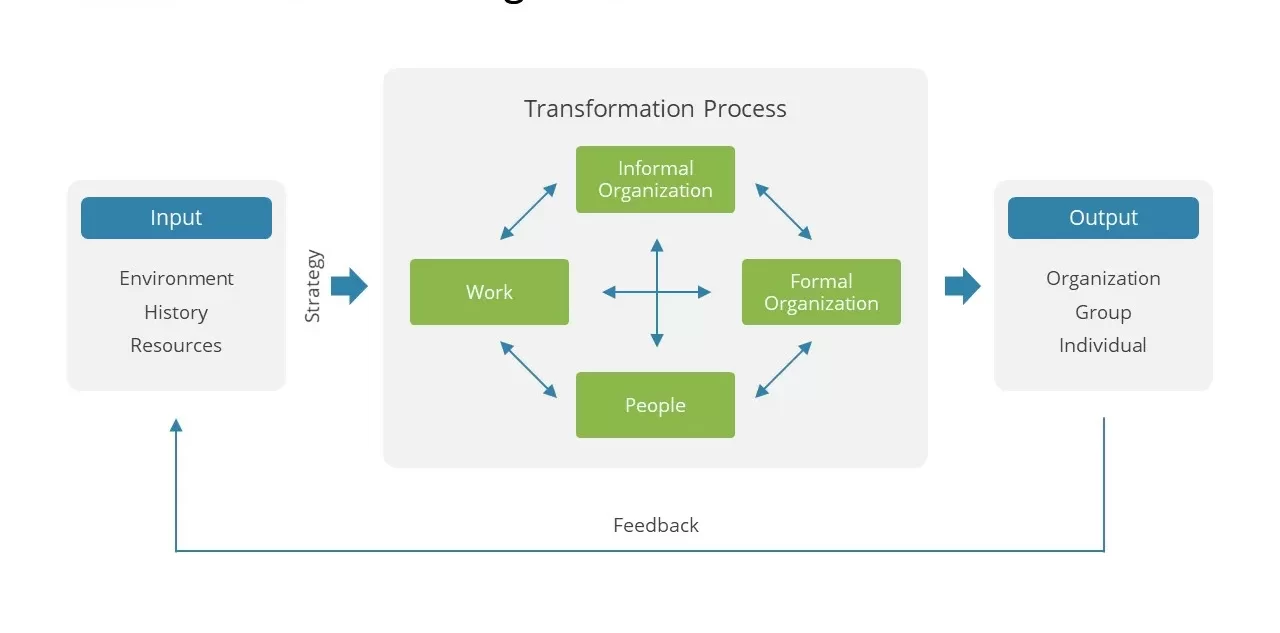
The Nadler-Tushman Congruence Model portrays a company as an open arrangement in which both the internal and external environments influence the subsystems to produce an output. The organization utilizes inputs that are drawn from sources considered both internally and externally. The organization’s sources of inputs include strategy, environment as well as the resources. It is important to note that the inputs are changed into useful final product, for example, actions and conduct. The transformation process is driven by the organization’s subsystems like work, prescribed and un-prescribed organization’s and people.
According to The Nadler-Tushman Congruence Model, the work sub-system cover the actions performed by the firm’s employees on a daily basis. On the other hand, people comprise the subsystem that represents the organization’s capabilities as well as the skills possessed by the employees. In addition, people or key individuals represent the organization’s expected goals and its formation background.
Evidently, the formal parts of the subsystem are the guiding principles: strategies, design, rules, and course of action that would enable the firm to achieve the set goals. The informal subsystem part of the organization is comprised of cultural aspects, power structure, behaviors as well as other subjective aspects that are likely to change over time. According to The Nadler-Tushman Congruence Model, organization’s change can only be successful when all these subsystems or components work in a coordinated manner.
The key Components or Subsystems of the Firm
Viewed from the perspective of The Nadler-Tushman Congruence Model, the organization possesses important components producing the required behavioral patterns that enhance the increased performance. These elements are categorized as inputs or outputs. In fact, while analyzing the subsystems, it is critical to understand the various inputs, the outputs as well as the change process itself.
In other words, how the inputs interact through the transformation process to produce the outputs. It is worth noting that Inputs are the requirements that must be factored in for the organization to run smoothly. Moreover, inputs have to be in existence for the organization to operate. Further, inputs are of different types each providing advantages to the company.
The Environment
The environment is the first key input of the organization. It encompasses all other factors that are found outside the company. In fact, the organization exists within a larger environment, which in effect influences the firm’s operations.
Environmental factors include people, social forces as well as the influences of other organizations. Specifically, the market forces or the forces of demand, the supply chain, economic and political forces influence organization’s operations. The other environmental factors cover labor or employment demands, regulatory entities in addition to high competition coming from similar firms.
The environmental inputs contain some characteristics that can easily impact on the organization. The first characteristic of the environmental inputs is that it exerts demand pressure on the company. For instance, the pressure from the environment may require the organization to produce a particular product with specified quality or quantity. In other words, the environment determines the quality, quantity, and the design of the potential firm’s products.
The second characteristic of the environment is that it puts the limit to the firm’s operations. For example, the government regulations may require the firm to produce a specified quantity, quality and type of the products. So, the environmental forces have the capability of exerting constraints on the firm’s activities, which may range from the limited resources such as capital to the government regulations.
The third environmental trait is the opportunities made available to the organization. In fact, the environment provides the organization with many opportunities which could be considered fundamental contributor to the firm’s continuity, progress, and success.
Organizations that exploit the opportunities provided by the environment normally succeed. Essentially, it is critical for the organization to understand and put into consideration various environmental factors and to establish the way these features generate demand, limitations, and prospects, acting either separately or in collection.
The Strategy
Strategy is the combination of all decisions made by the firm or the way the firm’s resources are organized to attain a particular output. Strategy, so to say, involves how the firm organizes its resources against the environmental characteristics that include demand, constraints, and opportunities. In addition, the environmental characteristics must be arranged within the context of the firm’s history.
Strategy also involves aligning the resources of the firm with the environment or making the decision on the kind of business the organization is involved in. Therefore, examining the firm’s capabilities, strengths and weaknesses according to the environmental characteristics results into the kind of strategy the firm should adopt in pursuit of its goals or expected output. However, the firm’s history may also inform the kind of strategy that should be adopted.
To minimize the gaps existing between the purported strategy and that being practiced, the strategies must be established in terms of the way the company has defined its fundamental role within the wider environmental system. For instance, the core mission of the organization includes the manner in which the market should be served, the kind of services or products to be provided as well as the way the firm competes in the market. Second, the strategies contain some steps or sub-plans on how the firm will attain the outcome of its core mission. Finally, the strategies presuppose particular objectives on how to reach the specified outcome or performance objectives.
According to the The Nadler-Tushman Congruence Model, strategies are significant inputs to the organization. In one hand, strategy establishes the kind of tasks the firm should perform. On the other hand, strategic decisions determine the organization’s productivity. It could be mentioned that strategy establishes the way the business acts in response to its essential efforts. The firm’s strategic decisions establish the type of action it should take as well as describing its outputs.
The Tasks
Certain tasks must be put in place for the formulated strategies to be successful. Tasks are the kind of jobs that must be performed for the strategies to realize the desired outcomes. Most of these tasks are the organization’s competencies or the success key factors that must be implemented by the company to realize the desired outcomes.
Organization’s tasks can be defined discretely using the position of an individual or the duties of an individual. Conversely, tasks of the firm can also be described by the functions the department performs during the transformation process such as the marketing and production departments.
The Formal Systems
The formal systems involve the prescribed framework that the company’s executive puts in place to generate the preferred results. The formal systems can be considered the outcomes of the tasks and the strategies that the organization has put in place.
The tasks and strategies are identified, described and collected to come up with a coherent correlation that becomes the basics of the formal organization. In other words, it is from the strategies and tasks that the organization’s structures are formed. Consequently, the tasks determine the roles, divisions, departments, and the responsibilities that in effect determine the organization’s chart.
The formal system is critical in the efficiency of the firm’s performance. Essentially, the formal systems are the organization mechanisms that are significant for the attainment of the goals of the tasks. In addition, the formal systems channel the efforts of the employees towards the organization’s goals. Formal structure is a very important component of the firm, particularly where hierarchical power is needed to fulfill changes in the organization.
The Informal Structure and Systems
The informal structure and systems arise from uncertainties that occur during the implementation of the formal structures. For instance, during the implementation of tasks to attain the formulated strategies, friendly relations between individuals enhance communication and understanding.
The eased communication enables the individuals and groups to provide the necessary support as well as adapt to procedures that would enable increased productivity. In most cases, the informal system touches the organization’s culture, the values of individuals and the organization, their beliefs and managerial style.
The Key Individuals
The key individuals are people within the organization assigned to perform defined tasks. The key individuals include employees, executives as well as other stakeholders. The key individuals perform the defined tasks within the organization’s formal structures. In addition, the key individuals utilize their capabilities, competencies together with skills to perform the defined tasks.
Managers should understand key individuals at personal level to have knowledge on how changes could be effected. In fact, some key individuals are important for the success of the organization. For instance, supervisors or leaders are of crucial importance in the attainment of the company’s mission. However, people with technical skills or special competencies are considered crucial in the attainment of the company’s objectives.
The Desired Output of the Firm
The desired output covers the products and services that the firm offers to the consumers or that the firm applies to meet other objectives. The capabilities of satisfying the stakeholders, the attainment of growth and development as well as the ability to satisfy the customers are also the desired outputs.
The outputs of the firm are quantified in terms of returns on investments, quantity produced and the number of customers served. The output is the form of feedback the firm uses to update its history, check whether its resources are utilized effectively, define its strategy and determine the nature of transformation. In addition, the firm uses the output to provide the direction in which the transformation of its operation and processes will be held.
Whether the Firm’s Strategies are in Line with the Environmental Inputs
Over the years, the company has been successful as indicated by the ability to generate the desired outcomes. The company’s products and services satisfy the customers and other stakeholders. The company has also been able to generate returns to the shareholders. It can be noted that the success of the output indicates how the firm’s strategies have been successful in the past.
However, the success also indicates how promptly the company corresponds to the needs of the environment and how effectively the inputs are converted into output. To examine how the firm’s strategies are aligned to the environmental inputs, it is important to understand the transformation processes within the firm.
The Firm’s Transformation Processes
The transformation process entails changing the firm’s inputs into outputs, or how the firms strategies are implemented to produce the desired outcomes. In this case, the inputs are transformed through its major components or systems. As indicated in the task component, the firm’s tasks or the work processes are arranged in such a way that they do not overlap.
Each department and individual have defined tasks that complement each other. The work processes also allow effortless flow of production procedures from the manufacturing stage to the assembly stage. In the task design, factors such as cost advantages are also taken into consideration.
In addition, the company’s employees are individuals with skills and capabilities. So, the company applies to come up with products that satisfy the customers. While recruiting, the company considers factors such as individual demographics, expectations, background and the required knowledge and competencies. The factors mentioned above are critical in building a competent staff that ensures the company’s goals are achieved.
Moreover, the company’s short vertical and long horizontal structures increase managerial efficiency in supervision. Furthermore, the managerial procedures enable individuals to perform their tasks in an effective manner. In fact, formal arrangement that includes the firm’s structural alignment, job design, work environment, control and coordination encourages fruitful production of the desired output.
In spite of the effective formal arrangement of the firm, the individuals’ culture, perceptions as well as values are enhanced. The organization’s management takes into account the cultural diversity among the employees and incorporates it into a wider corporate culture. The individuals’ aspirations are also aligned with the organization’s desires and objectives. Thus, the informal arrangements components work together with other components to turn the strategies into the desired outcomes.