The Boston Consulting Group (BCG) published its ranking of the most innovative companies of 2021. The first line was taken by Apple, with Alphabet, Amazon, Microsoft, and Tesla also in the top five. The 6th position goes to Samsung; IBM Corporation takes the 7th place, and Chinese ICT giant Huawei occupies the 8th. In tenth place is Pfizer, which invented one of the vaccines for the coronavirus. Beyond that, Pfizer is one of the world’s largest drug manufacturers. Innovation is not just about making a new device; it is also about writing software code. That is done in companies that run a search engine, an operating system, or companies that make smartphones. That is why Apple has been the most technologically advanced company globally for years, and others like it are growing in that ranking year after year. In addition, Fast Company magazine ranked the innovative companies of the world Continue reading
Business Analysis
10 Important Theoretical Concepts in Business Analytics
Making informed choices in the workplace is of great importance since strong data analysis and decision-making skills enable teams to maximize the chances of success. In organizational contexts, those involved in making important decisions should be aware of different methods helping to analyze data sets and make accurate predictions. This article is aimed at analyzing 10 important theoretical concepts in business analytics and discussing their applications in data analysis and decision-making. Ten concepts discussed below facilitate the process of decision-making in business environments. The concepts are relevant to the workplace since they can be utilized to support strategy development, inform inventory and investment choices, establish effective internal policies, and maximize profits. 1. Probability The concept of probability can be justly listed among the terms having numerous applications in decision-making in everyday and professional problems. Based on class activities, the probability is basically the chance that a specific event will happen, Continue reading
Case Study: Critical Success Factors of Tesco
Tesco PLC is a British merchandise retailer that was founded in 1919 by Jack Cohen. It has operations in 12 countries around the world. It is the largest retailer in the U.K. with more than 530,000 employees. Currently, Tesco serves more than 75 million customers every week. Tesco is present in Malaysia, India, Czech Republic, Hungary, Ireland, Poland, and China. The retailer is the third largest in the world in terms of revenues and a market capitalization of more than £20.5 billion in 2013. After its founding, Tesco operated for many years selling grocery only in the U.K. Today, the multinational retailer has diversified its operations into other areas that include electronics, furniture, software, clothing, books, internet services, and financial services. The company has good online presence and makes great sales through its website. The success of Tesco has been studied for a very long time because of its size and Continue reading
Case Study: Analysis of Barclays and Lehman Brothers Merger Issues
Barclays PLC is an international organization responsible for providing financial services to various people and companies across the world. In addition, the company has approximately 30,000 workers who are actively involved in retail and profitable banking. Additionally, the organization is also involved in the sale of credit cards, asset banking, control of wealth, and asset management services. Barclays PLC is also functions within the six business sections. The organization was able to expand its banking business activities in the United States by when it attained the American business of Lehman Brothers. Actually, this happened in the year 2008. Since its acquisition, the company has been gradually improving the image of Lehman Brothers business in the United States. In addition, the acquisition was to make the company become an international bank. The asset banking trade, Barclay’s investment and the business involved in managing the capital, business capital and the Barclays international Continue reading
History and Background of Mother Dairy

“MotherDairy” is one among the single largest brands of milk in India as well as in Asia, marketing about 2.2 million litres of milk per day. Mother Dairy commands 40% market share in the organized sector in and around Delhi, primarily because of consistent quality and service – whatever be the crisis – floods, transport-strike, curfew etc. Mother Dairy, Patparganj, Delhi, is presently manufacturing & selling around 8.5 lakh litres of tonned milk through bulk vending shops. Mother Dairy, Delhi is an IS/ISO – 9001:2000 and Hazard Analysis Critical Control Points (HACCP) and IS-14001:1996 Envoirnment Management System (EMS) Certified organisation. Mother Dairy was the first Dairy in the country to implement ISO-14031 (Envoirnment Performance Evaluation) project. The comany’s Quality Assurance Laboratory is ISO/IEC- 17025:1999 certified by NABL (National Accreditation Board for Testing and Calibration Laboratory), Department of Science & Technology, India. This provides assurance to the consumer in respect of Quality Continue reading
Case Study: A Look at Tesla’s Challenges Despite Success
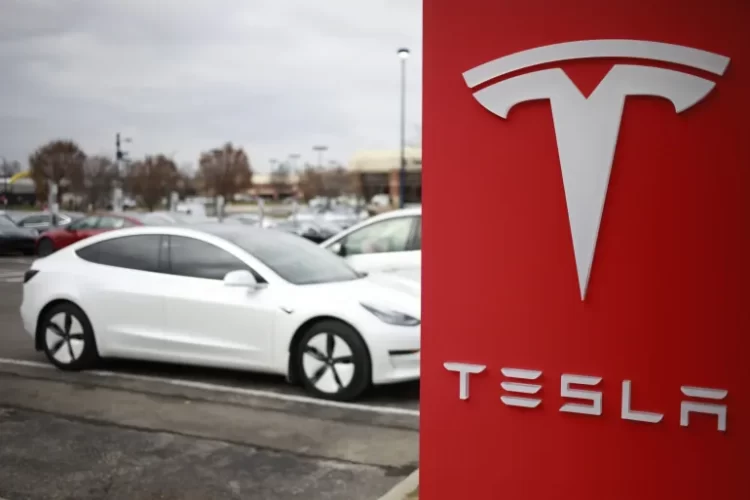
Tesla is the leading American vehicle company manufacturing electric cars, solar roof tiles, and solar panels. Tesla Motors’ foundation belongs to two engineers Martin Eberhard and Marc Tarpenning, who established the company in 2003, attributing its name to Nicola Tesla. The integration of ingenious technologies and forward-thinking led to the creation of an environmentally conscious, powerful, and modern automobile, preserving the sustainability of energy. Elon Musk, as the CEO of Tesla Motors, managed to uplift the company’s name and the vehicles on the global level. Even though Tesla has been a successful manufacturer for over a decade, it still faces issues that are to be solved in the future. Among the main problems the car industry encountered was the issue of cash flows that turned into net losses according to the constant colossal investment in research and development of new vehicles. A currently best-selling model-Tesla 3-was a source of continuous Continue reading