In the narrowest sense, price is the amount of money charged for a product or service. More broadly, price is the sum of all the values that consumers exchange for the benefits of having or using the product or service. Price is the only element in the marketing mix that produces revenue; all other elements represent costs. Price is also one of the most flexible elements of the marketing mix. Unlike product features and channel commitments, price can be changed quickly. At the same time, pricing and price competition is the number one problem facing many marketing executive. Yet, many companies do not handle pricing well. Factors to Consider When Setting Prices A company’s pricing decisions are affected by both internal and external environmental factors. Internal Factors Affecting Pricing Decisions: Internal factors affecting pricing include the company’s marketing objectives, marketing strategy, costs and organizational considerations. 1. Marketing Objectives: Before setting Continue reading
Marketing Strategies
Importance of Sound in Branding

The impact that sound creates on anyone is profound. Sound being one of the major five senses plays a vital role in everyone’s day to day activities. In a country like India, which has an extensive oral culture where even a form of medication has been passed on to the next generation orally; sound is something that matters to every single soul in one way or the other. Sound is prevalent in almost all traditional forms in India ranging from festivals to discourses. In a vast country like India, each state has its own culture and each culture has its own representation of sound in its own unique ways. Right from the birth, where a special song is sung to represent the birth of a new child till the death, where in some states there are different instruments played during funeral. There are different sounds that represent different emotional states Continue reading
Case Study of Procter & Gamble: Marketing of Scope Mouthwash

Scope was introduced in 1967 by Procter & Gamble, is a green mint tasting mouthwash, and was positions as a great tasting mouth refreshing brand that provided bad breath protection. Scope held 32% share of the Canadian market for 1990. In 1970 Scope became the market leader in Canada, with many competitors, such as Listerine mouthwash that was launched by Warner Lambert in 1977 and it was a direct competitor to Scope, it had nearly the same characteristics as Scope with a 12% of the market share during that time. But the major competitor for Scope was Plax, a brand by Pfizer Inc, which was launched in Canada in 1988 on a platform quite different from the traditional mouthwashes, and gained a 10% share since launched. Plax detergents were supposed to help loosen plaque to make brushing effective. Before the entry of Plax, brands in the mouth wash market were Continue reading
Sustainability Mix – Greening the Marketing Mix
Sustainability has been a growing concern regarding the natural environment, which has resulted in the transformation of the competitive landscape and constraining companies to take a look at the costs and profits of greening their marketing mix. Sustainability is defined as the development that meets the needs of the present without compromising the ability of future generations to meet their own needs. Sustainability issues have turned out to be progressively critical to corporate decision-makers as companies face public sensitivity, stricter guidelines, and growing stakeholder pressures focused on saving the common habitat. There has been a shift in the consumer’s preferences towards environmentally friendly products and services. Greening the marketing mix means incorporating the sustainability elements in the marketing mix. For example, HSBC is aiming for a zero-carbon footprint and Walmart is implementing procedures that empower sustainability among its suppliers. Green pricing strategy refers to pricing exercises that record both the Continue reading
Case Study: The “More Doctors Smoke Camels” Campaign
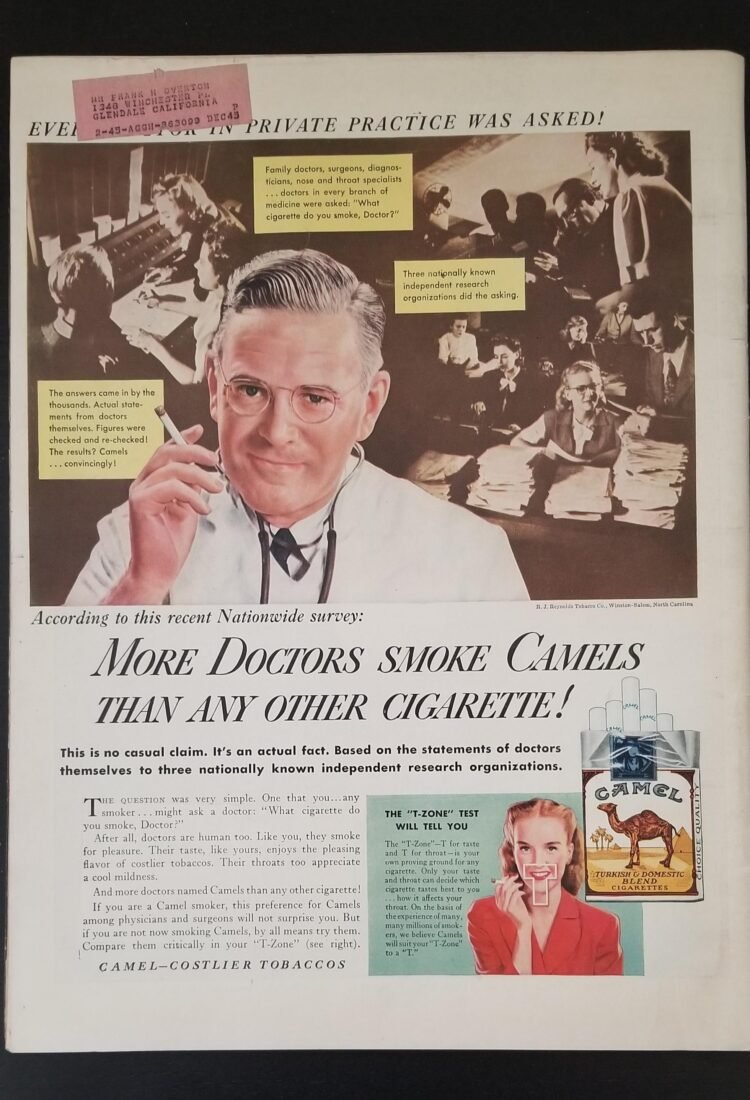
Camel is an American cigarette type possessed and industrialized by the Reynolds Tobacco Enterprise and contains a mixture of Turkish and Virginia tobacco. Many surgeons prefer Camel cigarettes to any other brand. One way used by the tobacco industry to comfort a vexed community was by including attractive images of doctors in advertisements. The argument was that if a physician with all due proficiency smokes a specific brand, the cigarettes cannot be harmful to human health. The main target of image advertisement is to publicize and create awareness of a product to ensure that the item is highly purchased for the company to make high profits. Image advertisement is preferred because it is affordable and easy to reach many viewers, and creates a wider reach of the product by the public, unlike video advertising. Image advertisement of Camel cigarettes was effective for society and the company. Since Camels are harmless Continue reading
Market Activated Corporate Strategy (MACS) Framework

Market Activated Corporate Strategy (MACS) Framework was developed in the late 1980s. But it wasn’t developed at once. There were several predecessors to this framework. Once of the first can be the BCG Growth-Share Matrix. This matrix represents the market growth rate and the relative market share, and according to the level, the business units were divided into 4 categories. It was used very often before, but over the time more comprehensive tools were designed, to eliminate the weaknesses of BCG Matrix, like the fact that is takes into consideration only two factors, avoiding many many others that have a huge impact on profitability. BCG Matrix also assumes the independence of each business unit, therefore it leads to underestimation of the interconnection that often exists (as “Dogs”, for example, sometimes help in gaining competitive advantage) Another predecessor is the old nine-box matrix, developed by McKinsey. It covers industry attractiveness and Continue reading