Marginal Cost Pricing

In case of Marginal Cost Pricing we have to consider the incremental cost of production. Fixed cost is not taken into consideration. Marginal cost is the additional cost for producing additional unit of output. In this method the price is related to marginal cost. The main difference between Full Cost Pricing and Marginal Cost Pricing is that in Marginal Cost Pricing the fixed cost component is not included. The Marginal Cost Pricing is useful in the short period whereas Full Cost Pricing is mainly for the long period. As long as the marginal cost is covered there is a sort of guarantee that the firm will not shut down. Advantages of Marginal Cost Pricing Variable cost remains constant per unit of output and fixed costs remain constant in total during short period. Thus control over costs becomes more effective and easier. Standards can be set for variable costs, while Budgets Continue reading
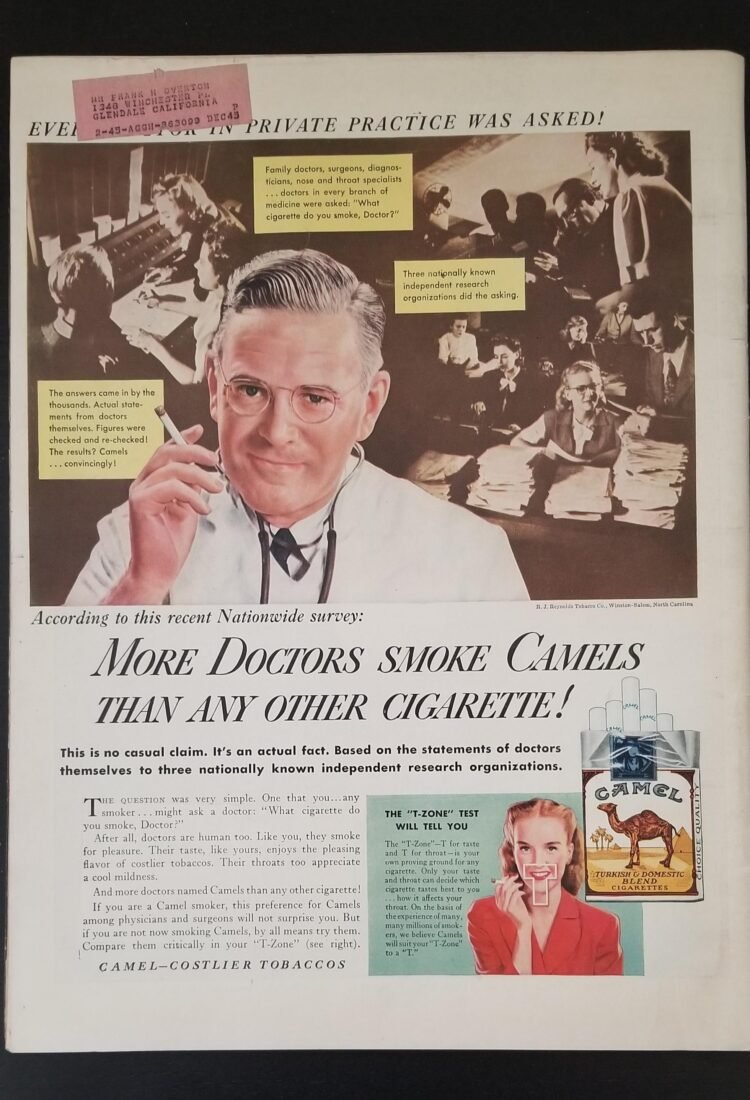
Case Study: The “More Doctors Smoke Camels” Campaign

Camel is an American cigarette type possessed and industrialized by the Reynolds Tobacco Enterprise and contains a mixture of Turkish and Virginia tobacco. Many surgeons prefer Camel cigarettes to any other brand. One way used by the tobacco industry to comfort a vexed community was by including attractive images of doctors in advertisements. The argument was that if a physician with all due proficiency smokes a specific brand, the cigarettes cannot be harmful to human health. The main target of image advertisement is to publicize and create awareness of a product to ensure that the item is highly purchased for the company to make high profits. Image advertisement is preferred because it is affordable and easy to reach many viewers, and creates a wider reach of the product by the public, unlike video advertising. Image advertisement of Camel cigarettes was effective for society and the company. Since Camels are harmless Continue reading

The Importance of Liquidity for Commercial Banks

Banks are considered to be as safe deposit for customers associated with them for both short and long term basis. It has increased liability over banks to make sure that they are able to fulfill all the demands of the customers. Also several acts passed in many countries has reduced the dependency that commercial banks used to possess over Central Banks to make sure that their needs are sufficed in case some emergency arrives. Thus to maintain certain level of stake in the company, it is mandatory for commercial banks to retain appropriate liquidity ratios such that any ambiguous situation could be avoided. If any disturbance is encountered in these ratios, there is a problem of funding that comes into picture and hampers bank’s credibility among its stakeholders. Liquidity control is also necessary for proper structuring of the bank along with looking after all the complexities related to the size Continue reading

Reasons You Should Commit to Lifelong Learning and Ways to Do It

One of the most valuable assets one can have is commitment to lifelong learning. The knowledge you will acquire from continuous education is a powerful possession you can ever have throughout your career. While there are so many advantages of lifelong learning, understanding the reasons why you need it is also important. Importance of Nonstop Learning Humans naturally yearn for learning. In fact, your insatiable hunger for learning begins during infancy since you become curious to your senses of smell, sound, taste, feel, and sight. The quest for knowledge doesn’t simply stop once your curiosity has been answered. As you mature, you seek for more discovery and learning while getting to know yourself. The main importance of learning is that, life is a broad concept with continuous changes happening in every stage. You need to keep up with those changes by understanding the real meaning of being alive. Here are Continue reading

Case Study of General Electric: Six Sigma Implementation

General Electric, one of the most successful companies implementing Six Sigma, has estimated benefits on the order of $10 billion during the first five years of  implementation. GE first began Six Sigma in 1995 after Motorola and Allied Signal blazed the Six Sigma trail. Since then, thousands of companies around the world have discovered the far reaching benefits of Six Sigma, including Japan’s Taiichi Ohno used as a model for the Toyota Production System (TPS), did not let him down during bad economic times. An Overview  of Six Sigma Motorola coined the term “Six Sigma” and created the original formulas in the 1980’s. The result was a culture of quality that permeated throughout Motorola and led to a period of unprecedented growth and sales. The crowning achievement was being recognized with the Malcolm Baldrige National Quality Award. Motorola factory that manufactured television sets in the United States, took over by Continue reading

“Job Enrichment is Just a Fancy Name for Employee Exploitation”- Discussion

Job enrichment is operationalized with job descriptions and job specifications. Badly written job descriptions and job specifications restrict management’s freedom to make changes in job tasks, duties and responsibilities; and assign work to employees. Claims of employee exploitation will usually come from trade unions. To avoid industrial disputes with trade unions, it is critical that job descriptions and job specifications be clear, concise and understandable. This is particularly so with jobs that have A,B,C, classifications. Such jobs must be carefully distinguished by job title and clearly involve different job content and job requirements. Where ABC type classifications have developed for ‘historical’ reasons it is essential that a thorough job analysis be conducted to ensure that more than one level of the job actually exits. If this is not done, claims for “higher duties” payments or upgrade to a higher classification are likely to be an ongoing source of grievances. Precise Continue reading