Behavioral Finance – Definition, Meaning, and Characteristics

Traditionally, economics and finance have focused on models that assume rationality. The behavioral insights have emerged from the application of insights from experimental psychology in finance and economics. Behavioral finance is relatively a new field which seeks to provide explanation for people’s economic decisions. It is a combination of behavioral and cognitive psychological theory with conventional economics and finance. Inability to maximize the expected utility (EU) of rational investors leads to growth of behavioral finance within the efficient market framework. Behavioral finance is an attempt to resolve inconsistency of Traditional Expected Utility Maximization of rational investors within efficient markets through explanation based on human behavior. For instance, Behavioral finance explains why and how markets might be inefficient. An underlying assumption of behavioral finance is that, the information structure and characteristics of market participants systematically influence the individual’s investment decisions as well as market outcomes. Investor, as a human being, processes Continue reading

Shareholder Value Approach

Nowadays shareholder value approach reflects to a modern management philosophy, which implies that an organization measures its success by enriching its shareholders. Shareholders or stockholders are individuals or institutions that owns in a legally form shares of a corporation. They are considered to be a subset of stakeholders, which are all individuals or communities, who have a direct or indirect interest in the business entity (e.g. suppliers, customers, government, competitors etc.). The philosophy of the shareholder value approach attempts to increase the organization’s value by enhancing firm’s earnings, by increasing the market value of corporation’s shares and by increasing also the frequency or amount of dividend paid. The idea is that shareholder’s money should be used to earn a higher return than it could by investing in other assets with same amount of money and risk. Furthermore according to many business analysts shareholder value approach provides managers with clear mission Continue reading

Case Study: Wal-Mart’s Failure in Germany

Wal-Mart Stores, Inc. is the largest retailer in the world, the world’s second-largest company and the nation’s largest non-governmental employer. Wal-Mart Stores, Inc. operates retail stores in various retailing formats in all 50 states in the United States. The Company’s mass merchandising operations serve its customers primarily through the operation of three segments. The Wal-Mart Stores segment includes its discount stores, Supercenters, and Neighborhood Markets in the United States. The Sam’s club segment includes the warehouse membership clubs in the United States. The Company’s subsidiary, McLane Company, Inc. provides products and distribution services to retail industry and institutional foodservice customers. Wal-Mart serves customers and members more than 200 million times per week at more than 8,416 retail units under 53 different banners in 15 countries. With fiscal year 2010 sales of $405 billion, Wal-Mart employs more than 2.1 million associates worldwide. Nearly 75% of its stores are in the United Continue reading

Cybersecurity – Best Practices to Protect Business Organizations

In any organization, there are set duties, assignments and responsibilities to accomplish department goals, targeted objectives, and outcomes. Employees at every level within a business organization should take their responsibilities about Cybersecurity very seriously and be part of the organization Cybersecurity focus. Every department under the business structure should know what their part within the organization cybersecurity program. Every one, though matter what department they belong to should work as a team to meet and exceed the organization cybersecurity goals. Having a great cybersecurity program is the responsibility of management and it should be a part of every facet in all sectors of the business. In every organization with an IT department, the IT department is the regulator of the business cybersecurity program. They create the policy, in accordance with the business goals, mission, and objectives. They build, implement and monitor the organization cybersecurity program against the business set goals. Continue reading

VRIO Analysis – Meaning, Components, Advantages, and Disadvantages

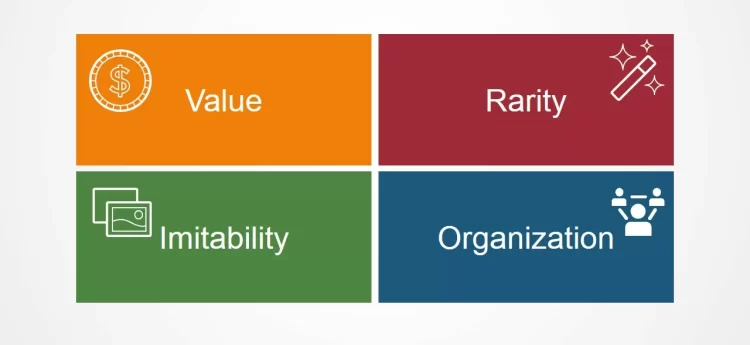
Resources and capabilities have been considered as one of the biggest factors that aids and assists the business entity in performing and executing the varied range of operations and functionalities. Moreover, the business corporation should utilize various mechanisms for stimulating the resources and capabilities of the enterprise. VRIO analysis will be proven very much beneficial for any business entity while analyzing the internal sources and capabilities of the enterprise. It has been noted down that Jay B Barney introduced the framework of VRIO in 1991. This tool was introduced in his work ‘Firm Resources and Sustained Competitive Advantage’. Valuable: Resources and capabilities minimize the impacts of threats and moreover, the stakeholders determine whether or not the resources are beneficial to the company or not. The resources are proven very much beneficial for the business in various areas, internally and externally and thus will assist in the firm’s development process. Rare: Continue reading

Stakeholder, Institutional, and Legitimacy Theories of Accounting

A theory is defined as a set of principles that form the underlying structure that can be referred to in a discipline of study. Accounting, being a human activity, considers such things as the behavior of people and their needs in regard to information that is financial in nature. It also considers why an organisation might choose to divulge or give information to a particular group of stakeholders. The theories of accounting date back to the early 1920’s when researchers were basically relying on observation. All through this period, there has been an attempt to prescribe how assets should be valued for the sake of external reporting, predict on what basis managers should be paid or motivated, predict the power of different stakeholders, and how the organisation aspires to be judged by the community. This article will discuss three accounting theories namely the stakeholder theory, legitimacy theory and institutional theory. Continue reading