Staffing Function of Management

Staffing function of management consists of manpower planning, recruitment, selection, training, compensation, promotion & maintenance of managerial personnel. “The managerial function of staffing involves manning the organizational structure through proper & effective selection, appraisal & development of personnel to fill the roles designed into the structure”: – Koontz and O’Donnell Need and Importance of Staffing How can the enterprise objectives be achieved if competent persons are not appointed in the organisation? What would be the fate of an organisation that is indifferent to the training requirements of its personnel? How will the managers and operators feel if they are not duly compensated for their sacrifices for the organisation? Will the morals of the people not come down, if nobody in the organisation looks after their welfare? The answers to these questions reveal the need and importance of staffing. The need and importance of staffing function of management  can be assessed Continue reading

Product Concept and Selling Concept in Marketing

The term marketing can be described as the management process through which goods and services move from concept to the customer. As a philosophy, marketing is based on thinking about the business in terms of customer needs and their satisfaction. In other definition, Marketing is the process of teaching consumers in terms of choosing the products which brings benefits to them and can be described as an organizational function and a set of process for creating, communicating, and delivering value to customers and for managing customer relationships in various ways that benefit the organization and its stakeholders. As for organizations or sales person, marketing is everything that the consumer encounters when it comes to your business. For examples such as advertising, to what they hear, to the customer service that they receive, to the follow-up care that you provide. It’s all known as the part of marketing subjects or criteria Continue reading

History and Background of Mother Dairy

“MotherDairy” is one among the single largest brands of milk in India as well as in Asia, marketing about 2.2 million litres of milk per day. Mother Dairy commands 40% market share in the organized sector in and around Delhi, primarily because of consistent quality and service – whatever be the crisis – floods, transport-strike, curfew etc. Mother Dairy, Patparganj, Delhi, is presently manufacturing & selling around 8.5 lakh litres of tonned milk through bulk vending shops. Mother Dairy, Delhi is an IS/ISO – 9001:2000 and Hazard Analysis Critical Control Points (HACCP) and IS-14001:1996 Envoirnment Management System (EMS) Certified organisation. Mother Dairy was the first Dairy in the country to implement ISO-14031 (Envoirnment Performance Evaluation) project. The comany’s Quality Assurance Laboratory is ISO/IEC- 17025:1999 certified by NABL (National Accreditation Board for Testing and Calibration Laboratory), Department of Science & Technology, India. This provides assurance to the consumer in respect of Quality Continue reading

Risk Management Structure / Framework in Banks

A major issue in establishing an appropriate risk management organization structure is choosing between a centralized and decentralized structure. The global trend is towards centralizing risk management with integrated treasury management function to benefit from information on aggregate exposure, natural netting of exposures, economies of scale and easier reporting to top management. The primary responsibility of understanding the risks run by the bank and ensuring that the risks are appropriately managed should clearly be vested with the Board of Directors. The Board should set risk limits by assessing the bank’s risk and risk-bearing capacity. At organizational level, overall risk management should be assigned to an independent Risk Management Committee or Executive Committee of the top Executives that reports directly to the Board of Directors. The purpose of this top level committee is to empower one group with full responsibility of evaluating overall risks faced by the bank and determining the Continue reading

Managerial Grid Model

The Ohio studies led to two dimensions of leadership behavior-concern for tasks and concern for relations. Almost in the same style, the Michigan University studies made the distinction between job-centered and production-centered leaders. Blake and Mouton rated these concepts in a framework called the Managerial Grid. They interpreted the concepts in a broad way. Blake and Mouton have used “Concern for Production” and “Concern for People’” in their Managerial Grid on horizontal and vertical axes respectively. Managers may be concerned for their people and they also must also have some concern for the work to be done. The question is, how much attention do they pay to one or the other? Managerial Grid Model  is a model defined by Blake and Mouton in the early 1960s.It included Impoverished management Authority-compliance Country Club management Middle of the road management Team management Leadership Grid The Managerial Grid was the original name; the Continue reading

Understanding the Need and Importance of a Business Model

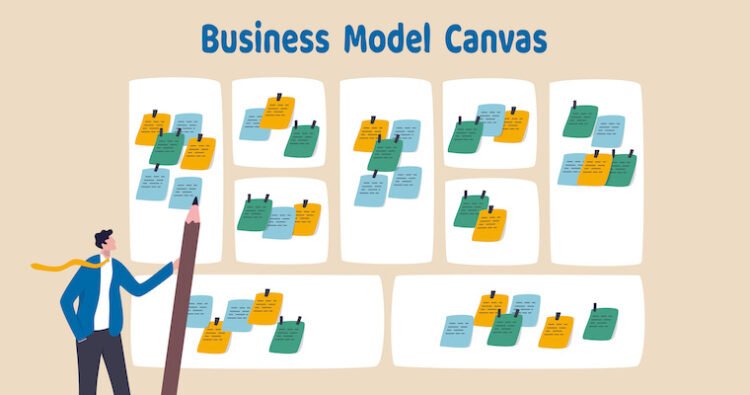
Business models became popular as a result of the internet boom that made many companies to begin relying on web-based models. Companies shifted from the traditional methods that were based on strategy and competence in an attempt to embrace the new trend. The new models came with a promise of substantial profits and efficiency. All the entrepreneurs who bought into the new idea ended up suffering huge loses because they did not implement the models in the right way. The concept of business models therefore did not perform well in the initial stages because many people did not actually understand the concept. The failure of these business models came as a result of misuse and distortion. Many entrepreneurs wasted their capital by investing in flawed models without careful consideration. The new concept of doing business using models is still very applicable in different types of business ventures. A business model should Continue reading