Formalization – Meaning, Advantages, and Disadvantages

Formalization is the process of creating structures that govern operations within an organization. In a formalized organization, work activities are often controlled by a set of accepted rules and procedures. In addition, a formalized structure has a hierarchical and clear reporting structure that runs from bottom to top. To a large extent therefore, a formalized organization is managed through several levels of supervision. The extent of formalization, however, varies from one organization to another and is mainly determined by the size of the organization. As opposed to informational organizational structures where individuals are esteemed higher than the job positions, a formal organizational structure is made up of rules that unmistakably state how work should be done at the various levels in the hierarchy. Since rules that guide the holder of a position are static, no confusion arises when the holder of the position changes. This thus implies that the transition Continue reading

Optimum Level of Working Capital

A firm has to maintain an adequate level of working capital to run its operations smoothly and effectively. It should be adequate in the sense that it shall not be more than the requirements nor it shall be less than the requirements. Both the excessive as well as inadequate working capital positions are dangerous from the firm’s point view. We know that the current liabilities are met out of the current assets. So the level of current assets shall be sufficient enough to meet the current liabilities. Excessive working capital refers to the position where when the level of current assets is much higher to meet current liabilities. The excessive capital has opportunity cost for the firm, as this excessive capital remains idle in the firm, which earns no profit for the firm. If these funds shall be invested in some profitable project, it adds the profitability of the Company. Continue reading

Increased Investment in Retailing

The prospects for significant modernization and development in retailing will depend on the nature of investment in this sector. The investment will be of two types-foreign and domestic. The quantum and nature of investment will depend on the factors outlined earlier namely economic development; civic situation; consumer needs; attitudes and behavior; and government policies. Although FDI is not yet permitted in retailing, a number of global retailers are testing the waters by signing technical agreements and franchises with Indian firms. Fast food chains like McDonald‘s and Pizza Hut are already operating in the metros. A Marks and Spencer store is already operational in Mumbai. Several global retailers are awaiting a change in policy. However, the development of the Indian retail sector is dependent not just on foreign investment but on Indian investment as well. Since the 1980s, industrial groups such as Reliance and Raymonds have been active in encouraging development Continue reading

Marginal Cost Pricing

In case of Marginal Cost Pricing we have to consider the incremental cost of production. Fixed cost is not taken into consideration. Marginal cost is the additional cost for producing additional unit of output. In this method the price is related to marginal cost. The main difference between Full Cost Pricing and Marginal Cost Pricing is that in Marginal Cost Pricing the fixed cost component is not included. The Marginal Cost Pricing is useful in the short period whereas Full Cost Pricing is mainly for the long period. As long as the marginal cost is covered there is a sort of guarantee that the firm will not shut down. Advantages of Marginal Cost Pricing Variable cost remains constant per unit of output and fixed costs remain constant in total during short period. Thus control over costs becomes more effective and easier. Standards can be set for variable costs, while Budgets Continue reading

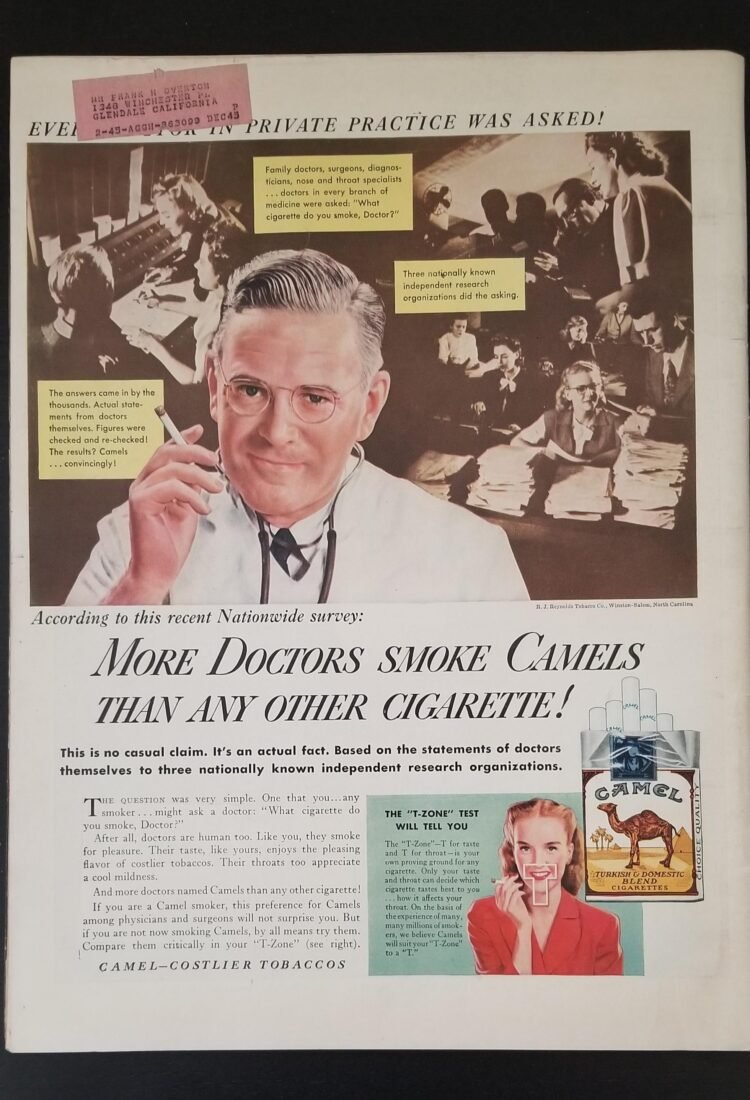
Case Study: The “More Doctors Smoke Camels” Campaign

Camel is an American cigarette type possessed and industrialized by the Reynolds Tobacco Enterprise and contains a mixture of Turkish and Virginia tobacco. Many surgeons prefer Camel cigarettes to any other brand. One way used by the tobacco industry to comfort a vexed community was by including attractive images of doctors in advertisements. The argument was that if a physician with all due proficiency smokes a specific brand, the cigarettes cannot be harmful to human health. The main target of image advertisement is to publicize and create awareness of a product to ensure that the item is highly purchased for the company to make high profits. Image advertisement is preferred because it is affordable and easy to reach many viewers, and creates a wider reach of the product by the public, unlike video advertising. Image advertisement of Camel cigarettes was effective for society and the company. Since Camels are harmless Continue reading

The Importance of Liquidity for Commercial Banks

Banks are considered to be as safe deposit for customers associated with them for both short and long term basis. It has increased liability over banks to make sure that they are able to fulfill all the demands of the customers. Also several acts passed in many countries has reduced the dependency that commercial banks used to possess over Central Banks to make sure that their needs are sufficed in case some emergency arrives. Thus to maintain certain level of stake in the company, it is mandatory for commercial banks to retain appropriate liquidity ratios such that any ambiguous situation could be avoided. If any disturbance is encountered in these ratios, there is a problem of funding that comes into picture and hampers bank’s credibility among its stakeholders. Liquidity control is also necessary for proper structuring of the bank along with looking after all the complexities related to the size Continue reading